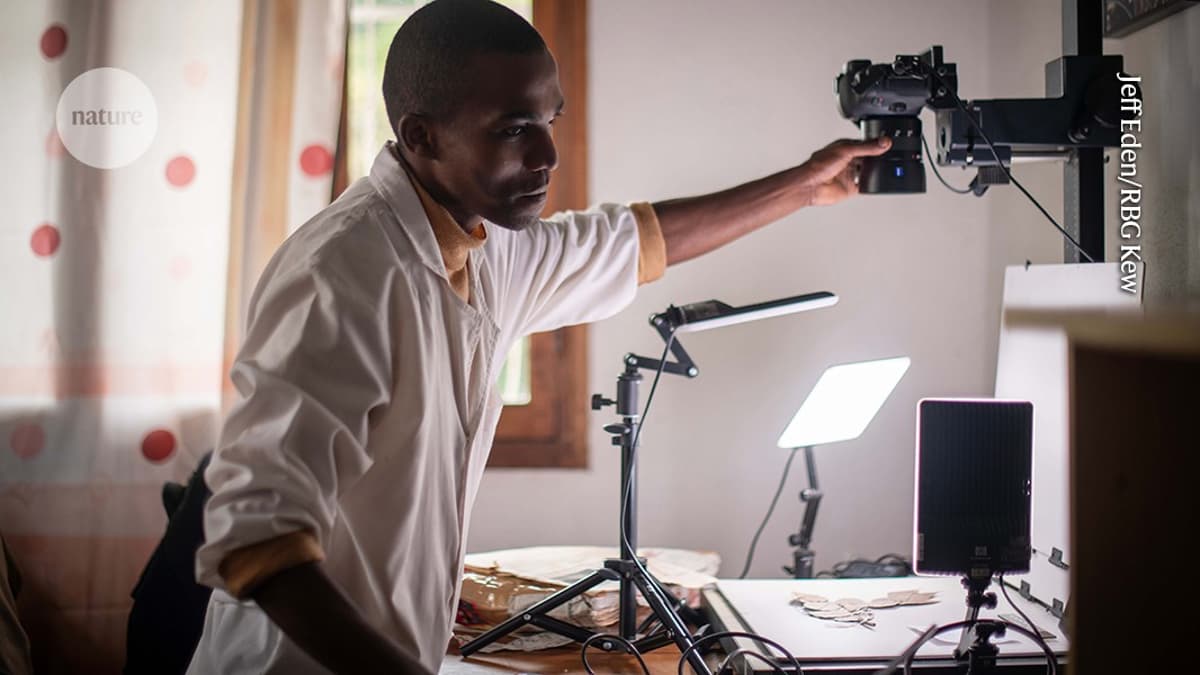
‘Every Box Has Been Opened’: London Botanic Gardens Digitizes 7 Million Specimens
Why It Matters
Open digital access accelerates global biodiversity research, informs conservation policy, and unlocks significant economic value for the UK’s science sector.
Key Takeaways
- •Kew digitised 7.4 million plant and fungi specimens.
- •Project cost $20 million, funded by UK government.
- •Digital collection now searchable via GBIF worldwide.
- •UK expects $2.66 billion economic gain from digitisation.
- •DISSCO‑UK launches $207 million effort for smaller collections.
Pulse Analysis
The completion of Kew’s massive digitisation campaign marks a watershed moment for botanical science. By capturing high‑resolution images of every pressed specimen and its original label, the initiative creates a permanent, searchable record that can be mined with artificial‑intelligence tools. Researchers in remote institutions, from Madagascar to the Arctic, can now retrieve specimen data instantly, eliminating the need for costly travel and handling. This level of openness not only democratises access but also standardises data formats across the global biodiversity community.
Beyond scientific merit, the economic implications are substantial. A recent study by economist Helen Hardy estimates that fully digitising the United Kingdom’s natural‑history collections could generate up to $2.66 billion in added value through new services, data‑driven startups, and accelerated drug‑discovery pipelines. The government’s $207 million DISSCO‑UK program extends this vision, targeting smaller museums and universities to bring their hidden archives into the digital fold. By creating a unified national infrastructure, the UK positions itself as a leader in data‑rich biodiversity research and associated commercial opportunities.
From a conservation standpoint, the newly released State of the World’s Plants and Fungi report underscores a race against extinction. With nearly 30,000 species flagged as threatened and many yet to be described, rapid digitisation enables real‑time monitoring of species distributions and habitat loss. Moreover, the shift of type specimens back to their countries of origin reflects a broader move toward equitable scientific collaboration. As AI models ingest the expanded dataset, they can predict extinction risk more accurately, guiding policymakers and NGOs in prioritising protection efforts. The synergy of technology, economics, and conservation promises to reshape how humanity safeguards Earth’s botanical heritage.
‘Every box has been opened’: London botanic gardens digitizes 7 million specimens
Comments
Want to join the conversation?
Loading comments...