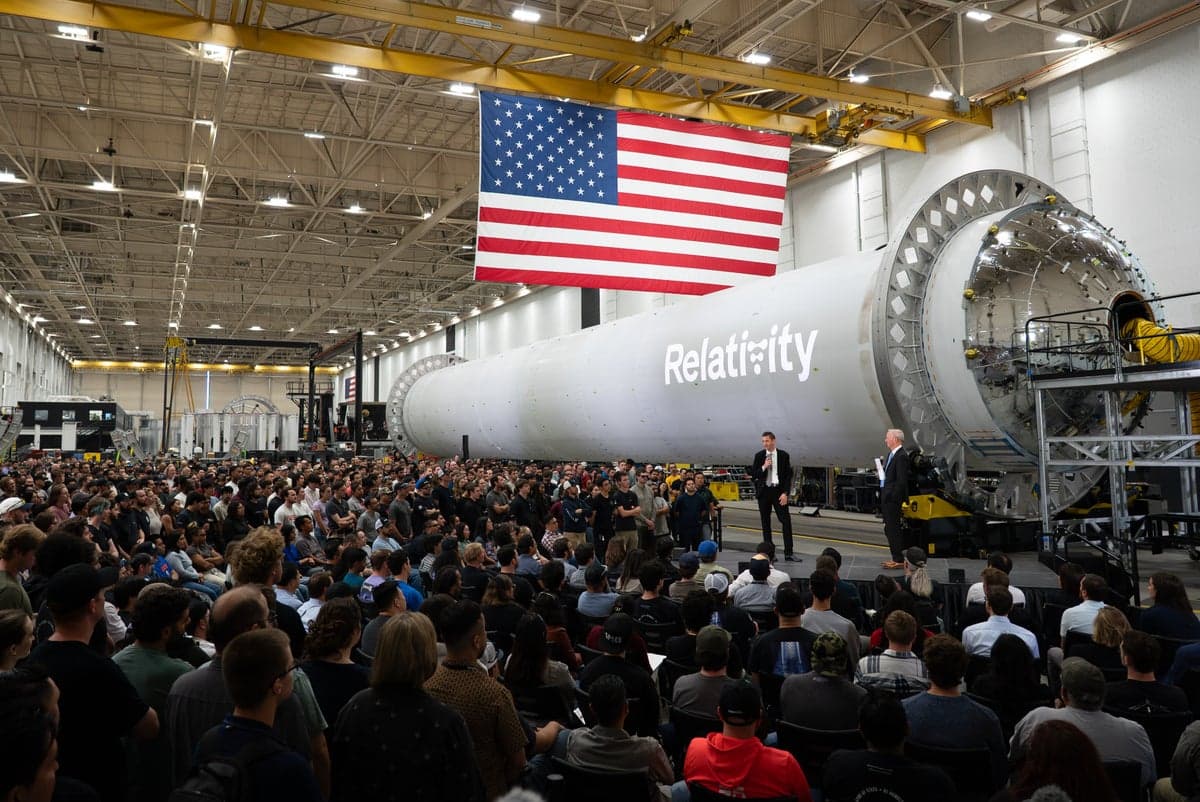
Ex-Google CEO Eric Schmidt’s Relativity Space Selected for Upcoming NASA Mars Orbiter Mission
Companies Mentioned
Why It Matters
The partnership restores critical climate data collection for Mars after MAVEN’s loss and demonstrates how commercial launch capabilities can accelerate planetary science, lowering costs and schedule risk for future human exploration.
Key Takeaways
- •NASA selects Relativity Space for 2028 Mars Aeolus launch
- •Aeolus will measure temperature, dust, wind, clouds for one Mars year
- •Terran R, 3D‑printed reusable rocket, aims first orbital flight in 2026
- •Partnership addresses data gap after MAVEN loss in 2023
- •Eric Schmidt’s CEO tenure speeds commercial involvement in planetary missions
Pulse Analysis
NASA’s decision to enlist Relativity Space for the upcoming Aeolus mission underscores a renewed urgency to fill the atmospheric data void left by the permanent loss of the MAVEN probe in 2023. Aeolus, slated for launch in 2028, will carry four NASA‑built instruments to monitor temperature, dust, wind and cloud dynamics over a full Mars year—information critical for refining entry, descent and landing models. By securing a dedicated spacecraft and launch vehicle, the agency aims to maintain a continuous flow of climate data that supports both robotic and future crewed expeditions.
Relativity Space, founded in 2016 and now led by former Google CEO Eric Schmidt, has built its reputation on fully 3D‑printing rocket components, a process that promises lower production costs and rapid iteration. Its two‑stage Terran R, designed for reusability and scheduled for an inaugural orbital flight in late 2026, will be the launch system for Aeolus, marking the company’s first mission to place a payload beyond Earth orbit. Schmidt’s appointment in 2025 has accelerated investment and partnerships, positioning Relativity as a viable alternative to legacy launch providers for deep‑space endeavors.
The collaboration illustrates how public‑private partnerships are becoming a force multiplier for planetary science, delivering more frequent missions at reduced cost and schedule risk. For the commercial sector, a successful Aeolus launch could unlock a pipeline of government contracts for satellite servicing, lunar logistics and eventual Mars cargo delivery. Investors are likely to view the partnership as validation of the 3D‑printing business model, potentially spurring additional capital into the nascent reusable‑launch market and accelerating humanity’s roadmap to crewed Mars exploration.
Ex-Google CEO Eric Schmidt’s Relativity Space selected for upcoming NASA Mars orbiter mission
Comments
Want to join the conversation?
Loading comments...