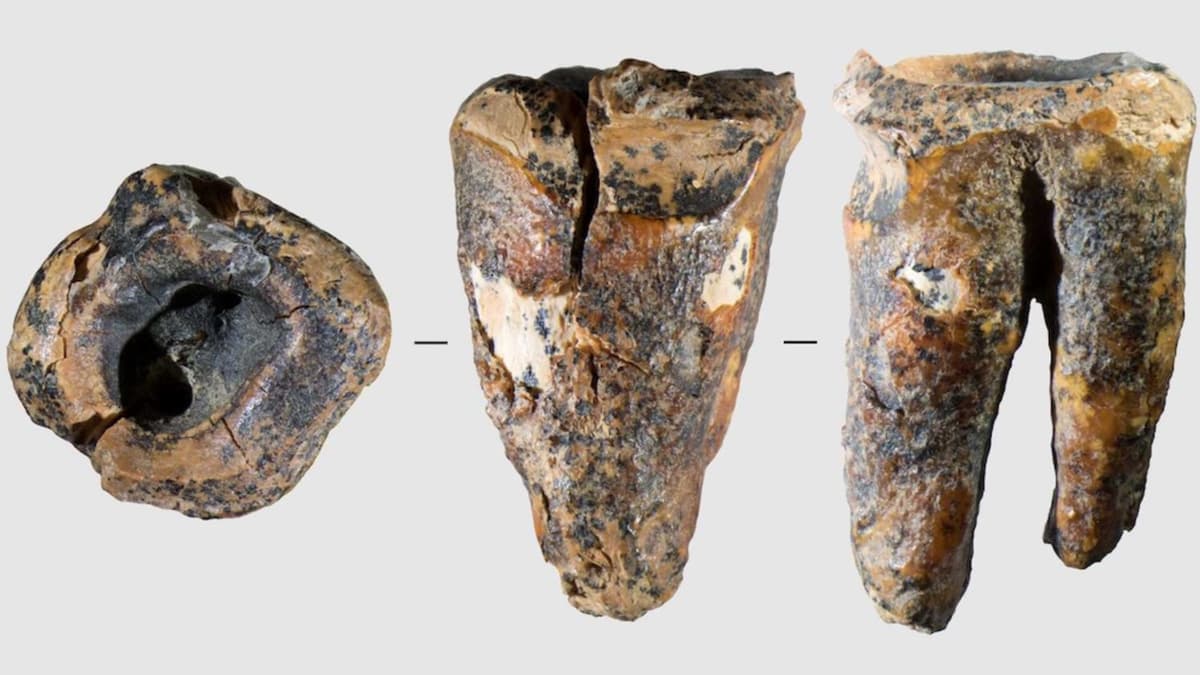
'Exceptional' Drilled Tooth Reveals Neanderthals Practiced Dentistry in Siberia 60,000 Years Ago
Companies Mentioned
Why It Matters
The finding demonstrates that complex medical interventions were not exclusive to modern humans, reshaping our view of Neanderthal cognitive abilities and the origins of invasive healthcare. It also extends the archaeological timeline for surgical practice, influencing how we interpret prehistoric societies.
Key Takeaways
- •Neanderthal molar drilled with stone tool 60,000 years ago
- •Procedure suggests early invasive dentistry predates Homo sapiens by 45,000 years
- •Survivor lived months after drilling, evidenced by chew‑mark wear
- •Stone jasper drills found at Chagyrskaya Cave support tool use
- •Find reshapes timeline of prehistoric healthcare and surgical skill
Pulse Analysis
The discovery of a deliberately drilled Neanderthal tooth in Chagyrskaya Cave offers a rare glimpse into prehistoric medical practice. By combining high‑resolution microscopy with experimental replication on modern teeth, scientists identified tiny, spiraled marks consistent with a tiny jasper drill. This level of precision—creating a 4.2 mm by 2.8 mm cavity to remove decayed tissue—suggests a sophisticated understanding of oral pathology far earlier than previously documented.
Beyond the technical feat, the evidence challenges long‑standing assumptions about Neanderthal cognition. The ability to recognize a painful dental infection, devise a tool, and execute a targeted intervention implies advanced problem‑solving and fine motor control. While scholars debate whether the procedure was self‑administered or performed by another individual, the survival of the patient, indicated by subsequent chew‑mark wear, confirms that the treatment was effective. Compared with the earliest Homo sapiens dental interventions—dated to roughly 14,000 years ago in Italy—this Neanderthal case extends the timeline of invasive medicine by nearly half a millennium, underscoring that surgical knowledge was shared among hominin species.
For archaeology and the study of human health evolution, the find opens new research avenues. It prompts re‑examination of other Neanderthal sites for subtle tool‑use marks and encourages interdisciplinary collaborations between paleoanthropologists, dental researchers, and materials scientists. As more evidence accumulates, the narrative of medical innovation will likely shift from a Homo sapiens‑centric story to a broader, shared legacy of early humans mastering the art of healing.
'Exceptional' drilled tooth reveals Neanderthals practiced dentistry in Siberia 60,000 years ago
Comments
Want to join the conversation?
Loading comments...