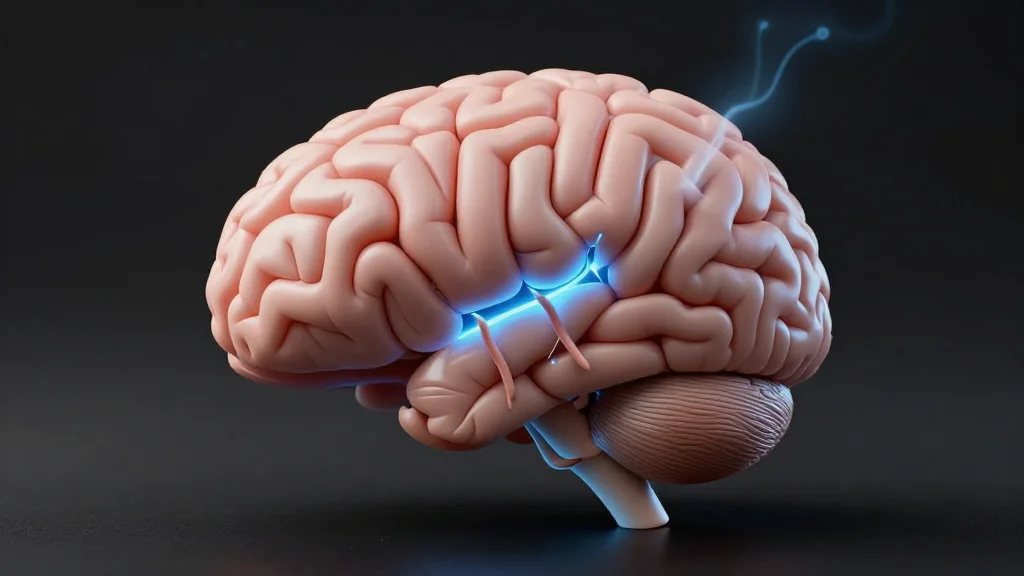
Excitatory Synapses Onto Axonic Spines Jump-Start Action Potentials and Route Information Flow
Companies Mentioned
Why It Matters
By revealing a previously unknown excitatory gateway at the axon initial segment, the work reshapes our understanding of how cortical networks initiate and modulate spikes, with implications for disease modeling and therapeutic targeting.
Key Takeaways
- •Axonic spines receive excitatory inputs that can initiate action potentials
- •Synaptic activation accelerates spike onset, shaping cortical information flow
- •Findings link axo‑axonic excitation to disorders like schizophrenia
- •Data and analysis code are publicly available for replication
Pulse Analysis
The axon initial segment (AIS) has long been viewed as a purely inhibitory hub, dominated by chandelier cell inputs that dampen neuronal output. This new study overturns that paradigm by documenting excitatory synapses on tiny axonic spines that sit directly on the AIS. By coupling high‑resolution two‑photon microscopy with in‑vitro electrophysiology, the authors demonstrated that a single excitatory event can lower the threshold for action‑potential generation, effectively acting as a rapid "starter" for neuronal firing. This mechanistic insight clarifies how cortical circuits achieve precise timing and suggests that excitatory AIS inputs may serve as a fine‑tuning knob for information routing across brain regions.
Beyond basic neuroscience, the discovery has translational relevance. Axo‑axonic excitation appears to intersect with pathways implicated in neuropsychiatric disorders, especially schizophrenia, where altered chandelier cell function and AIS plasticity have been reported. By linking excitatory AIS inputs to altered spike dynamics, the work provides a concrete target for future pharmacological or gene‑therapy approaches aimed at restoring balanced excitation‑inhibition. Moreover, the open‑source code repository on GitHub enables other labs to apply the analytical pipeline to disease models, accelerating the validation of therapeutic hypotheses.
The authors’ commitment to data transparency—making raw electrophysiological recordings and imaging datasets available on request—sets a benchmark for reproducibility in high‑impact neuroscience. As computational models increasingly incorporate subcellular detail, the detailed morphological and functional parameters supplied here will improve the fidelity of large‑scale simulations of cortical processing. In sum, the study not only expands the anatomical map of excitatory connections but also opens new avenues for understanding and intervening in brain disorders that hinge on precise spike initiation.
Excitatory synapses onto axonic spines jump-start action potentials and route information flow
Comments
Want to join the conversation?
Loading comments...