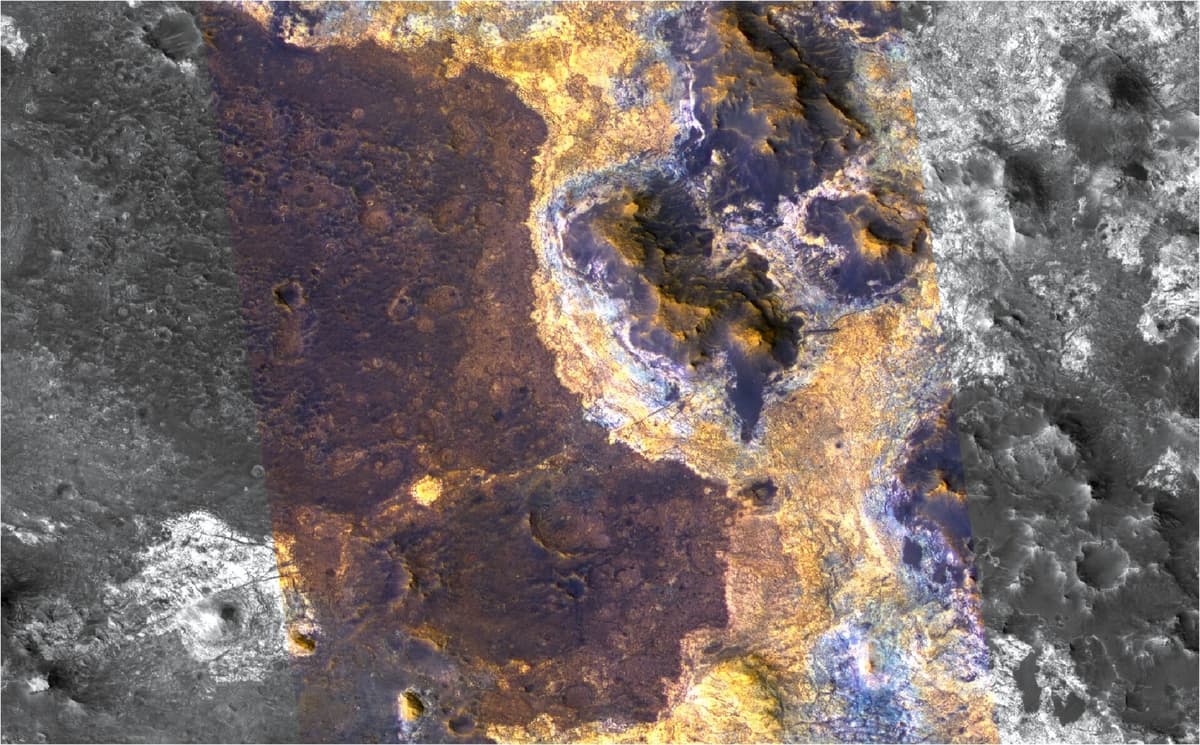
ExoMars Rover Targets Vast Bed of Clay in Search for Life
Why It Matters
Understanding the scale and timing of Mars’ ancient water activity reshapes models of the planet’s climate and habitability, directly guiding the ExoMars rover’s life‑detection strategy.
Key Takeaways
- •Clay deposits span 600 km from Oxia Planum to Mawrth Vallis.
- •Study suggests a deep ancient ocean shaping regional clay layers.
- •Oxia Planum clays date to ~4 billion years, older than Mawrth Vallis.
- •Orbital data reveal a paleosurface indicating a pause in sedimentation.
- •Rosalind Franklin rover will drill 2 m to test for biosignatures.
Pulse Analysis
The discovery of a continuous clay belt linking Oxia Planum and Mawrth Vallis marks a watershed in Martian geology. Using ESA’s OMEGA spectrometer and NASA’s CRISM data, researchers mapped mineral layers that extend across a 600‑kilometre corridor, far larger than previously recognized. This continuity implies that a substantial body of water—potentially a deep ocean or extensive groundwater system—once inundated the region, depositing clays that have survived for billions of years. The identification of a paleosurface between two major clay units further suggests a distinct pause in sedimentation, hinting at episodic climate shifts during Mars’ early history.
If an ancient ocean existed, its implications for Mars’ climate models are profound. A kilometre‑deep sea would have provided a stable, warm environment capable of sustaining chemical gradients conducive to life, aligning with recent theories of intermittent wet periods on early Mars. Comparisons with other water‑rich sites, such as Gale crater and Jezero basin, show that Oxia Planum’s clays are among the oldest, offering a unique window into the planet’s primordial conditions. This broader water narrative strengthens the case for a globally habitable epoch, reshaping expectations for where biosignatures might be preserved.
The ExoMars Rosalind Franklin rover is now poised to test these orbital insights on the ground. Equipped with high‑resolution cameras, spectrometers, a ground‑penetrating radar, and a drill that reaches two metres, the rover can analyze the mineralogy, chemistry, and potential organic remnants within the clay layers. By directly sampling the oldest deposits, scientists aim to confirm the ocean hypothesis and assess whether the ancient seabed hosted microbial life. Successful detection of biosignatures would not only validate the mission’s objectives but also redefine humanity’s understanding of life’s potential beyond Earth, influencing future exploration strategies and international collaboration.
ExoMars rover targets vast bed of clay in search for life
Comments
Want to join the conversation?
Loading comments...