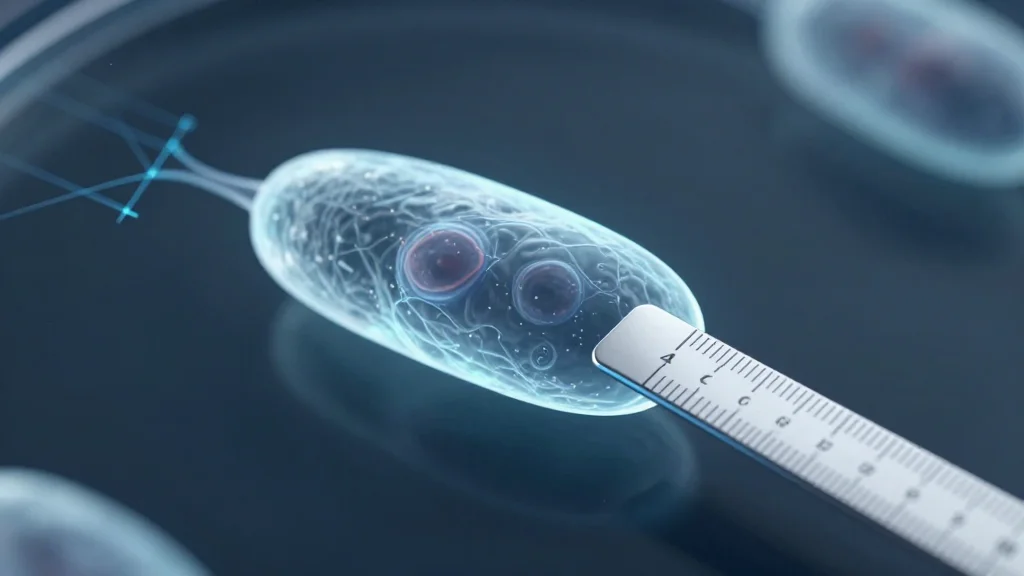
Expansion Microscopy Tool Kit Corrects Distortion of Blown-Up Cells
Why It Matters
Accurate, quantitative expansion microscopy transforms routine imaging into a high‑precision analytical tool, expanding its utility across biomedical research and reducing reliance on costly super‑resolution platforms.
Key Takeaways
- •Nanoscale protein cages serve as internal expansion rulers
- •Tool kit corrects uneven swelling, enabling quantitative 3‑D imaging
- •Achieved ~1,000‑fold gel expansion, 10‑fold linear magnification
- •Resolved endosome cargo trafficking previously invisible at diffraction limit
- •Technique compatible with Airyscan confocal, rivaling super‑resolution methods
Pulse Analysis
Expansion microscopy (ExM) has emerged as a practical way to bypass the diffraction limit by physically enlarging biological specimens within a swellable hydrogel. While the method can increase apparent size by up to a thousand‑fold, uneven expansion of subcellular structures—especially organelles such as endosomes and mitochondria—has limited its quantitative reliability. Researchers have struggled to determine the local expansion factor, which can vary across a cell and distort measurements of size, shape, and protein distribution. Addressing this variability is essential for turning ExM from a qualitative visual tool into a rigorous analytical platform.
The new toolkit introduced by Jayasinghe, Shakespeare and colleagues solves the problem by embedding genetically encoded protein nanocages that act as nanoscale rulers. These soccer‑ball‑shaped cages expand in lockstep with nearby organelles, providing a built‑in reference for each region of the sample. Coupled with custom image‑analysis software, the system automatically calculates local distortion and reconstructs a corrected three‑dimensional model. In practice, the authors demonstrated 10‑fold linear magnification and the ability to track endosomal cargo and surface protein clustering with sub‑100‑nanometer precision, a level previously unreachable with conventional microscopy.
The implications extend beyond basic cell biology. By delivering super‑resolution quality without expensive hardware, the toolkit lowers the barrier for labs to study nanoscale processes such as viral entry, synaptic vesicle dynamics, or drug‑target interactions. Its compatibility with existing Airyscan confocal setups means institutions can upgrade their imaging pipeline with minimal capital outlay. As the method is adaptable to genetically tractable organisms and potentially to tissue sections, it could accelerate discoveries in neuroscience, immunology and precision medicine, positioning ExM as a cost‑effective competitor to STED, PALM and other high‑end techniques.
Expansion microscopy tool kit corrects distortion of blown-up cells
Comments
Want to join the conversation?
Loading comments...