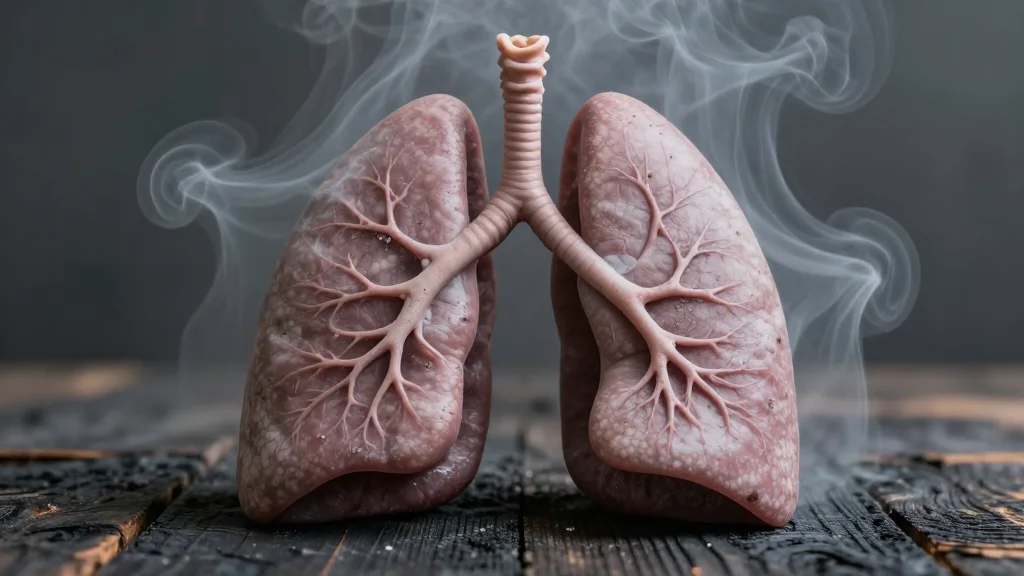
Exposure to Wildfire Smoke May Be Linked to Increased Risk of Developing Several Cancers
Why It Matters
The research shows chronic wildfire smoke is a systemic carcinogen, expanding public‑health concerns and prompting policymakers to consider air‑quality regulations and cancer‑screening strategies in fire‑prone areas.
Key Takeaways
- •Wildfire smoke PM2.5 increase raises lung cancer risk by 92%.
- •Bladder cancer risk jumps 249% per µg/m³ wildfire PM2.5.
- •Study links smoke exposure to colorectal, breast, and blood cancers.
- •Risk rises even at low average exposure (0.37 µg/m³).
- •Findings urge broader health policies for wildfire‑prone regions.
Pulse Analysis
Wildfires are becoming a defining feature of the climate‑change era, delivering plumes of fine particulate matter that routinely breach clean‑air standards. Historically, public‑health alerts have focused on short‑term respiratory and cardiovascular spikes during fire events. The new AACR‑presented analysis, however, adds a longer‑term dimension: chronic inhalation of wildfire‑derived PM2.5 may act as a systemic carcinogen, raising the stakes for communities living under recurrent smoke clouds.
The investigation leveraged the Prostate, Lung, Colorectal, and Ovarian (PLCO) Cancer Screening Trial, tracking 91,460 U.S. adults with no prior cancer diagnoses. Researchers matched participants' residential addresses to satellite‑derived PM2.5 and black‑carbon data, calculating 36‑month moving averages and plume‑day counts. Statistical models revealed a linear, dose‑responsive rise in cancer incidence: a 1 µg/m³ increase in wildfire PM2.5 translated to 92% higher lung cancer risk, 131% for colorectal, 109% for breast, 249% for bladder, and 63% for blood cancers. These associations persisted even at median exposure levels of just 0.37 µg/m³, underscoring that modest, chronic smoke exposure can be consequential.
The implications are twofold. First, health agencies must expand monitoring frameworks to capture long‑term oncologic outcomes linked to air‑quality events, integrating wildfire smoke metrics into cancer‑risk assessments. Second, policymakers may need to revisit emissions standards and land‑management practices, recognizing that wildfire mitigation is also cancer prevention. Future research should dissect regional variations in smoke composition and explore indoor‑air filtration as a protective measure. As fire seasons lengthen, the intersection of climate, air pollution, and oncology will demand coordinated action across public‑health, environmental, and regulatory domains.
Exposure to wildfire smoke may be linked to increased risk of developing several cancers
Comments
Want to join the conversation?
Loading comments...