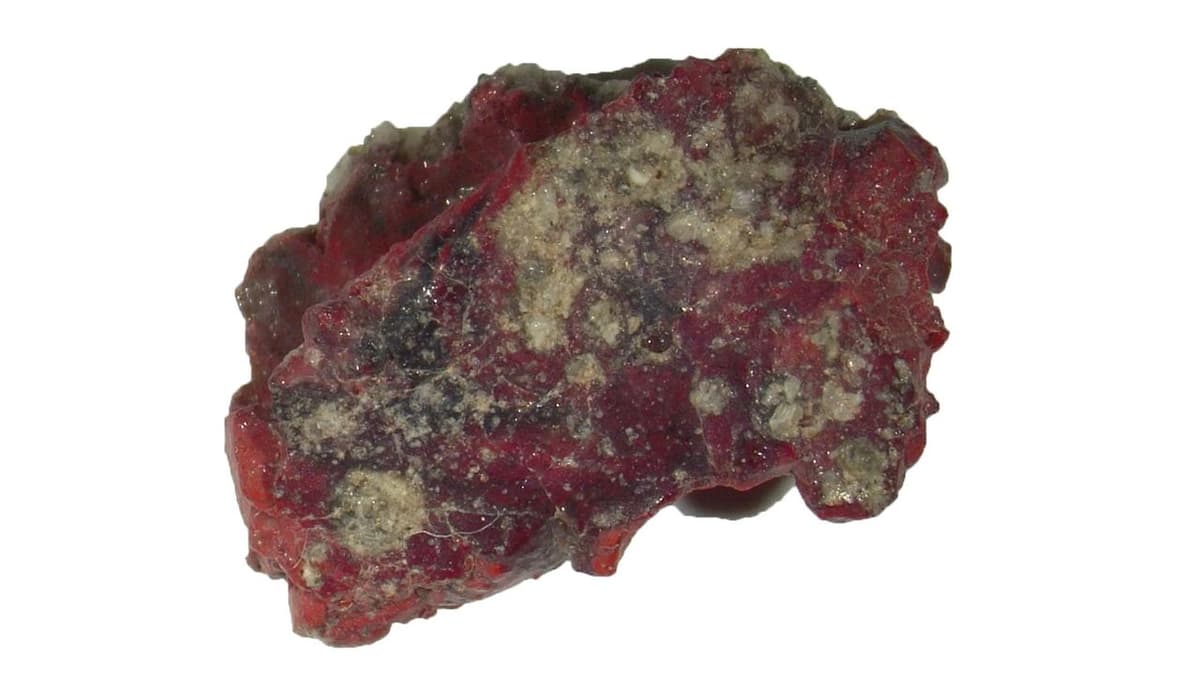
'Extreme' Crystal that Formed in 1945 Nuclear Bomb Test Is Unlike Anything Scientists Have Seen
Why It Matters
The find reveals that nuclear detonations can create mineral structures unattainable in conventional labs, opening new avenues for materials science and deep‑earth geology research. It also provides a natural analogue for studying matter behavior under pressures comparable to those deep within planetary interiors.
Key Takeaways
- •New Ca–Cu–Si clathrate discovered in red trinitite
- •Crystal formed under 2,700 °F and 8 GPa conditions of Trinity test
- •First clathrate identified as byproduct of a nuclear explosion
- •Findings broaden known mineral phases beyond laboratory synthesis limits
Pulse Analysis
The Trinity test’s unprecedented energy release forged a glassy matrix that captured metallic debris, creating a unique environment for exotic mineral formation. By examining an "oxblood" variant of trinitite, scientists uncovered a silicon‑based clathrate—a cage‑like crystal that entraps copper and calcium atoms. This structure, never seen in nature before, demonstrates how rapid, high‑temperature, high‑pressure events can push atoms into configurations that defy ordinary thermodynamic pathways.
Clathrates are typically associated with organic compounds like methane hydrates, yet this inorganic Ca–Cu–Si variant challenges that paradigm. Its 12‑ and 14‑sided lattices suggest a level of structural complexity achievable only when temperatures soar above 1,500 °C and pressures rival those at the base of the continental crust. For materials scientists, the crystal offers a blueprint for synthesizing novel compounds with potentially unique electronic or catalytic properties, prompting interest in replicating similar conditions through shock‑wave experiments or laser‑driven compression.
Beyond the laboratory, the discovery informs planetary geology by providing a natural analog for mineral phases that may arise during meteorite impacts or volcanic super‑eruptions. Understanding how extreme events generate such minerals helps refine models of crustal evolution on Earth and other rocky bodies. As researchers continue to mine historic nuclear sites for hidden phases, the Trinity clathrate underscores the broader scientific value of studying humanity’s most destructive experiments for peaceful, knowledge‑driven outcomes.
'Extreme' crystal that formed in 1945 nuclear bomb test is unlike anything scientists have seen
Comments
Want to join the conversation?
Loading comments...