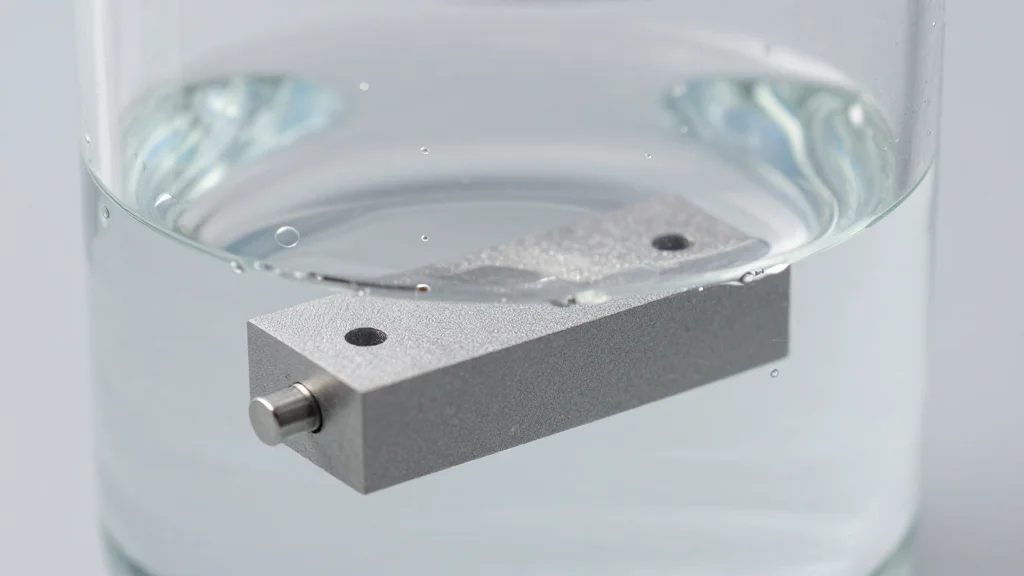
Fabrication of Fluorine Doped Ti/SnO2-Sb/α-PbO2/F-Doped Β-PbO2 Electrode and Optimized Treatment of Dye Wastewater Using Response Surface Methodology in Plate and Frame Electrolytic Cell
Why It Matters
The energy reduction makes electrochemical oxidation competitive for large‑scale textile wastewater treatment, supporting cost‑effective, greener manufacturing processes.
Key Takeaways
- •Fluorine‑doped β‑PbO₂ electrode reaches 1.81 V OEP
- •Accelerated electrode life extends to 32 hours
- •Optimized conditions lower energy to 4.60 kWh/ton
- •NSGA‑III algorithm yields precise multi‑objective solution
Pulse Analysis
Electrochemical oxidation has long been touted as a promising route for treating dye‑laden wastewater, yet high power consumption has limited its commercial uptake. Textile mills generate billions of gallons of effluent containing recalcitrant colorants such as methylene‑blue, which resist conventional biological treatment. By focusing on the electrode—the heart of the oxidation cell—researchers aim to boost catalytic activity while curbing the voltage required for oxygen evolution, directly addressing the energy bottleneck that has stalled broader adoption.
In the new study, a fluorine‑doped β‑PbO₂ electrode was engineered through precise NaF doping, achieving an oxygen evolution potential of 1.81 V and an accelerated durability of 32 hours—metrics that surpass many traditional PbO₂ designs. The fluorine atoms modify the electrode’s surface chemistry, enhancing electron transfer and suppressing corrosion. These improvements translate into higher decolorization efficiencies for methylene‑blue, positioning the material as a viable candidate for continuous‑flow plate‑frame cells used in industrial settings.
Beyond material innovation, the team applied a response‑surface methodology coupled with the NSGA‑III multi‑objective algorithm to fine‑tune operational parameters. The resulting quadratic models, with adjusted R² exceeding 0.99, reliably predict both decolorization rates and energy draw. The optimal condition—9.37 mA cm⁻² current density, 0.025 M electrolyte, pH 6.37, and a 10‑minute run—cuts energy consumption to just 4.60 kWh per ton of wastewater, a figure competitive with advanced oxidation processes. This integrated approach of electrode engineering and data‑driven optimization offers a scalable blueprint for the textile industry to meet tightening environmental regulations while lowering operating costs.
Fabrication of Fluorine Doped Ti/SnO2-Sb/α-PbO2/F-doped β-PbO2 Electrode and Optimized Treatment of Dye Wastewater Using Response Surface Methodology in Plate and Frame Electrolytic Cell
Comments
Want to join the conversation?
Loading comments...