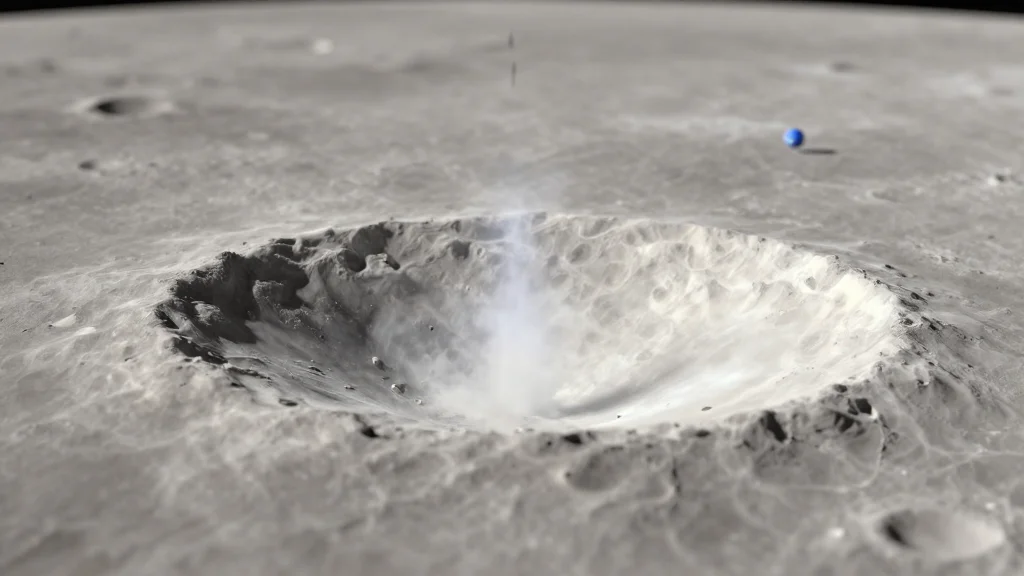
Falcon 9 Upper Stage to Hit the Moon in August
Companies Mentioned
Why It Matters
The impact provides a rare scientific chance to study high‑speed lunar collisions while highlighting the need for improved debris monitoring as commercial missions proliferate. It also raises policy questions about the long‑term stewardship of lunar space.
Key Takeaways
- •Falcon 9 upper stage to strike Moon on Aug 5 2026, 02:44 ET
- •Impact speed estimated at 5,400 mph (1.5 mi/s) on lunar surface
- •Solar radiation pressure creates primary uncertainty in impact timing/location
- •LRO will attempt post‑impact imaging despite daylight conditions
- •Event highlights tracking challenges of long‑term space junk
Pulse Analysis
Commercial interest in the Moon has surged, with firms like Firefly and Ispace deploying landers via Falcon 9 rockets. While the payloads achieve their missions, the discarded upper stages remain in Earth‑Moon space for years, gradually drifting under gravitational forces. The predicted August 2026 impact marks one of the first documented cases where a spent launch vehicle will collide with the lunar surface, offering a tangible reminder that the burgeoning lunar economy must account for its own waste.
Predicting the exact point of impact involves more than simple orbital mechanics. Bill Gray’s analysis combines publicly released U.S. satellite tracking data with custom software that models perturbations such as solar radiation pressure—a subtle but cumulative force that can shift an object’s path over months. Although the stage’s trajectory is largely deterministic, the tumbling motion and varying reflectivity introduce uncertainty, limiting the forecast to a narrow time window rather than a pinpoint location. This illustrates the technical limits of current debris‑tracking capabilities and the importance of continuous observation.
For scientists, the collision is a valuable experiment. The Lunar Reconnaissance Orbiter’s high‑resolution cameras can capture the fresh crater, providing data on impact dynamics at speeds exceeding 5,000 mph. Such observations improve models of lunar surface evolution and inform future mitigation strategies. At a policy level, the event may accelerate discussions on end‑of‑life protocols for lunar‑bound hardware, encouraging designers to incorporate de‑orbiting or passivation measures that reduce the long‑term debris burden on both Earth and the Moon.
Falcon 9 upper stage to hit the Moon in August
Comments
Want to join the conversation?
Loading comments...