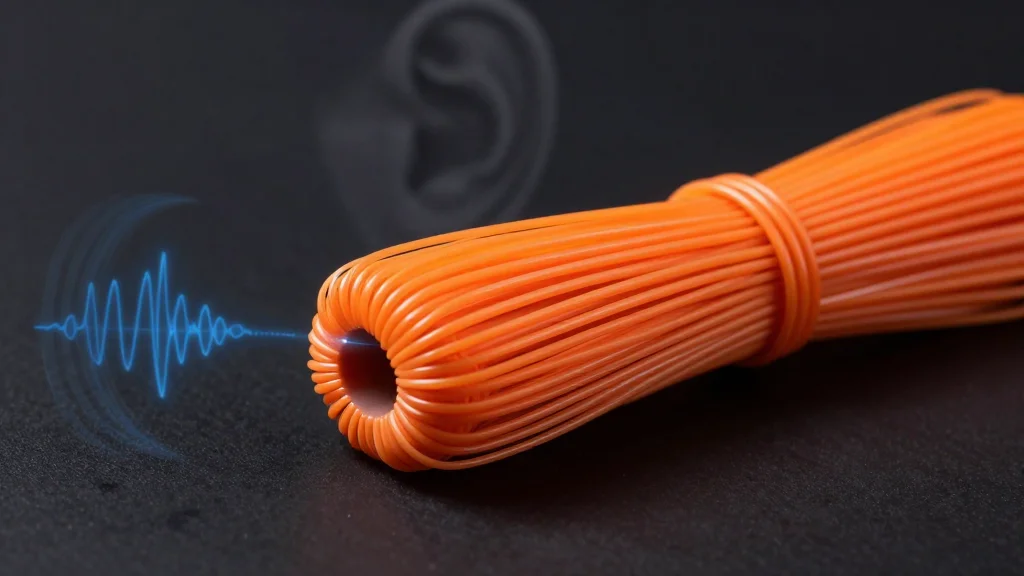
Fiber Optic Cables Can Eavesdrop on Nearby Conversations
Why It Matters
The finding exposes a hidden privacy vulnerability in global fiber infrastructure, prompting regulators and operators to reassess data‑security protocols. It also highlights potential military surveillance applications, influencing policy on undersea cable monitoring.
Key Takeaways
- •DAS can turn fiber cables into acoustic sensors detecting speech
- •Burial under 20 cm blocks speech detection in DAS
- •Deep‑sea DAS may capture submarine movements, raising security concerns
- •Researchers suggest filtering speech or avoiding coil data for privacy
- •Real-time transcription achieved using free AI tool Whisper
Pulse Analysis
Distributed acoustic sensing (DAS) repurposes ordinary fiber‑optic cables as a continuous line of vibration sensors. By sending laser pulses down the glass strand and analysing back‑scattered light, the system maps minute strain changes caused by seismic waves, traffic, or even human speech. The technique, originally developed for earthquake monitoring, has been adopted for infrastructure health, oil‑field surveillance, and coastal erosion studies because it offers kilometre‑scale coverage without installing separate sensors. Recent experiments show that the same data stream can be decoded into audible frequencies, turning a communication backbone into an inadvertent microphone.
The Vienna‑based study demonstrated that a speaker placed within five metres of a surface‑coiled fiber produced tones that were recognisable after minimal processing. Feeding the raw DAS trace into the open‑source Whisper model yielded accurate, real‑time transcripts of spoken sentences. However, the effect vanished when the cable was buried just 20 cm underground or when straight, non‑coiled fibres were used, indicating that only certain deployment configurations are vulnerable. The ability to eavesdrop on dark‑fiber networks raises privacy questions for telecom operators and data‑sharing initiatives, while military analysts warn that similar methods could detect submarines on undersea cables.
Geoscientists acknowledge the risk but argue that the scientific benefits outweigh the privacy concerns. Proposed mitigations include algorithmic suppression of speech frequencies, routine exclusion of coil‑derived data, and stricter access controls for raw DAS recordings. Industry stakeholders are likely to adopt these safeguards as regulatory scrutiny intensifies, especially in regions with stringent data‑protection laws. As AI transcription tools become more powerful and readily available, the line between passive sensing and active surveillance will continue to blur, prompting a broader dialogue about the ethical use of ubiquitous fiber‑optic infrastructure.
Fiber optic cables can eavesdrop on nearby conversations
Comments
Want to join the conversation?
Loading comments...