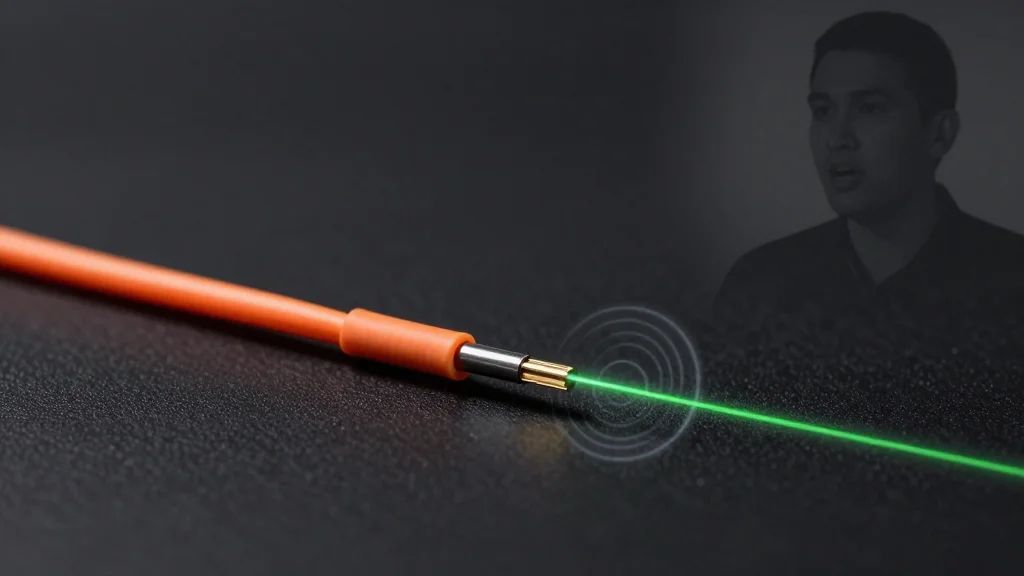
Fiber Optic Cables Can Eavesdrop On Nearby Conversations

Why It Matters
If ordinary telecom fibers can be turned into covert microphones, corporations and governments must reassess data‑center security and urban infrastructure privacy. The technique could enable new surveillance tools or, conversely, motivate standards to shield against acoustic leakage.
Key Takeaways
- •DAS converts fiber optics into long, continuous acoustic sensors.
- •AI transcription turned raw fiber data into real‑time speech text.
- •Speech detectable up to 5 m from coiled, surface‑exposed cables.
- •20 cm of soil or straight cable geometry blocks intelligibility.
- •Dark‑fiber networks may become unintended eavesdropping vectors.
Pulse Analysis
Distributed acoustic sensing (DAS) originated as a seismic monitoring tool, using laser pulses to interrogate tiny imperfections in glass fibers. When an earthquake or volcanic tremor strains the fiber, the reflected light shifts, allowing scientists to map subsurface activity over hundreds of kilometres. Over time, researchers discovered that the same principle captures any mechanical vibration, turning a single strand of cable into a continuous line of microphones capable of detecting traffic, footsteps, and even musical instruments.
At a recent European Geosciences Union assembly, a team from the University of Edinburgh demonstrated the privacy angle of DAS. By placing a speaker next to a coiled, surface‑exposed fiber, they recorded pure tones, music and human speech. Low‑frequency speech emerged directly from the raw data, while higher frequencies required modest post‑processing. Feeding the signal into Whisper, a free AI transcription engine, produced accurate, real‑time text. The method worked reliably within five metres; burying the cable under just 20 cm of soil or using straight cable runs essentially muffled the audio, indicating clear physical limits but also a realistic threat in densely cabled urban environments.
The implications for telecom operators and data‑center owners are profound. Millions of kilometres of “dark fiber”—unused strands that criss‑cross cities and oceans—could inadvertently become surveillance vectors if accessed by malicious actors with DAS equipment and AI tools. Industry standards may need to incorporate acoustic shielding, deeper burial depths, or active noise‑cancellation protocols. Meanwhile, regulators could consider privacy guidelines that treat acoustic leakage from fiber infrastructure similarly to audio recording laws, prompting a new wave of security investments and research into fiber‑optic hardening techniques.
Fiber Optic Cables Can Eavesdrop On Nearby Conversations
Comments
Want to join the conversation?
Loading comments...