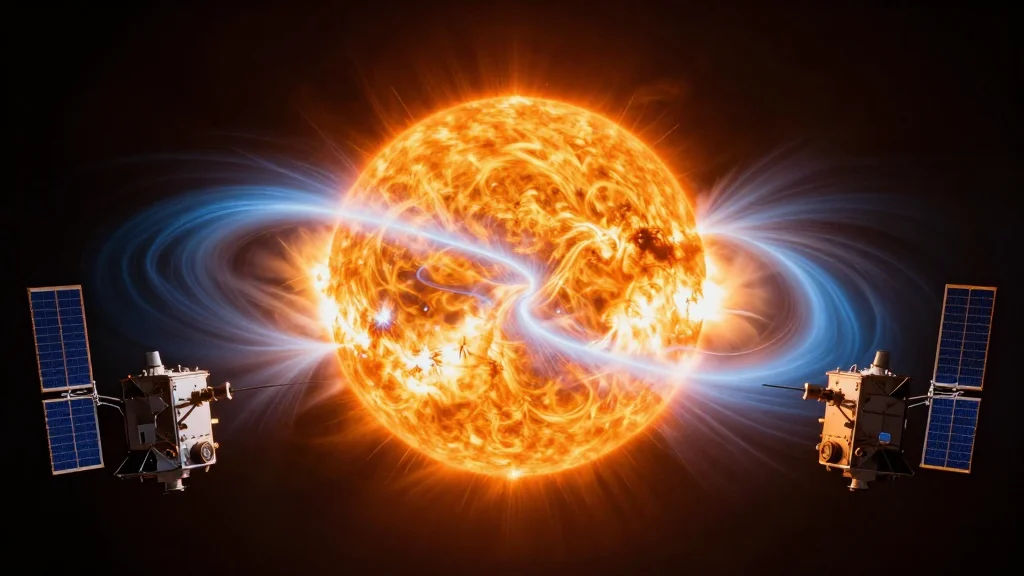
First Proba-3 Science: Surprisingly Speedy Solar Wind
Why It Matters
Understanding the early acceleration of solar wind improves space‑weather predictions that protect satellites, power grids, and astronaut safety.
Key Takeaways
- •Proba‑3 measured solar wind speeds near 800 km/s at 5 R☉
- •Observed acceleration exceeds predictions from standard Parker solar‑wind model
- •High‑resolution coronagraph images reveal fine magnetic structures driving plasma
- •Data will feed next‑generation space‑weather forecasting tools
Pulse Analysis
The European Space Agency’s Proba‑3 mission, a formation‑flying coronagraph composed of two microsatellites, was launched to study the Sun’s outer atmosphere with unprecedented detail. By keeping the spacecraft separated by 150 meters, the instrument can block the bright solar disk and image the faint corona, a technique previously limited to large, costly observatories. This innovative approach not only demonstrates the viability of low‑cost, high‑precision space optics but also opens the door for future constellations that could monitor solar activity continuously.
The first science results stunned researchers: plasma streams were recorded moving at roughly 800 km/s just five solar radii from the surface, a velocity far above the 400‑600 km/s range forecast by the classic Parker model. The high‑resolution images captured swirling magnetic loops and rapid reconnection events, suggesting that wave‑particle interactions and localized magnetic energy release accelerate the wind much earlier than thought. These observations challenge long‑standing assumptions about how the Sun’s magnetic field transfers energy to the surrounding plasma.
For the commercial and defense sectors, faster‑than‑expected solar wind has direct implications for space‑weather forecasting. Accurate predictions of geomagnetic storms are essential for protecting satellite constellations, GPS reliability, and terrestrial power grids. The Proba‑3 data will be integrated into next‑generation models, improving lead times for alerts and reducing economic losses from solar‑induced disruptions. Moreover, the mission’s success validates a cost‑effective platform that could be replicated for continuous monitoring, supporting both scientific discovery and the growing demand for resilient space infrastructure.
First Proba-3 Science: Surprisingly Speedy Solar Wind
Comments
Want to join the conversation?
Loading comments...