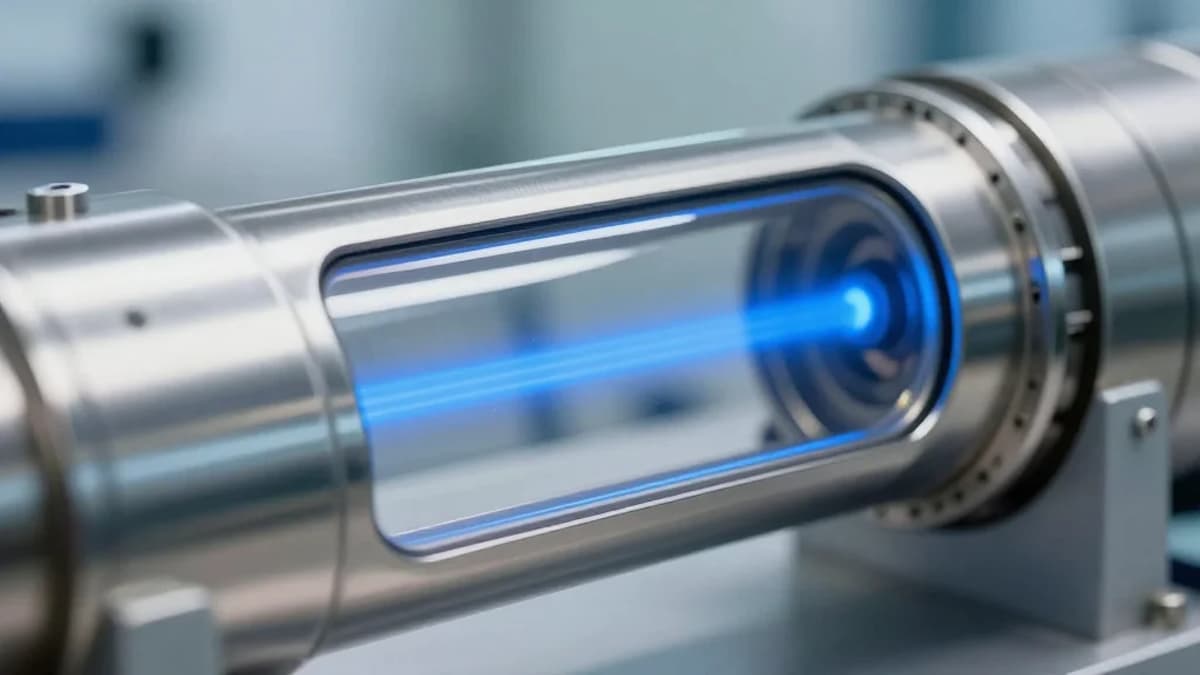
First Proton Beams Circulate in US Test Accelerator Built to Shape Future Colliders
•March 10, 2026
0
Why It Matters
Demonstrating controllable high‑intensity proton beams accelerates development of next‑generation colliders and neutrino experiments, while AI integration promises faster design cycles and cost reductions.
Key Takeaways
- •First proton beams circulated at Fermilab's FAST/IOTA test facility
- •Beam speed reaches 7% of light, enabling realistic tests
- •New injector combines low‑voltage source with RF quadrupole
- •AI optimization now drives half of accelerator R&D
- •Results will inform PIP‑II and future high‑intensity colliders
Pulse Analysis
The FAST/IOTA facility represents a strategic shift in accelerator research, offering a dedicated sandbox where high‑risk concepts can be vetted without disrupting the schedule of large‑scale machines. By isolating experimental hardware in a compact ring, Fermilab maintains its edge in high‑energy physics while fostering collaborations that span academia, national labs, and industry partners. This model mirrors a broader trend toward modular testbeds that accelerate innovation cycles across the particle‑physics community.
At the heart of the breakthrough is a newly installed proton injector that merges a low‑voltage source with a radio‑frequency quadrupole accelerator, delivering a beam that circulates at roughly 7% of light speed. This velocity provides a realistic proxy for the dynamics of full‑scale high‑intensity machines, allowing scientists to probe beam stability, magnet optics, and loss mitigation in real time. Simultaneously, artificial‑intelligence algorithms treat the accelerator as a black box, iteratively tuning parameters to maximize performance without exhaustive manual modeling, a practice that now underpins about half of the program’s R&D effort.
The implications extend well beyond the test hall. Insights gained will feed directly into Fermilab’s PIP‑II upgrade, which aims to boost proton power for the Deep Underground Neutrino Experiment and future collider concepts. By validating AI‑enhanced control strategies and novel magnet configurations early, the facility reduces development risk and cost for multi‑billion‑dollar projects worldwide. As global initiatives—such as the proposed Future Circular Collider—seek ever‑higher beam intensities, the FAST/IOTA achievements position the United States to influence design standards and supply chains for the next generation of particle accelerators.
First proton beams circulate in US test accelerator built to shape future colliders
0
Comments
Want to join the conversation?
Loading comments...