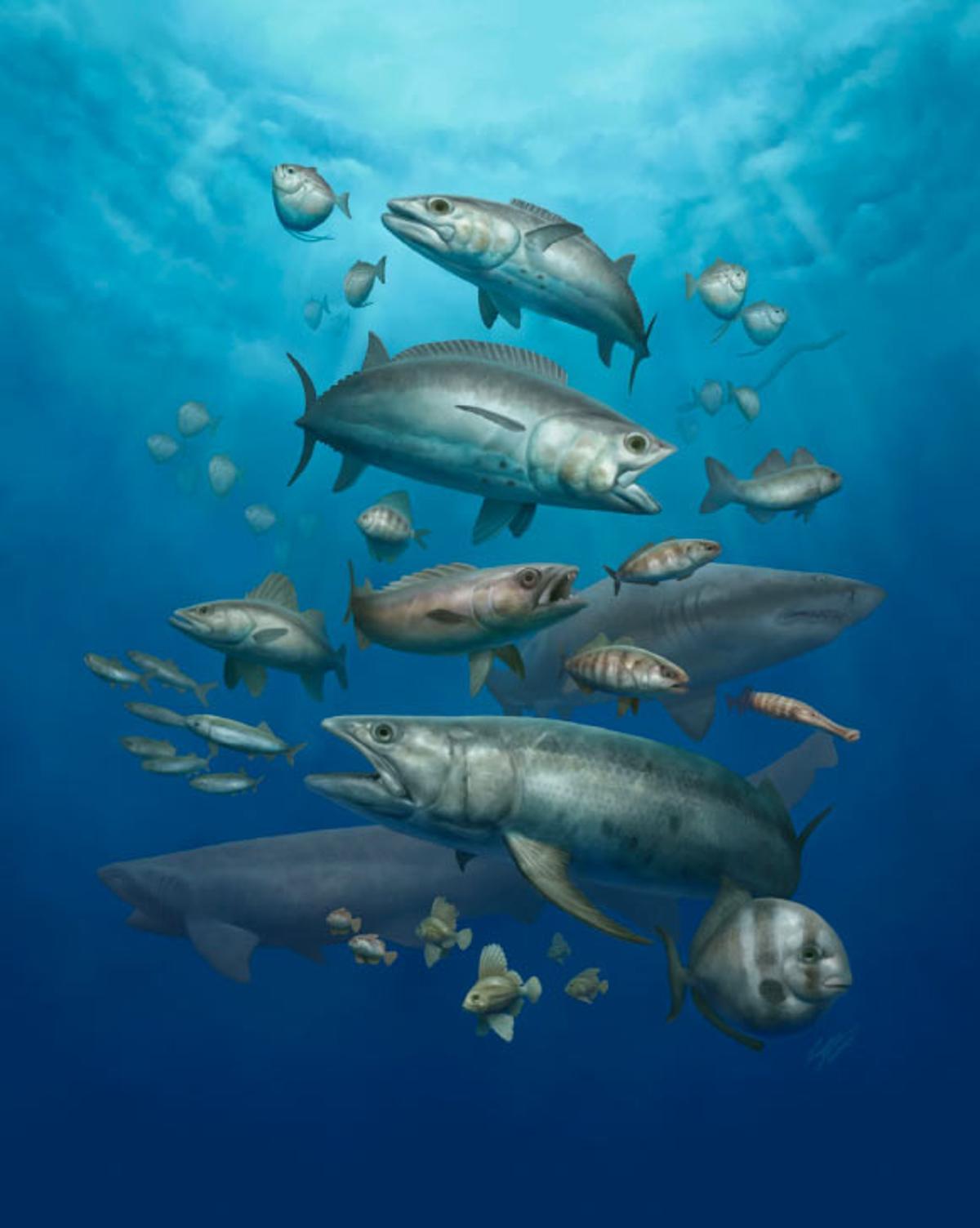
Fish Fossils From Early Paleocene Fill 10-Million-Year Gap After Dinosaur Extinction
Why It Matters
The discovery fills a 10‑million‑year gap—known as Patterson’s Gap—in the marine fossil record, confirming that many dinosaur‑era fishes went extinct while modern percomorphs quickly established themselves. This reshapes our understanding of how ocean ecosystems rebounded after the asteroid impact, with implications for studying rapid evolutionary recoveries.
Key Takeaways
- •Qreiya 3 site yields 21 fish species from 62.2 Ma.
- •First fossil skeletons of jack, moonfish, and pipefish discovered.
- •Findings confirm rapid rise of modern percomorphs after dinosaur extinction.
- •Early Paleocene fish diversity concentrated in tropical regions, later spreading globally.
Pulse Analysis
The end‑Cretaceous asteroid impact 66 million years ago erased roughly three‑quarters of terrestrial species and left a murky imprint on marine life. Paleontologists have long struggled with Patterson’s Gap, a ten‑million‑year interval in the early Cenozoic where fish fossils are scarce. The newly described Qreiya 3 lagerstätte in Egypt provides a rare, well‑preserved window into this missing chapter. By dating the sediment to 62.2 million years ago, the site bridges the chronological divide and offers concrete evidence of how oceanic communities reorganized in the immediate aftermath of the mass extinction.
The assemblage contains 21 distinct fish taxa spanning nine orders, with remarkable first‑record skeletons of jack (Carangidae), moonfish (Mola), and pipefish (Syngnathidae). Most specimens belong to percomorphs, a clade that dominates today’s seas but was only a minor component of Late Cretaceous ecosystems. Their sudden abundance at Qreiya 3 suggests a rapid evolutionary turnover, where extinct lineages were replaced by modern‑looking groups within a few million years. Moreover, the fauna shows a pronounced tropical concentration, implying that warm, equatorial waters acted as a cradle for the early diversification of these modern fish families.
These insights have far‑reaching implications for both paleobiology and contemporary climate studies. Understanding how marine ecosystems rebounded after a global catastrophe can inform models of resilience under current anthropogenic stressors such as ocean warming and acidification. The Qreiya 3 findings also prompt a reevaluation of the timing and pathways of percomorph radiation, encouraging targeted fieldwork in other understudied Paleocene deposits. As researchers continue to fill Patterson’s Gap, the emerging picture underscores the speed with which life can reorganize, offering a hopeful counterpoint to narratives of irreversible loss.
Fish Fossils from Early Paleocene Fill 10-Million-Year Gap after Dinosaur Extinction
Comments
Want to join the conversation?
Loading comments...