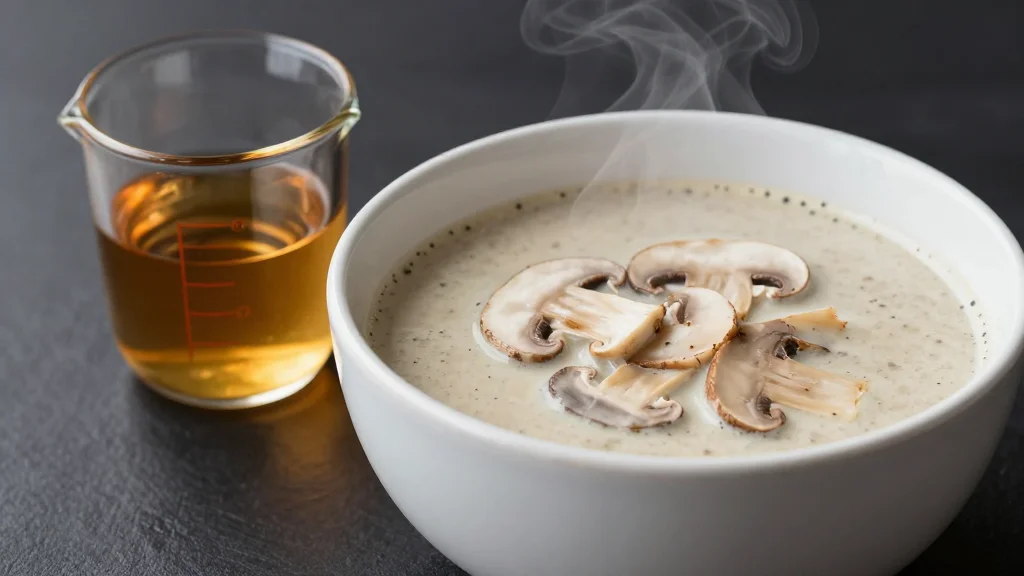
Flavoromics Approach Reveals the Dynamic Changes of Non-Volatile and Volatile Compounds in the Sarcodon Imbricatus Soup at Different Cooking Times
Companies Mentioned
Why It Matters
Understanding how cooking time reshapes taste‑active molecules enables food manufacturers to fine‑tune processing for optimal flavor and consumer appeal.
Key Takeaways
- •Free amino acids dip then rise, peaking after 150 min.
- •5′‑GMP increases with time, enhancing umami synergy.
- •Volatile aldehydes peak at 120 min, then decline.
- •Esters grow steadily, reaching maximum at 150 min.
- •Six C6‑C9 volatiles drive distinct flavor notes across stages.
Pulse Analysis
Flavoromics combines advanced analytical tools such as HS‑GC‑IMS, electronic noses, and multivariate statistics to map the molecular evolution of food during cooking. In this study, researchers applied a systematic workflow—sample preparation, amino‑acid and nucleotide quantification, volatile profiling, and data modeling—to dissect the complex chemistry of Sarcodon imbricatus soup. By converting raw sensor outputs into taste activity values (TAV) and relative odor activity values (ROAV), the team translated chemical changes into sensory relevance, offering a blueprint for similar investigations across culinary domains.
The results reveal a dynamic interplay between non‑volatile and volatile constituents. Free amino acids, especially umami drivers Asp and Glu, initially decline due to Maillard reactions before rebounding as prolonged heat hydrolyzes proteins. Meanwhile, 5′‑GMP rises, reinforcing umami perception despite low individual taste thresholds. Volatile analysis shows aldehydes such as (E)‑4‑heptenal and 1‑nonanal reaching a concentration apex at 120 minutes, delivering citrus‑like notes, whereas ketones and alcohols fade, and esters like ethyl acetate accumulate toward 150 minutes, adding sweet aromatics. Six C6‑C9 compounds—1‑octen‑3‑one, 1‑octen‑3‑ol, 1‑nonanal, 1‑octanal, 1‑hexanal, and related isomers—emerge as primary flavor discriminators, each linked to specific cooking intervals.
For the food industry, these insights translate into actionable processing guidelines. By targeting a 120‑minute cook, producers can maximize desirable aldehyde aromas while preserving umami‑enhancing nucleotides and amino acids. The methodology also supports product standardization, allowing manufacturers to replicate optimal flavor profiles at scale. Moreover, the identified key volatiles could serve as markers for quality control or as targets for natural flavor‑enhancement strategies, paving the way for innovative mushroom‑based soups and functional foods that meet evolving consumer taste expectations.
Flavoromics approach reveals the dynamic changes of non-volatile and volatile compounds in the Sarcodon imbricatus soup at different cooking times
Comments
Want to join the conversation?
Loading comments...