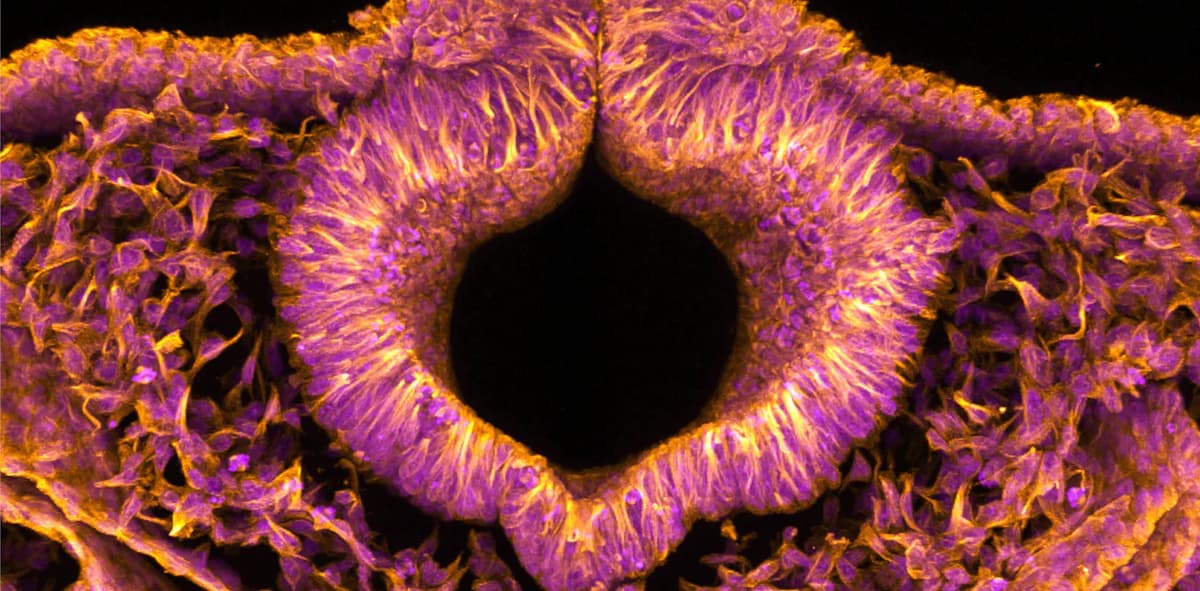
Fluorescent Quail Embryos Could Help Solve Serious Birth Defects in Humans
Why It Matters
Understanding the precise cellular cues that shape the neural tube can accelerate genetic screening and therapeutic strategies, potentially reducing the global burden of neural tube defects affecting hundreds of thousands of pregnancies each year.
Key Takeaways
- •Fluorescent quail embryos enable real‑time imaging of early spinal development.
- •PRICKLE1 loss disrupts up‑down cell signaling, causing neural tube defects.
- •Model bypasses limitations of mouse and human embryo observation.
- •Findings could guide genetic screening and new therapeutic targets for NTDs.
Pulse Analysis
Neural tube defects (NTDs) remain a leading cause of prenatal loss and lifelong disability, affecting an estimated 214,000 pregnancies worldwide annually. Traditional animal models, especially mice, struggle to reveal the earliest stages of spinal cord formation because the embryos develop in utero, limiting direct observation. Consequently, researchers have long sought a system that combines accessibility, rapid development, and physiological relevance to human spine formation. The fluorescent quail embryo meets these criteria, offering a transparent, egg‑bound platform where scientists can watch cells assemble the neural tube in real time, a feat previously impossible in mammalian models.
The breakthrough hinges on a genetically engineered quail line that expresses bright fluorescent tags in specific cellular components. Under confocal microscopy, individual cells can be followed as they migrate, communicate, and organize into the three‑segment spinal structure shared by birds and humans. By knocking out the PRICKLE1 gene, the team observed that cells lost their ability to distinguish dorsal‑ventral (up‑down) cues, even though left‑right signaling remained intact. This unexpected phenotype pinpoints a previously hidden role for PRICKLE1 in guiding cells along the dorsal‑ventral axis, a critical step whose failure leads directly to open neural tubes. Such granular insight into cell‑level dynamics reshapes our understanding of the molecular choreography underlying NTDs.
Beyond basic science, the fluorescent quail model opens practical pathways for translational research. It provides a rapid screening tool for candidate drugs or genetic interventions that can restore proper signaling pathways, accelerating preclinical pipelines. Moreover, the clarified function of PRICKLE1 offers a concrete target for genetic screening programs, enabling earlier identification of at‑risk pregnancies. As the model gains adoption, it could bridge the gap between laboratory discovery and clinical application, ultimately contributing to reduced incidence of spina bifida, anencephaly, and related disorders worldwide.
Fluorescent quail embryos could help solve serious birth defects in humans
Comments
Want to join the conversation?
Loading comments...