Former NASA Engineers Create Ingenious Way To Save Homes From Wildfires Using Noise

Companies Mentioned
Why It Matters
Acoustic fire suppression could give homeowners and fire departments a rapid, low‑cost tool to halt wildfire spread, potentially reducing property loss and insurance claims. Its safety profile and ease of deployment make it attractive for dense suburban areas vulnerable to ember‑driven fires.
Key Takeaways
- •Sonic Fire Tech uses low-frequency sound to extinguish flames
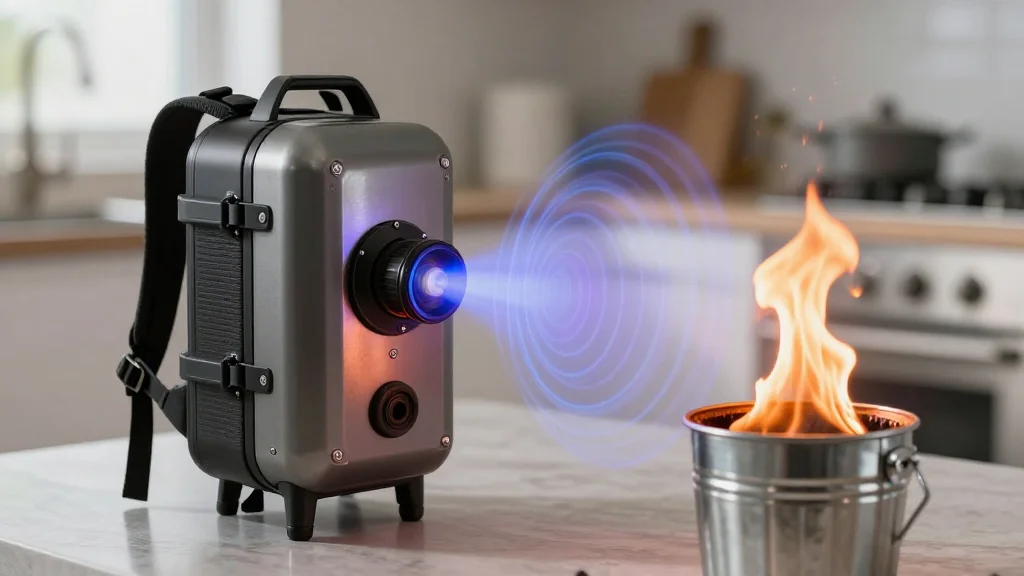
- •Tests showed backpack device suppressed shrub and stovetop fires
- •System can project sound up to 30 ft through home ducts
- •Sound waves target oxygen molecules, interrupting combustion chemistry
- •Technology is safe for humans and pets, no harmful emissions
Pulse Analysis
Wildfires are escalating in frequency and intensity, straining traditional suppression tactics that rely on water, foam or chemical retardants. Acoustic fire suppression, pioneered by former NASA engineers at Sonic Fire Tech, leverages physics rather than chemicals. By emitting low‑frequency sound that agitates oxygen molecules, the system disrupts the flame’s chemical chain reaction, effectively “snuffing” the fire. This principle, long studied in laboratory settings, is now being translated into a field‑ready device that can be carried by firefighters or installed in residential ventilation systems.
In recent field trials, a backpack‑mounted prototype successfully doused a shrub fire and a stovetop flare within seconds, demonstrating the technology’s rapid response and portability. The device can broadcast sound waves up to 30 feet, a range sufficient to cover most single‑family homes when routed through existing ductwork. Because the method relies on sound rather than water or chemicals, it leaves no residue, poses no toxicity risk, and is harmless to pets and occupants. Early adopters, such as the San Bernardino County Fire Department, are evaluating integration pathways that could augment existing fire‑suppression infrastructure, especially in high‑risk, ember‑laden communities.
Adoption hurdles remain, including certification by fire‑safety authorities, scalability of production, and public acceptance of a seemingly unconventional approach. Nonetheless, the potential economic impact is significant: insurers could see reduced claim payouts, municipalities might lower firefighting expenditures, and homeowners gain an additional layer of protection without major retrofits. As climate change fuels more aggressive fire seasons, acoustic suppression could become a pivotal component of a diversified fire‑mitigation strategy, reshaping how communities defend against the growing wildfire threat.
Former NASA Engineers Create Ingenious Way To Save Homes From Wildfires Using Noise
Comments
Want to join the conversation?
Loading comments...