Formicine Ants Produce Hidden Arsenal of Venom Peptides, Study Finds
Why It Matters
The discovery reveals hidden chemical complexity in a major ant subfamily, opening new avenues for antimicrobial drug development and deepening our understanding of social insect immunity. It signals that billions of insects may harbor novel bioactives with commercial and ecological relevance.
Key Takeaways
- •Researchers identified 35 new venom peptides across eight carpenter ant species
- •Peptides, named formicitoxins, show strong antifungal activity in lab tests
- •Formic acid still dominates venom, but peptides add lasting antimicrobial protection
- •Study suggests millions of undiscovered bioactives in over 3,700 Formicinae species
- •Proteotranscriptomic approach combined chemistry and genetics to map ant venom composition
Pulse Analysis
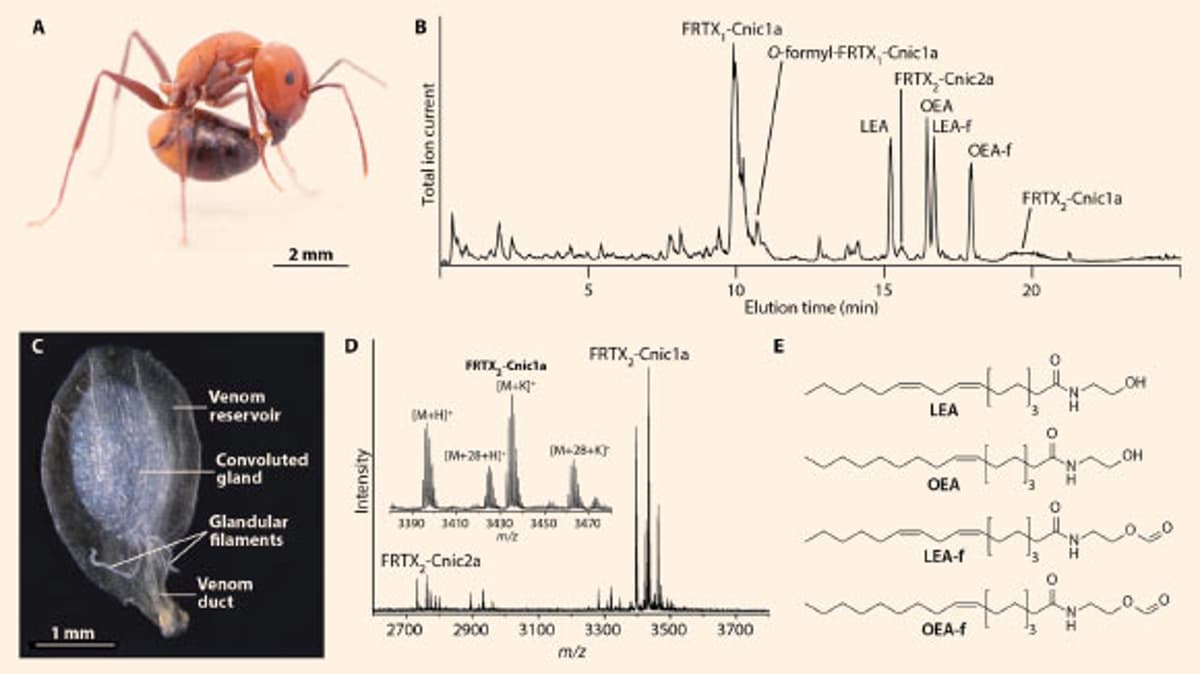
Ant venom research has traditionally focused on formic acid, the volatile compound that makes up the bulk of Formicinae secretions. This narrow view persisted because these ants lack a stinger and instead spray or smear their acidic fluid, leading scientists to assume acid alone handled all defensive and hygienic roles. The new study upends that paradigm by revealing a sophisticated peptide arsenal hidden beneath the acidic veil, highlighting how even well‑studied insects can surprise researchers with biochemical depth.
The research team employed a proteotranscriptomic pipeline, extracting both protein and RNA from the venom glands of eight geographically diverse carpenter ant species. By sequencing transcripts and matching them to mass‑spectrometry data, they identified two gene families responsible for 35 distinct peptides, dubbed formicitoxins. Laboratory assays demonstrated that several of these peptides inhibit fungal growth far more effectively than formic acid alone, suggesting a complementary, longer‑lasting antimicrobial shield for the colony. Ecologically, this dual‑mode defense—immediate acid burn followed by peptide‑mediated hygiene—helps maintain nest health in environments teeming with opportunistic microbes.
Beyond entomology, the discovery carries significant biotech implications. Ant‑derived antimicrobial peptides are a promising template for new antibiotics, especially as human pathogens develop resistance to conventional drugs. With over 3,700 Formicinae species worldwide, the chemical diversity hinted at by this work could translate into a pipeline of novel bioactive molecules for pharmaceuticals, agriculture, and material science. Future investigations will likely expand the peptide catalog, explore their mechanisms of action, and assess scalability for commercial development, positioning carpenter ant venom as an unexpected treasure trove for drug discovery.
Formicine Ants Produce Hidden Arsenal of Venom Peptides, Study Finds
Comments
Want to join the conversation?
Loading comments...