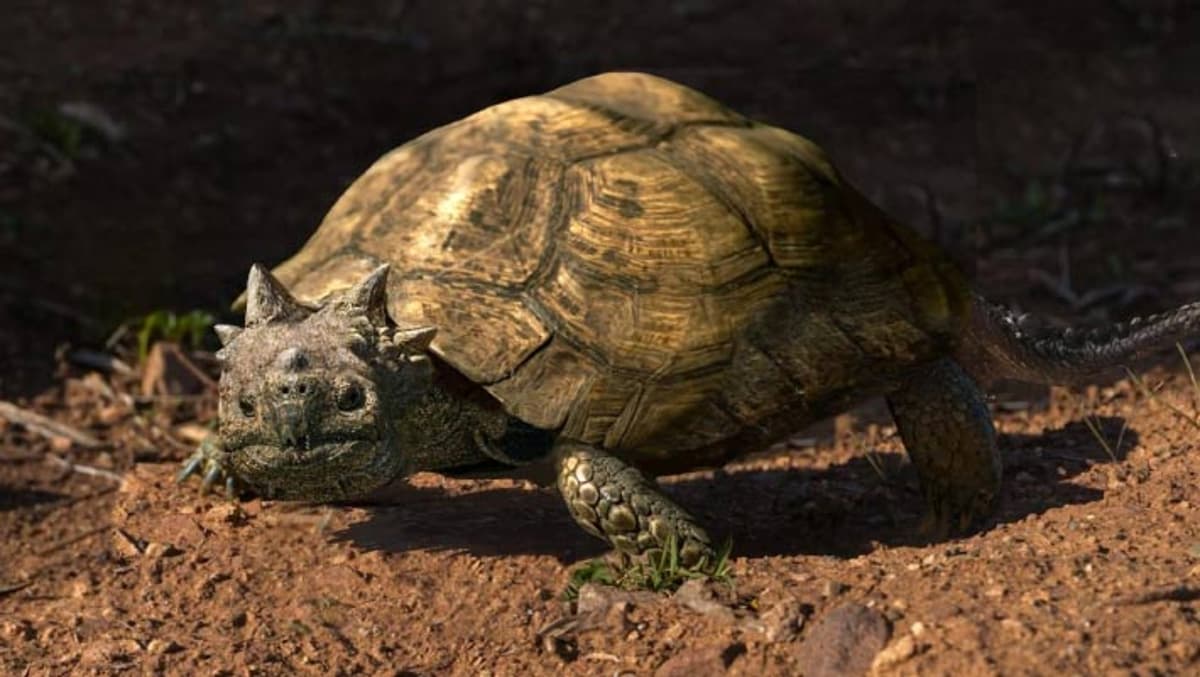
Fossil Discovery in Patagonia Reveals New Species of Horned Turtle
Why It Matters
The discovery reshapes our understanding of turtle diversity just before the K‑Pg extinction and suggests chelonian lineages persisted with limited turnover, informing broader models of survivorship during mass‑extinction crises.
Key Takeaways
- •Patagoniaemys aeschyli measured ~80 cm shell length.
- •Species lived 72‑67 million years ago in Late Cretaceous.
- •Findings suggest Patagonian turtles survived the K‑Pg extinction.
- •Discovery adds second meiolaniform lineage to Maastrichtian South America.
Pulse Analysis
The newly identified Patagoniaemys aeschyli enriches the fossil record of Late Cretaceous turtles in South America. Unearthed from Argentina’s Los Alamitos Formation, the specimen offers rare anatomical detail—skull base, shell fragments, vertebrae, and limb bones—allowing scientists to reconstruct its morphology. At roughly 80 cm in shell length, the turtle’s low, broad carapace contrasts with the more domed shells of later meiolaniforms, while its surface bears a pattern of pits and grooves that hint at defensive adaptations.
Beyond taxonomy, the find carries weight for extinction dynamics. By documenting a meiolaniform lineage that persisted into the Maastrichtian, the study provides concrete evidence that Patagonian turtles weathered the end‑Cretaceous asteroid impact with relatively low mortality. This resilience challenges the view that the K‑Pg event caused wholesale turnover among non‑avian reptiles, instead suggesting that certain ecological niches and geographic refugia—such as the southern Gondwanan landmasses—offered shelter. The continuity between Maastrichtian and Danian turtle assemblages underscores a broader pattern of chelonian stability during global crises.
The discovery also fuels ongoing debates about Gondwanan biogeography and the evolutionary pathways of armored turtles. As researchers compare Patagoniaemys with contemporaneous taxa like Niolamia and the Australian Meiolania, they can trace the dispersal and diversification of heavily armored turtles across southern continents. Future excavations in Patagonia and elsewhere may uncover additional specimens, refining timelines for meiolaniform evolution and enhancing predictive models of how modern reptiles might respond to rapid environmental change.
Fossil Discovery in Patagonia Reveals New Species of Horned Turtle
Comments
Want to join the conversation?
Loading comments...