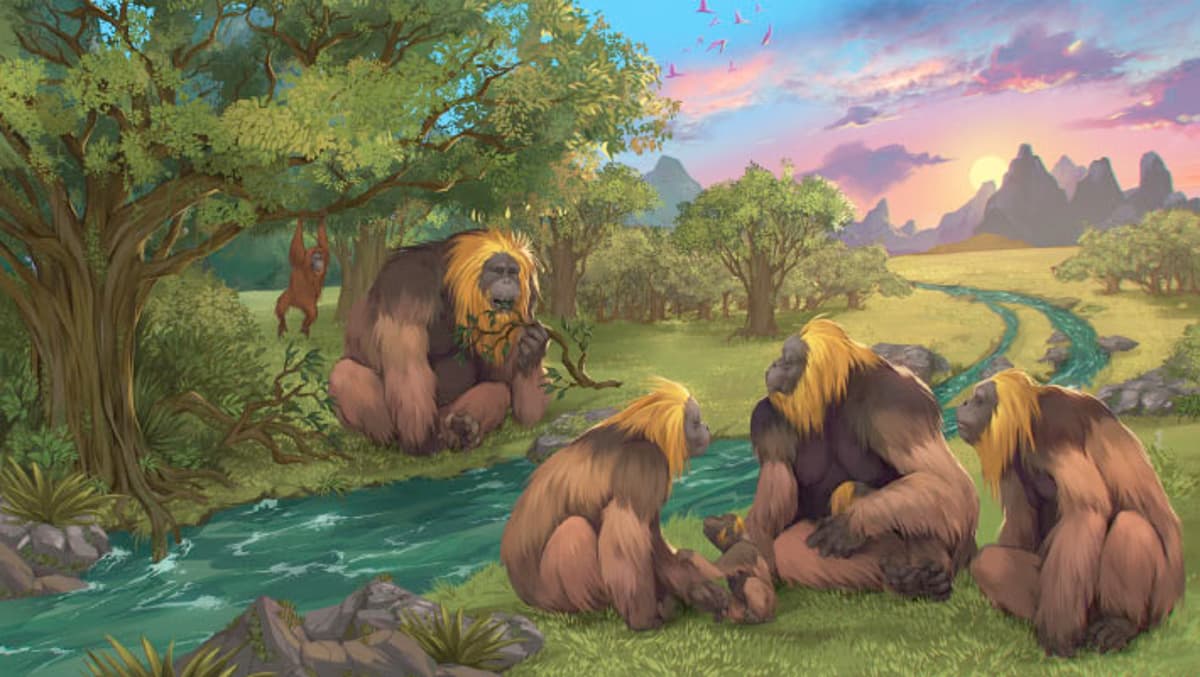
Fossils From Chinese Cave Fill Crucial Gap in History of Gigantopithecus Blacki
Why It Matters
The find bridges a 500,000‑year gap in Gigantopithecus fossils, illuminating how the giant ape adapted its diet and size during a period of cooling and drying. It also refines biostratigraphic dating methods for Southeast Asian Pleistocene sites.
Key Takeaways
- •Thirteen Gigantopithecus teeth found in Yanli Cave 1, Guangxi
- •Fossils date to Early‑Middle Pleistocene transition (1.2‑0.7 Ma)
- •Dental sizes show mix of early and later Gigantopithecus traits
- •Associated fauna, including two panda species, anchor precise biostratigraphic age
Pulse Analysis
Gigantopithecus blacki, the largest known primate, has long been known from isolated teeth and a few jaw fragments scattered across Southeast Asia. Standing up to three metres tall and weighing over 500 kg, the ape occupied dense forest habitats during the Pleistocene. Prior to this discovery, the fossil record was heavily weighted toward the Early Pleistocene, leaving a critical gap in our understanding of how the species responded to the dramatic climatic cooling that began around 1.2 million years ago. The new Yanli Cave assemblage provides a rare, well‑dated snapshot of the genus during that transition.
The teeth recovered exhibit a striking size gradient: some retain the smaller dimensions typical of early populations, while others approach the larger measurements seen in later specimens. This variation likely reflects dietary shifts as forest composition changed under cooler, drier conditions. The co‑occurrence of two distinct panda species—Ailuropoda wulingshanensis and A. m. baconi—offers a robust biostratigraphic marker, confirming the deposit’s placement within the Early‑Middle Pleistocene transition. Such precise dating is essential for correlating faunal changes across the region and for modeling how megafauna adapted to glacial cycles.
Beyond its immediate scientific value, the Yanli Cave find underscores China’s growing role as a hotspot for Pleistocene paleoanthropology. Together with earlier discoveries at Queque and Zhanwang caves, it establishes a network of sites that can be used to track evolutionary trends in Gigantopithecus and associated megafauna. Researchers can now explore questions about niche competition, migration patterns, and extinction drivers with greater confidence. As climate change continues to reshape ecosystems today, understanding past megafaunal responses offers a vital analog for predicting future biodiversity outcomes.
Fossils from Chinese Cave Fill Crucial Gap in History of Gigantopithecus blacki
Comments
Want to join the conversation?
Loading comments...