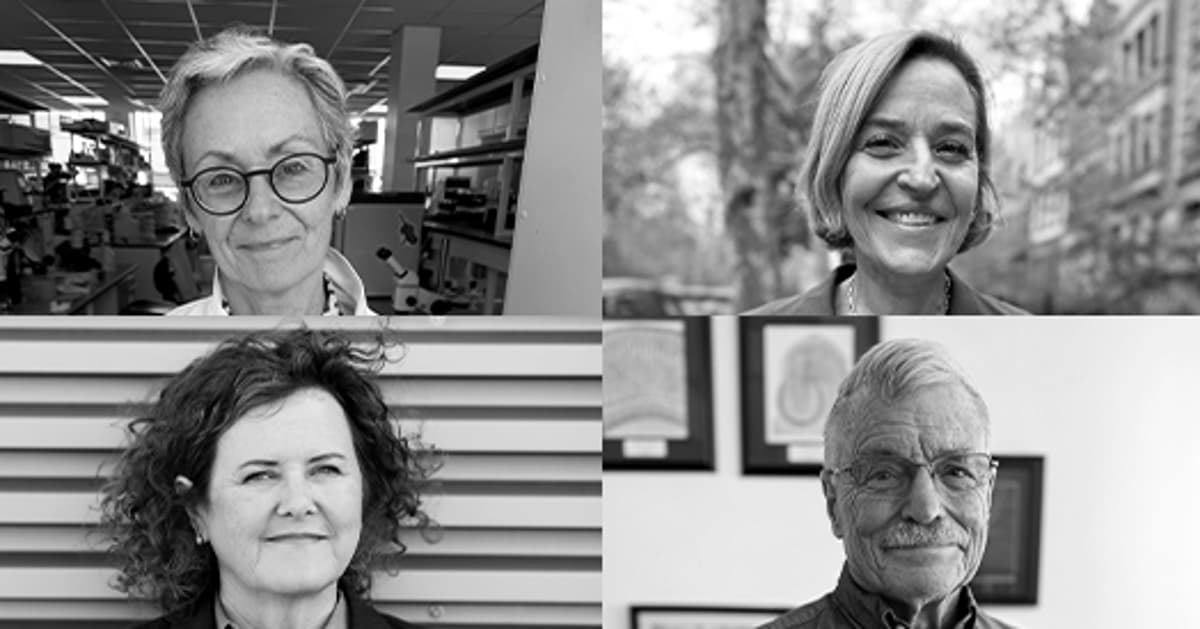
Four Protein Synthesis Pioneers Win Kavli Prize in Neuroscience
Why It Matters
Localizing protein synthesis reshapes our mechanistic view of learning, opening new avenues for treating memory disorders and neurodegeneration. The recognition signals broad funding and industry interest in targeting synapse‑specific pathways.
Key Takeaways
- •Local protein synthesis occurs in dendrites, axons, and synapses
- •Discovery reshapes understanding of memory and brain plasticity mechanisms
- •Kavli Prize awards $1 million to Holt, Martin, Schuman, Steward
- •Research enables synapse-specific regulation, advancing neurodegenerative disease studies
Pulse Analysis
The Kavli Prize, administered by the Norwegian Academy of Science and Letters, is one of the most prestigious biennial awards in neuroscience, recognizing breakthroughs that redefine the field. This year’s laureates dismantled a decades‑old dogma that protein synthesis was confined to the neuronal cell body. By proving that ribosomes and messenger RNAs operate in peripheral neuronal compartments, they revealed a decentralized mechanism that can rapidly modify synaptic strength, a cornerstone of learning and memory. The prize not only honors past achievements but also signals a broader shift toward investigating subcellular processes as therapeutic targets.
Christine Holt’s axon‑growth experiments, Oswald Steward’s electron‑microscopy of dendritic spines, Erin Schuman’s ribosome‑associated mRNA sequencing, and Kelsey Martin’s sea‑slug synapse imaging each contributed a piece of the puzzle. Their complementary approaches—ranging from live‑cell imaging to high‑throughput sequencing—demonstrated that neurons possess autonomous protein‑manufacturing hubs capable of responding to local activity cues. This autonomy explains how a single neuron, with one nucleus, can fine‑tune thousands of synapses independently, providing a molecular basis for experience‑dependent plasticity that was previously speculative.
Looking ahead, the confirmation of local translation opens fertile ground for drug development aimed at synapse‑specific modulation. Pharmaceutical pipelines are already exploring small molecules that influence ribosomal activity at dendritic sites, hoping to restore plasticity in Alzheimer’s disease or mitigate maladaptive changes in chronic pain. Moreover, the findings encourage investment in advanced imaging and single‑cell omics platforms, accelerating discovery across neurobiology and related biotech sectors. The Kavli recognition thus amplifies both scientific curiosity and commercial momentum, positioning local protein synthesis as a frontier of next‑generation neuroscience.
Four protein synthesis pioneers win Kavli Prize in Neuroscience
Comments
Want to join the conversation?
Loading comments...