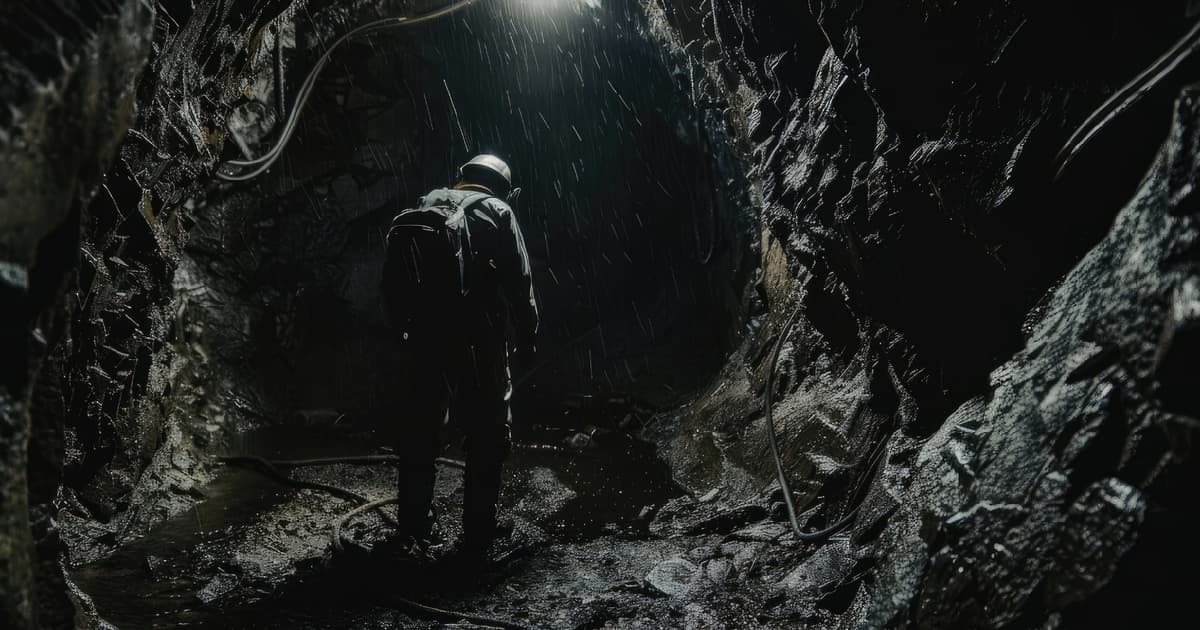
French Scientist Michel Siffre Spent Two Months Alone in a Cave with No Clock, No Calendar, and No Sunlight — and when His Team Finally Told Him the Experiment Was over, He Thought He Still Had Nearly a Month Left Underground
Why It Matters
The discovery of an autonomous internal clock reshaped our understanding of human biology, informing medical chronotherapy and the design of habitats for space missions where natural day‑night cycles are absent.
Key Takeaways
- •Siffre's sleep-wake cycle drifted to ~24.5 hours without external cues.
- •He misestimated elapsed time by 2–4 weeks, showing memory compression.
- •Experiment proved humans possess a free‑running internal circadian clock.
- •Findings spurred early chronobiology research and NASA interest in spaceflight.
- •Later isolation studies showed rhythms can drift up to 48‑hour cycles.
Pulse Analysis
Michel Siffre’s 1962 underground isolation was more than a curiosity; it provided the first concrete evidence that humans carry an internal timekeeper independent of external cues. By living in the darkness of the Scarasson glacier cave for roughly sixty days, Siffre’s body settled into a free‑running circadian rhythm that stretched to about 24.5 hours. This subtle drift, coupled with his dramatic underestimation of elapsed time, highlighted two distinct phenomena: the physiological persistence of a biological clock and the psychological compression of perceived duration when sensory input is stripped away.
The implications rippled through emerging scientific fields. Chronobiology, then a nascent discipline, gained a foundational experiment that proved the human circadian system is endogenous rather than purely learned. Researchers began probing how light, meals and social interaction act as "zeitgebers"—time‑givers—that reset the clock each day. NASA, anticipating the challenges of long‑duration spaceflight where day‑night cycles vanish, funded analyses of Siffre’s data to model astronaut sleep patterns and develop countermeasures for circadian desynchronization. In medicine, the insight that internal rhythms can drift without cues paved the way for chronotherapy, timing drug delivery to align with optimal physiological windows.
Siffre’s legacy endures in modern isolation studies and space analog missions. Subsequent cave experiments, including a six‑month stint in Texas, showed rhythms can swing toward 48‑hour cycles under extreme deprivation, underscoring the need for artificial zeitgebers in habitats beyond Earth. Today, wearable technology monitors personal circadian phases, and lighting design in offices and hospitals leverages Siffre’s findings to boost productivity and health. The two‑month darkness experiment remains a touchstone for understanding how we keep time when the world outside stops ticking.
French scientist Michel Siffre spent two months alone in a cave with no clock, no calendar, and no sunlight — and when his team finally told him the experiment was over, he thought he still had nearly a month left underground
Comments
Want to join the conversation?
Loading comments...