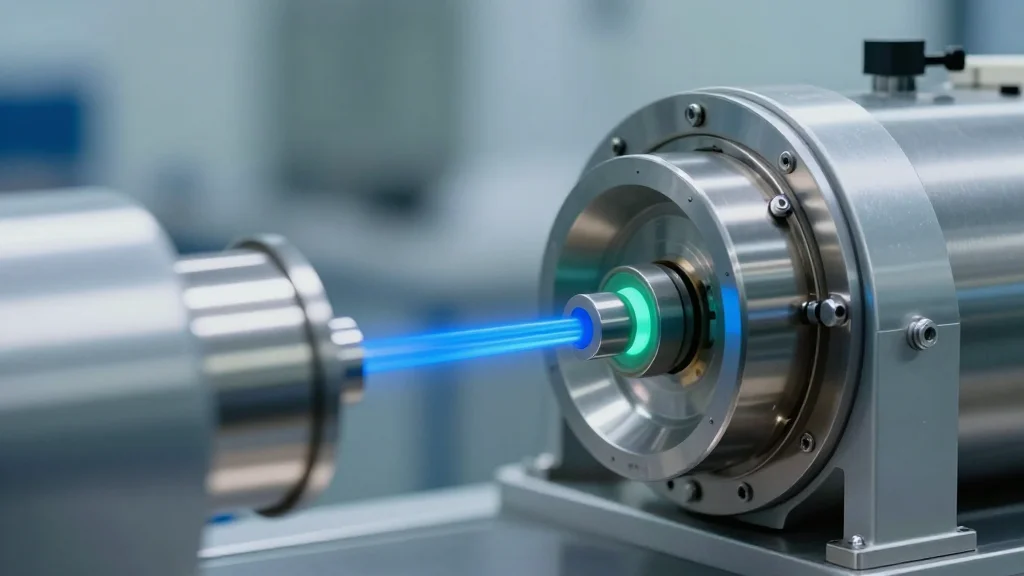
FRIB Directly Measures Arsenic‑73 Proton Capture, Halving P‑Nuclei Uncertainty

Why It Matters
Direct measurements of nuclear reactions that occur in extreme astrophysical environments have been a missing piece in the puzzle of element formation. By providing a concrete rate for the arsenic‑73 + proton reaction, the FRIB experiment validates a key step of the gamma‑process, allowing astronomers to refine models of supernova nucleosynthesis and better interpret spectroscopic data from ancient stars. Beyond astrophysics, the breakthrough demonstrates the power of next‑generation rare‑isotope facilities to study fleeting nuclei that exist for fractions of a second. This capability opens new avenues for research in fundamental nuclear physics, medical isotope production, and national security applications, reinforcing the strategic importance of sustained funding for large‑scale accelerator infrastructure.
Key Takeaways
- •First direct measurement of arsenic‑73 proton capture to selenium‑74 at FRIB.
- •Experimental uncertainty in gamma‑process models reduced by ~50%.
- •More than 45 scientists from 20 institutions participated.
- •Results published in *Physical Review Letters* on April 14, 2026.
- •Future FRIB campaigns will target additional p‑nuclei reactions.
Pulse Analysis
The FRIB breakthrough marks a turning point for experimental nuclear astrophysics, shifting the field from reliance on indirect, model‑dependent estimates to hard data. Historically, the gamma‑process has been a theoretical construct, constrained only by meteoritic abundances and stellar spectroscopy. By anchoring the lightest p‑nucleus reaction rate, researchers can now calibrate the entire reaction network, reducing systematic errors that have plagued supernova simulations for decades.
This development also reshapes the competitive landscape among nucleosynthesis theories. While the neutrino‑process and rp‑process remain viable for certain isotopic signatures, the newly quantified arsenic‑73 capture rate forces modelers to re‑evaluate the relative yields of each pathway. In practice, the tighter constraints may diminish the need to invoke exotic astrophysical sites to explain observed selenium‑74 abundances, streamlining the narrative of element formation.
Looking forward, the success of this experiment will likely accelerate the rollout of similar campaigns at FRIB and partner facilities worldwide. As more short‑lived isotopes become experimentally accessible, the community can expect a cascade of data that will iteratively refine stellar models, improve predictions for kilonova nucleosynthesis, and even inform the design of next‑generation nuclear reactors. The ripple effect extends beyond pure science, influencing how funding agencies prioritize large‑scale accelerator projects and how interdisciplinary teams integrate nuclear data into broader astrophysical research.
FRIB Directly Measures Arsenic‑73 Proton Capture, Halving p‑Nuclei Uncertainty
Comments
Want to join the conversation?
Loading comments...