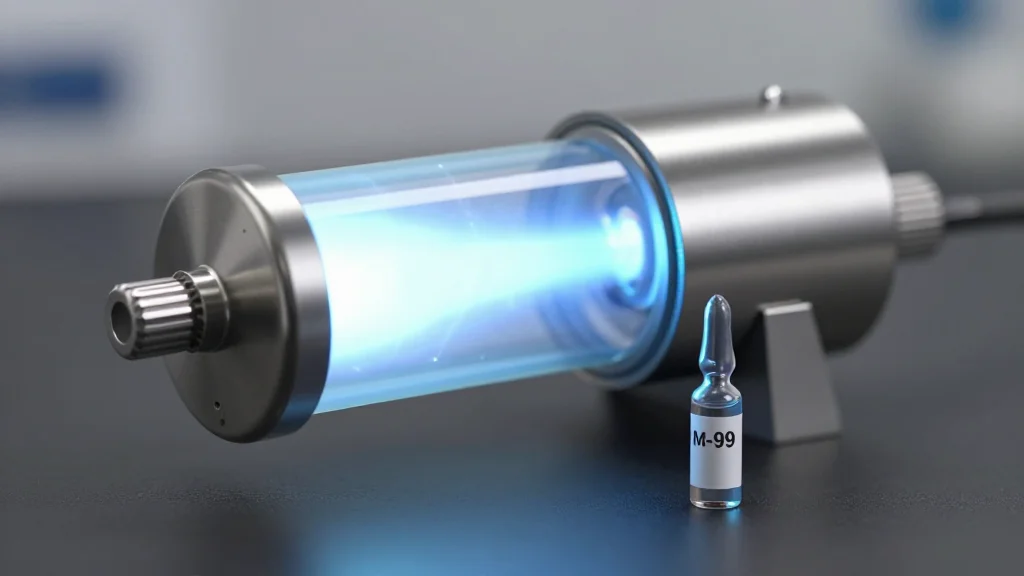
From Fusion to Life Saving Medicine: A Revolution in Isotope Production ~ The Journey of Mo-99
Key Takeaways
- •SHINE secures $263 M DOE loan for domestic Mo‑99 fusion plant
- •Mo‑99 supports 85 % of U.S. nuclear‑medicine scans, 56k daily patients
- •Fusion neutron generators recycle low‑enriched uranium, cutting waste vs reactors
- •Avalanche Energy wins $5.2 M DARPA contract for compact radioisotope power
- •ARPA‑E commits $135 M to accelerate commercial fusion technologies
Pulse Analysis
Molybdenum‑99 is the linchpin of modern diagnostic imaging, decaying into technetium‑99m that appears in roughly 85 % of nuclear‑medicine procedures. The United States currently imports most of its Mo‑99 from aging reactors abroad, a supply chain vulnerable to transport delays and half‑life losses. SHINE Technologies’ Chrysalis plant leverages a fusion‑generated neutron source to bombard a liquid low‑enriched uranium target, recycling the material and producing medical‑grade Mo‑99 with dramatically lower radioactive waste. By localizing production, the facility promises a more reliable, cost‑effective supply for the 56,000 daily scans that guide heart disease, cancer and other critical diagnoses.
The Chrysalis loan is part of a broader federal surge in fusion funding. The Department of Energy’s $263 million loan, a $5.2 million DARPA contract to Avalanche Energy for compact radioisotope power cells, and a historic $135 million ARPA‑E budget earmarked for commercial‑scale fusion all signal a policy shift toward near‑term, market‑ready applications. These programs not only de‑risk private investment but also create a shared technology ecosystem—neutron generators, advanced materials, and power‑conversion systems—that can be repurposed across medical, defense and energy sectors. The combined public capital, estimated at over $400 million, is accelerating the timeline for scalable fusion solutions.
Internationally, the United Kingdom has pledged roughly £200 million (about $266 million) to build the STEP tokamak prototype, highlighting a global race to commercial fusion. While the UK focuses on large‑scale magnetic confinement, U.S. initiatives are diversifying with compact neutron generators and radioisotope power concepts. This competitive landscape pushes American firms to innovate faster, ensuring the United States remains a leader in both the emerging fusion industry and the critical supply of life‑saving isotopes. As fusion moves from laboratory experiments to commercial plants, the ripple effects will reshape energy, healthcare and national security.
From Fusion to Life Saving Medicine: A Revolution in Isotope Production ~ The Journey of Mo-99
Comments
Want to join the conversation?