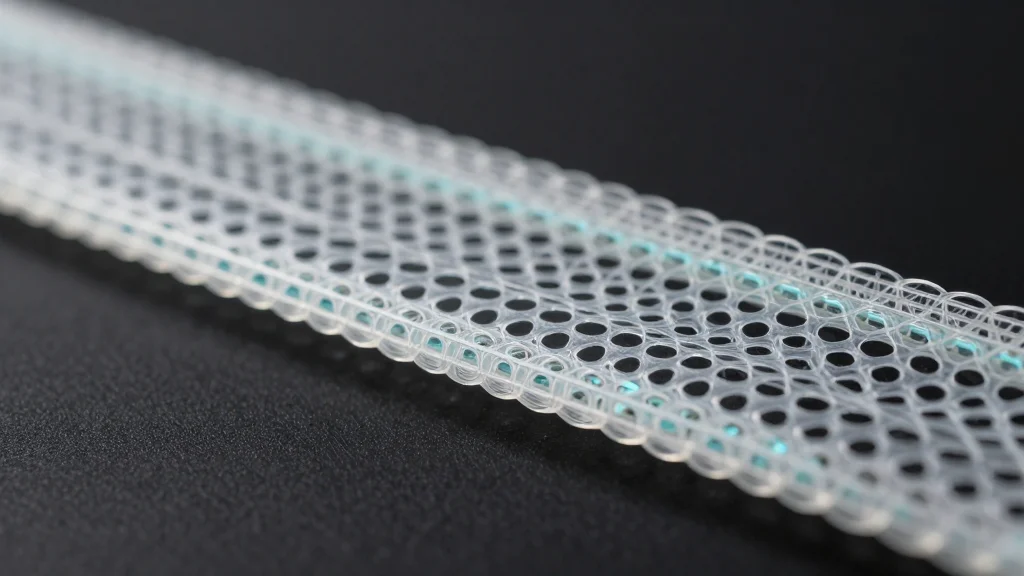
From Limited to Tunable: Precise Protonation Engineering the Pore Structure of Kevlar Aramid Nanofiber Membranes for Lithium Batteries
Why It Matters
Tunable KANF membranes solve a long‑standing materials‑processing bottleneck, unlocking high‑performance, safe separators for next‑generation lithium batteries and expanding the market for versatile nanofiber‑based devices.
Key Takeaways
- •Precise protonation via ethyl acetate hydrolysis tunes KANF membrane porosity.
- •Porosity adjustable from 56% to 87%; pore size 20–800 nm.
- •Atmospheric drying enables scalable, continuous membrane production.
- •Tuned membranes serve as high‑performance lithium‑battery separators.
- •Method reduces solvent‑fiber interactions, improving structural control.
Pulse Analysis
Kevlar aramid nanofiber (KANF) membranes have attracted attention for their exceptional mechanical strength, chemical resistance, and thermal stability, making them attractive for energy‑storage separators, filtration, and biomedical scaffolds. However, their intrinsic rigidity and strong inter‑fiber hydrogen bonding have limited the ability to engineer pore size and porosity, resulting in inconsistent performance across applications. Traditional phase‑inversion techniques rely on solvent‑fiber interactions that are difficult to control, leading to membranes with narrow pore distributions and limited scalability. Overcoming these barriers is essential for translating KANF technology from the lab to commercial products.
The new study introduces a precise protonation approach that leverages the selective hydrolysis of ethyl acetate to donate protons to deprotonated amide groups on the nanofibers. By tempering the electrostatic attraction between fibers and the drying solvent, the researchers decouple self‑assembly from solvent evaporation, allowing atmospheric drying to produce membranes with porosity ranging from 56 % to 87 % and pore diameters from 20 nm up to 800 nm. This level of tunability is achieved in a continuous roll‑to‑roll format, offering a cost‑effective pathway for large‑scale manufacturing.
Applying the tunable KANF membranes as lithium‑battery separators demonstrates markedly improved ionic conductivity and thermal shutdown behavior, addressing two of the most critical safety challenges in next‑generation batteries. The ability to tailor pore architecture also opens doors for high‑energy solid‑polymer electrolytes and hybrid separator designs that can accommodate fast‑charging regimes. Beyond batteries, the same protonation‑engineered membranes could be adapted for water desalination, gas separation, and tissue engineering, positioning the technology as a versatile platform in the growing market for advanced functional membranes.
From Limited to Tunable: Precise Protonation Engineering the Pore Structure of Kevlar Aramid Nanofiber Membranes for Lithium Batteries
Comments
Want to join the conversation?
Loading comments...