Why It Matters
By pinpointing a structural substrate for voluntary speech, the findings reshape how scientists view language origins and open new pathways for treating speech disorders that involve FAT damage.
Key Takeaways
- •Human FAT shows 30% greater fiber density than chimpanzees
- •Expanded FAT connects Broca’s area to motor planning for phoneme sequencing
- •Evolution of FAT enabled voluntary vocal control absent in other primates
- •Insights could inform targeted rehab for aphasia, stuttering, apraxia of speech
- •Study shifts language evolution focus from gray matter to white‑matter pathways
Pulse Analysis
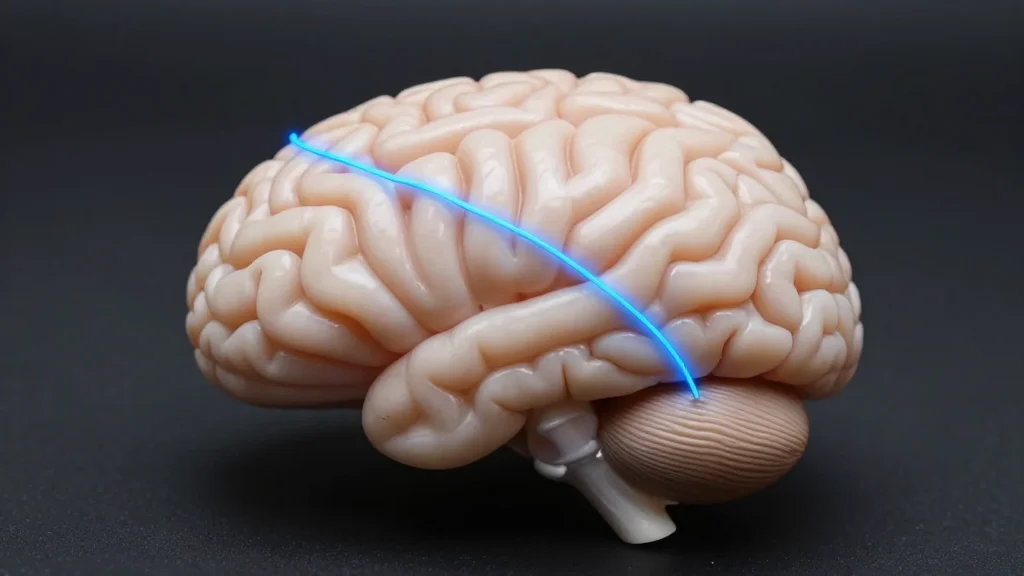
The frontal aslant tract has long been a hidden conduit between language‑processing hubs and motor‑planning circuits. By leveraging state‑of‑the‑art diffusion MRI and tractography, the recent Nature Communications paper provides the first cross‑species quantification of FAT architecture. Humans exhibit a roughly 30% increase in fiber density and a broader spatial footprint compared with chimpanzees, suggesting that evolutionary pressure favored more intricate white‑matter scaffolding to support the rapid, sequential articulation that characterizes spoken language.
Beyond raw anatomy, the study links FAT expansion to functional capabilities unique to our species. The enhanced pathway enables voluntary modulation of vocal output—a trait largely absent in other primates whose calls are fixed and emotion‑driven. This neuro‑connectivity also dovetails with higher‑order processes such as theory of mind and complex social cognition, implying that the same wiring upgrades that refined speech may have simultaneously bolstered human social intelligence. In effect, the FAT acts as a neural highway that synchronizes auditory feedback with motor commands, a prerequisite for fluent speech and language learning.
Clinically, the findings reorient approaches to speech pathology. Damage to the FAT is increasingly recognized as a cause of aphasia, stuttering, and apraxia of speech, conditions where patients struggle with initiation or sequencing of verbal output. Understanding the tract’s precise role opens avenues for targeted rehabilitation—such as neurostimulation or task‑specific training aimed at strengthening residual FAT connectivity. Moreover, the research encourages a broader shift in neuroscience, emphasizing white‑matter pathways as critical drivers of cognitive evolution rather than treating them as mere support structures. Future work integrating genetics, developmental biology, and comparative imaging promises to map the full network of tracts that together enabled the emergence of human language.
Frontal Aslant Tract Evolution Shapes Primate Speech
Comments
Want to join the conversation?
Loading comments...