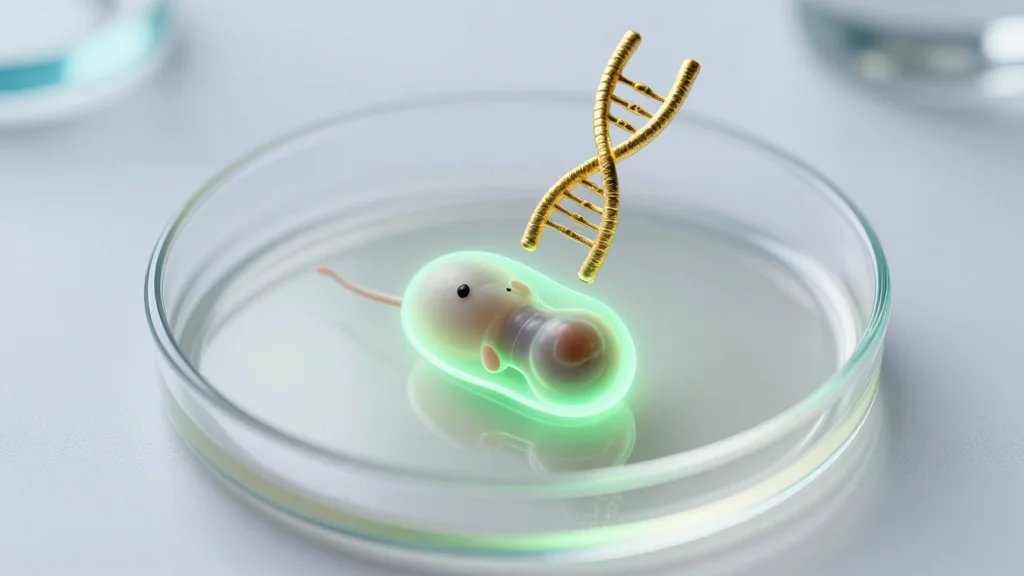
Frozen Rat Chromosome Springs Back to Life Inside a Mouse Embryo
Why It Matters
The breakthrough shows that genetic material from long‑frozen specimens can be functionally reanimated without whole cells, offering a practical route to probe extinct‑species genes and accelerate de‑extinction research. It also provides a scalable platform for cross‑species gene studies relevant to biotechnology and conservation.
Key Takeaways
- •Single frozen rat chromosome expressed functional genes in mouse embryo
- •Technique bypasses need for intact nuclei or whole extinct cells
- •Hybrid stem cells retained rat chromosome and showed GFP fluorescence
- •Mouse hearts produced rat Hsp90ab1 protein, confirming cross-species transcription
- •Approach opens path to study extinct species' genetics without full cloning
Pulse Analysis
The quest to resurrect extinct organisms has long been hampered by the fragility of DNA extracted from museum specimens or permafrost. Traditional cloning demands intact nuclei and viable egg cells from closely related species, a combination rarely available for ancient taxa. By isolating a single chromosome and inserting it into a mouse oocyte, the Japanese team sidestepped these constraints, proving that even fragmented, cryopreserved genomes can retain enough structural integrity to be transcribed in a foreign cellular environment. This method reframes the technical bottleneck from whole‑genome reconstruction to targeted chromosome rescue.
At the heart of the experiment is a sophisticated single‑chromosome transfer technique. Researchers first coaxed loose rat DNA from frozen blood cells to re‑form into a chromosome within mouse eggs, then isolated that chromosome for injection into fresh oocytes. The resulting embryos not only progressed to the blastocyst stage but also expressed a GFP reporter and a native rat stress‑protein gene, Hsp90ab1, across multiple mouse tissues. Such cross‑species transcription confirms that epigenetic regulation can be maintained despite the interspecies context, suggesting that functional assays of extinct genes are now feasible without the need for full organismal cloning.
Looking ahead, this chromosome‑centric approach could become a cornerstone for paleogenomics and synthetic biology. Scientists may soon retrieve specific chromosomes from extinct megafauna, insert them into surrogate embryos, and study gene function in vivo, accelerating the identification of traits like cold tolerance or disease resistance. While ethical and ecological concerns will shape the deployment of any de‑extinction technology, the ability to resurrect and interrogate individual chromosomes offers a low‑risk, high‑reward pathway for both basic research and potential conservation interventions. The technique also holds promise for agricultural biotech, where introgressing desirable traits from wild relatives could be achieved without traditional breeding cycles.
Frozen rat chromosome springs back to life inside a mouse embryo
Comments
Want to join the conversation?
Loading comments...