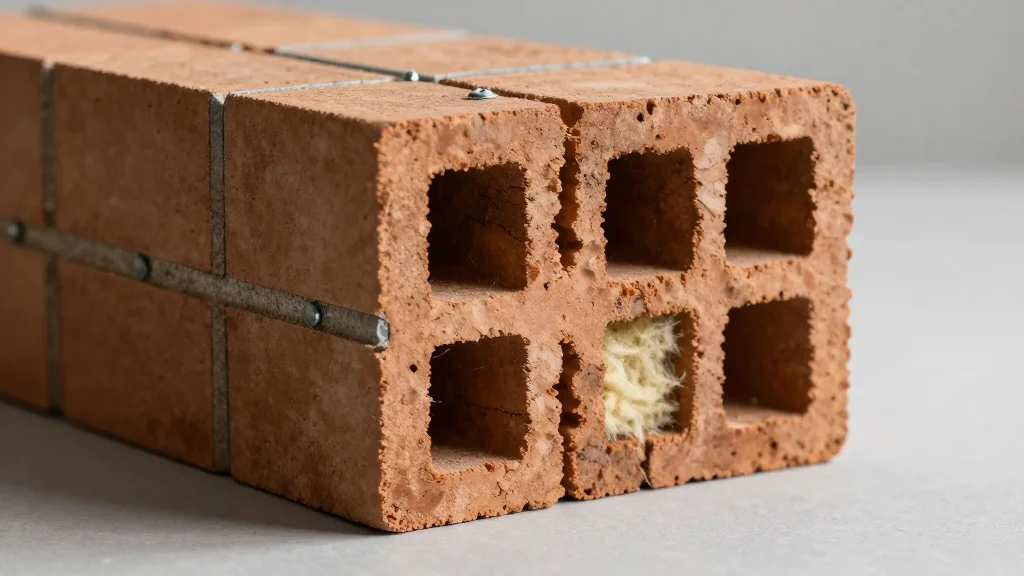
Fully Reusable Bricks Could Allow Old Buildings to Be Taken Apart and Rebuilt
Why It Matters
The technology could slash construction‑related carbon emissions and transform demolition into a resource‑recovery process, offering both environmental and economic benefits for the building sector. Adoption at scale would reduce the one‑third share of construction waste in Europe and preserve building value.
Key Takeaways
- •Reversible joint bricks cut construction CO2 by ~60% over three lifecycles
- •Bricks 44 cm thick include insulating wool, pre‑plastered at factory
- •Stability achieved via heavy roof or threaded pre‑stressed rods
- •Demonstrator building dismantled, moved, reassembled, meeting safety standards
- •Circular‑economy approach could boost residual building value and reduce waste
Pulse Analysis
Construction and demolition waste accounts for more than a third of Europe’s total waste stream, a figure that drives both landfill pressure and greenhouse‑gas emissions. In response, a research team at Graz University of Technology has prototyped a modular brick system that can be taken apart like a giant Lego set and re‑used in new projects. By eliminating permanent mortar and embedding reversible joints, the approach promises to keep valuable building material in circulation, a core tenet of the circular‑economy model gaining traction across the EU’s sustainability agenda.
The reusable bricks are 44 cm thick, contain an insulating wool core and arrive pre‑plastered, reducing on‑site labor. Structural integrity is achieved through two alternative methods: a sufficiently heavy roof that locks the walls in place, or vertically threaded rods that are pre‑stressed to hold the panels together. Both solutions satisfy current safety regulations while allowing rapid disassembly. Early testing on a full‑scale demonstrator showed the structure could be dismantled, transported to a new site and reassembled without loss of performance, validating the engineering concept.
If the technology scales, the reported 60 % cut in CO₂ emissions over three building lifecycles could translate into substantial climate benefits for the construction sector, which is responsible for roughly 8 % of global emissions. Moreover, owners would retain a higher residual value for their assets, turning demolition into a revenue‑generating activity rather than a cost sink. Challenges remain, including standardisation of the reversible joint system and integration with existing supply chains, but the prototype signals a viable path toward greener, more economical building practices.
Fully reusable bricks could allow old buildings to be taken apart and rebuilt
Comments
Want to join the conversation?
Loading comments...