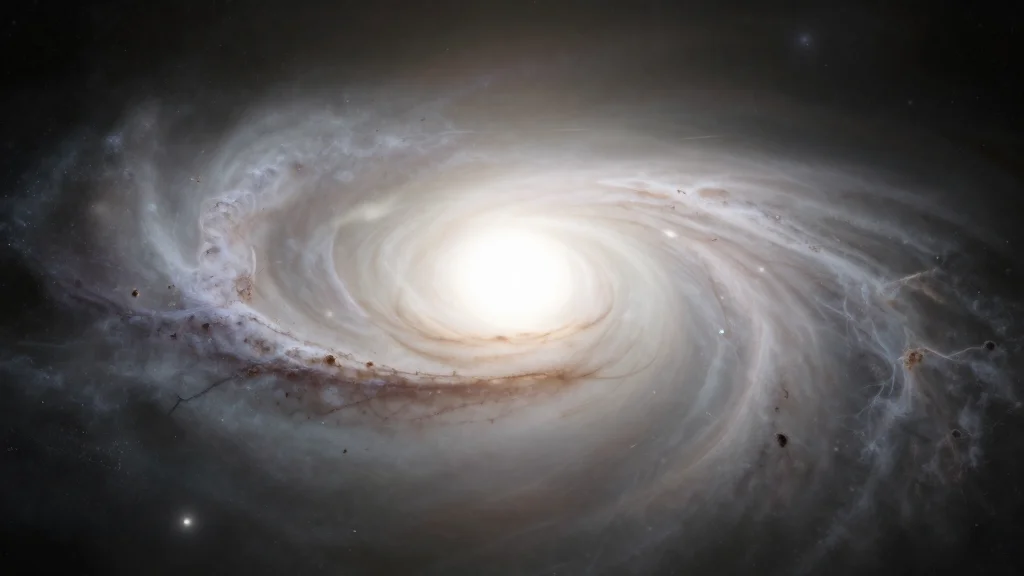
Galaxy Cluster Relaxed Now, but Was Wild in the Past
Why It Matters
The discovery shows that relaxed‑looking clusters can hide complex merger histories, affecting mass estimates used in cosmology and large‑scale structure studies.
Key Takeaways
- •Chandra X‑ray data shows A2029's core is thermally smooth
- •Outer regions reveal shock fronts from ancient merger events
- •Past turbulence likely redistributed dark matter and heated intracluster gas
- •Findings refine models of galaxy‑cluster evolution and cosmological simulations
- •Relaxed appearance masks complex dynamical history, impacting mass‑estimate accuracy
Pulse Analysis
The latest Chandra observations of galaxy cluster Abell 2029 illustrate how modern X‑ray astronomy can peel back layers of cosmic history. While the cluster’s central region now exhibits a uniform temperature profile, detailed spectroscopy uncovers shock fronts and temperature spikes in the periphery, hallmarks of past merger activity. By correlating these X‑ray signatures with optical galaxy distributions, researchers reconstructed a timeline of violent collisions that occurred roughly 2‑3 billion years ago, reshaping the intracluster medium and stirring dark‑matter halos.
These insights have far‑reaching implications for astrophysics and cosmology. Cluster mass estimates, which underpin measurements of dark energy and the universe’s expansion rate, often assume hydrostatic equilibrium—a condition challenged by hidden turbulence. Recognizing that even visually relaxed clusters may harbor dynamical scars forces a recalibration of scaling relations used in large‑scale surveys. Moreover, the redistribution of dark matter during mergers refines simulations of structure formation, helping to resolve discrepancies between observed cluster abundances and theoretical predictions.
Beyond pure science, the study underscores the growing value of high‑performance data pipelines and machine‑learning tools in processing terabytes of X‑ray data. Companies specializing in cloud‑based analytics stand to benefit from partnerships with observatories seeking faster, more accurate image reconstruction. As next‑generation telescopes like Athena and Lynx come online, the demand for sophisticated computational infrastructure will rise, driving investment in AI‑enhanced astrophysical research and opening new commercial opportunities in the space‑tech sector.
Galaxy Cluster Relaxed Now, but Was Wild in the Past
Comments
Want to join the conversation?
Loading comments...