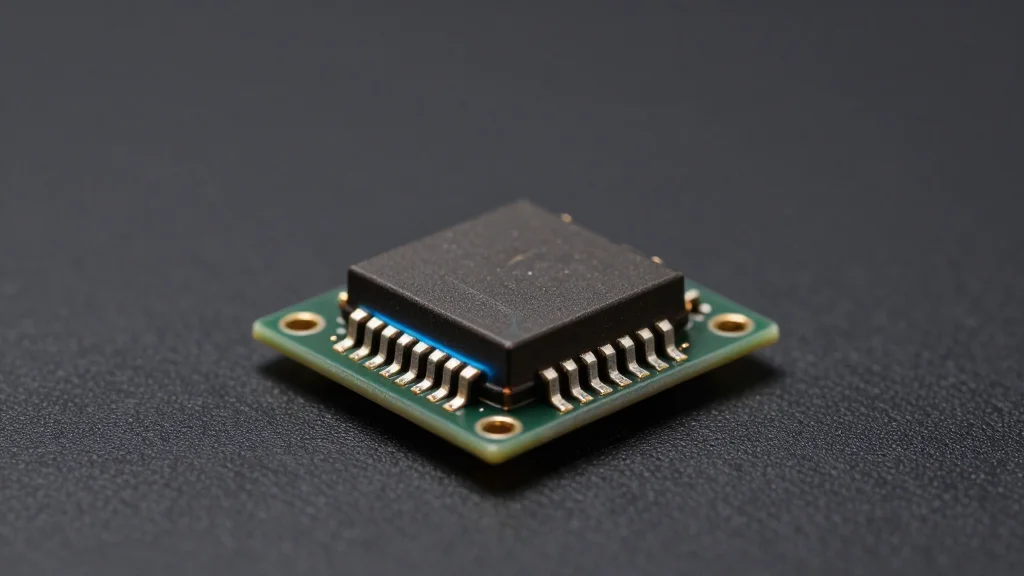
GaN Breaks the 250 W Barrier in Flyback Power Supplies
Why It Matters
The breakthrough lets high‑volume, low‑cost flyback supplies compete with more complex resonant designs, shortening development cycles and reducing BOM costs. It also improves average energy efficiency in variable‑load products, lowering operating expenses and thermal requirements.
Key Takeaways
- •TOPSwitchGaN raises flyback power limit from 250 W to 440 W.
- •GaN HEMTs cut conduction and switching losses versus silicon MOSFETs.
- •Flat 92% efficiency from 10% to 100% load outperforms LLC converters.
- •Flyback design uses 74 components vs 104 in comparable LLC solutions.
Pulse Analysis
Gallium‑nitride’s superior electron mobility and low parasitic capacitance have reshaped power‑electronics design over the past decade, but its impact on the ubiquitous flyback topology has been limited by cost and integration challenges. Power Integrations’ TOPSwitchGaN family demonstrates that GaN can now be mass‑produced for high‑volume platforms, pushing the flyback’s power ceiling well beyond the historic 250 W barrier. By decoupling conduction and switching losses, the new GaN HEMTs deliver a flat efficiency curve that stays near 92% from light‑load to full‑load conditions, a performance previously reserved for more exotic resonant converters.
The practical advantage of this shift becomes clear when comparing flyback and LLC designs. An LLC converter typically requires a half‑bridge or full‑bridge primary, a resonant tank, and sophisticated frequency‑control loops, inflating the bill‑of‑materials to roughly 104 components and demanding a pre‑regulation PFC stage for universal AC inputs. In contrast, the TOPSwitchGaN flyback uses a single primary‑side switch and only 74 components, eliminating the need for a separate PFC and simplifying thermal management. Even though LLCs can achieve peak efficiencies above 96% at full load, their efficiency collapses at light loads, whereas the GaN flyback maintains consistent performance, delivering lower average losses and smaller heatsinks.
For OEMs, the combination of higher power density, reduced component count, and stable efficiency translates into faster time‑to‑market and lower total‑cost‑of‑ownership. Industries ranging from consumer electronics to industrial motor drives can now select a flyback solution for power levels that previously forced a migration to resonant topologies. As GaN manufacturing scales and costs continue to fall, we can expect further extensions of the flyback class into the kilowatt range, reinforcing its role as the go‑to architecture for cost‑sensitive, high‑efficiency power supplies.
GaN breaks the 250 W barrier in flyback power supplies
Comments
Want to join the conversation?
Loading comments...