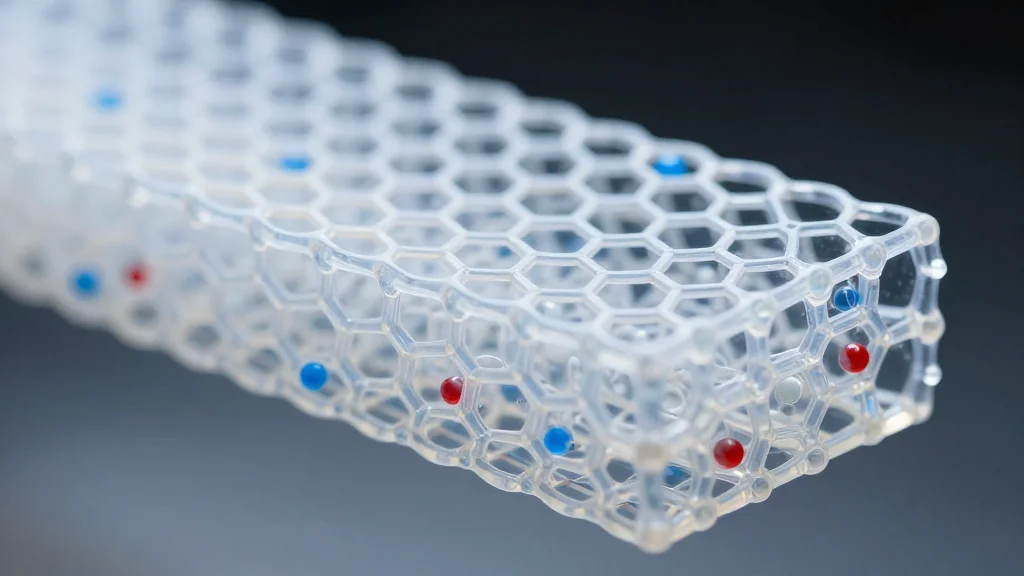
Gas Separation With COF Membranes: Crystalline Design Meets Selective Transport
Why It Matters
COF membranes promise energy‑efficient separations that can lower operating costs and emissions in carbon capture and hydrogen purification, making them a strategic asset for the decarbonization economy.
Key Takeaways
- •COF membranes achieve selectivity beyond Robeson upper bound
- •Crystallinity and pore alignment boost permeance for CO2 and H2
- •In situ growth enables defect‑free, freestanding COF layers
- •Scalability and mechanical robustness remain major commercialization hurdles
- •Future research targets defect control and long‑term stability
Pulse Analysis
Covalent organic frameworks have moved from laboratory curiosities to serious contenders in gas‑separation technology. Their crystalline lattices provide uniform pore sizes that can be tuned through organic linkers, allowing engineers to design membranes with atom‑level precision. Unlike conventional polymer membranes, which suffer from trade‑offs between permeability and selectivity, COF membranes can simultaneously deliver high flux and sharp molecular discrimination. This structural advantage positions them as a promising solution for energy‑intensive separations such as carbon‑dioxide capture and hydrogen purification, where efficiency gains translate directly into cost savings.
Recent studies highlighted in the Wiley review demonstrate that COF membranes can exceed the Robeson upper bound for CO2/N2 and H2/CH4 separations, achieving permeances above 10,000 GPU while maintaining selectivities over 50. Such performance stems from the ability to align pores during in‑situ growth, creating defect‑free channels that minimize resistance. Mixed‑matrix approaches, where COF particles are embedded in polymer matrices, have also shown incremental gains, but fully crystalline freestanding films deliver the most dramatic improvements. These metrics suggest that COF technology could cut energy consumption in large‑scale separations by up to 30 percent.
Despite the promise, commercial adoption faces three critical barriers: scalable synthesis, mechanical durability, and long‑term defect management. Current COF production relies on solvothermal methods that are difficult to translate to kilogram‑scale reactors, inflating capital costs. Moreover, the brittle nature of many crystalline sheets challenges membrane handling and pressure‑cycling durability. Researchers are exploring continuous flow reactors and cross‑linking strategies to reinforce frameworks, while advanced characterization aims to detect sub‑nanometer defects before deployment. Overcoming these hurdles could unlock a multibillion‑dollar market for low‑carbon gas separation technologies, aligning with global decarbonization goals.
Gas Separation With COF Membranes: Crystalline Design Meets Selective Transport
Comments
Want to join the conversation?
Loading comments...