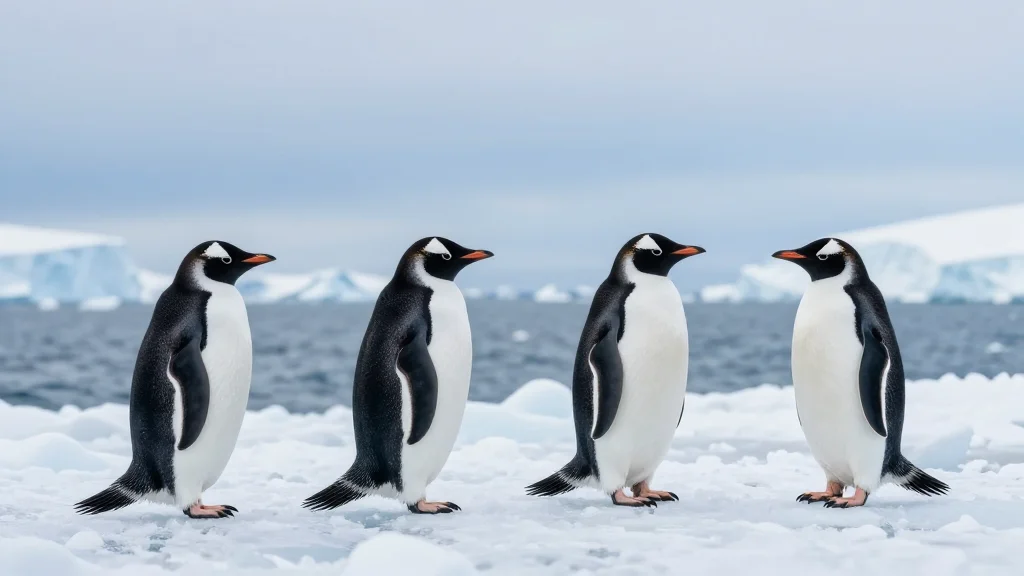
Gentoo Penguins Split Into Four Species, Including a New Cryptic Species

Why It Matters
The split of gentoo penguins into four species reshapes conservation priorities across the Southern Ocean. By recognizing three lineages as threatened, the study compels governments and NGOs to revise protection status, allocate funding, and potentially expand marine reserves. Moreover, the discovery of a cryptic species after a century underscores how genomic tools can reveal hidden biodiversity, prompting similar investigations in other understudied taxa. From a climate‑change perspective, the findings illustrate how warming temperatures can differentially impact closely related species sharing similar habitats. While the Antarctic‑resident southern gentoo may benefit, its sub‑Antarctic cousins could lose critical breeding grounds, highlighting the uneven ecological consequences of global warming and the need for region‑specific mitigation strategies.
Key Takeaways
- •Genomic analysis of 64 gentoo penguins from 10 colonies reveals four distinct species.
- •A new cryptic species, *Pygoscelis kerguelensis*, is identified on the Kerguelen Islands.
- •Three of the four species are projected to be threatened by climate change.
- •Southern gentoo (*P. ellsworthi*) may expand its range as Antarctic sea‑ice retreats.
- •Study calls for updated IUCN assessments and coordinated international conservation action.
Pulse Analysis
The reclassification of gentoo penguins is a watershed moment for avian taxonomy, demonstrating the power of whole‑genome sequencing to overturn long‑standing species concepts. Historically, penguin taxonomy relied on morphology and limited mitochondrial data, which often masked deeper genetic divergence. This breakthrough mirrors similar taxonomic revisions in other marine birds, such as the split of the black‑legged kittiwake, and signals a broader shift toward genomics‑driven biodiversity assessments.
From a policy angle, the findings arrive at a critical juncture as nations negotiate the next round of Antarctic and sub‑Antarctic marine protected areas. The fragmented governance of the sub‑Antarctic islands means that any conservation response must be multilateral, integrating scientific recommendations with the geopolitical realities of territorial claims. Failure to act could see three gentoo lineages slide toward endangerment, eroding the ecological resilience of the Southern Ocean food web.
Looking ahead, the research team’s plan to model future distributions under different emissions scenarios will provide concrete data for climate‑adaptation planning. If the southern gentoo indeed expands, it could alter predator‑prey dynamics, potentially affecting krill fisheries and higher‑trophic predators. Conversely, the loss of sub‑Antarctic populations would reduce genetic diversity and could have cascading effects on ecosystem stability. The study thus not only redefines a beloved bird group but also offers a predictive framework for managing climate‑impacted marine species.
Overall, the gentoo split underscores an urgent message: biodiversity hidden in plain sight can be uncovered with modern tools, but protecting it requires swift, coordinated action across borders and disciplines.
Gentoo Penguins Split into Four Species, Including a New Cryptic Species
Comments
Want to join the conversation?
Loading comments...