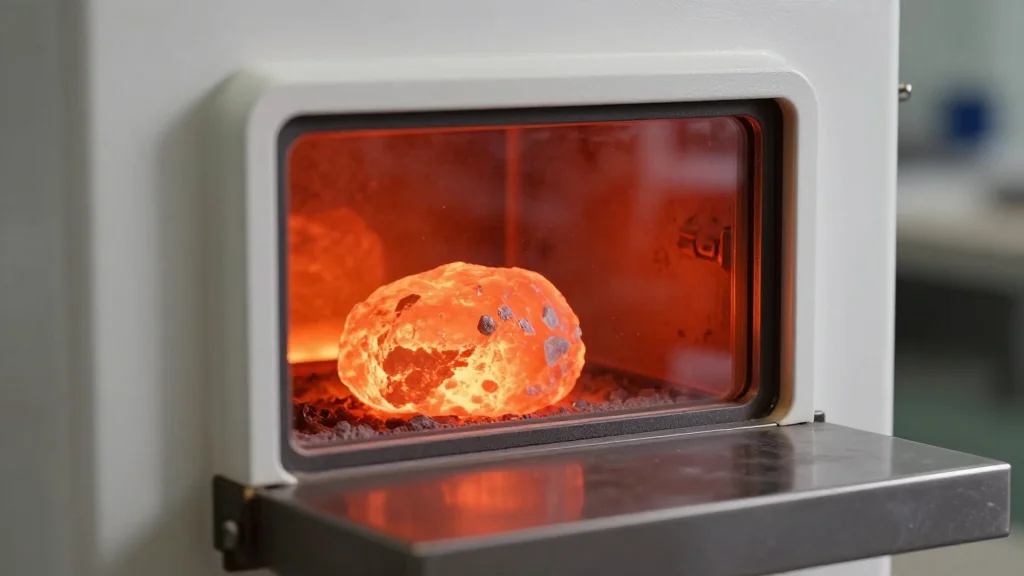
Georgia Tech Scientists Create Moon Rock in the Lab
Why It Matters
The lab‑grown moon rock provides affordable, on‑demand material for aerospace testing and scientific research, reducing dependence on the limited Apollo sample collection.
Key Takeaways
- •Georgia Tech synthesized a lunar basalt analog matching Apollo rock composition
- •Sample produced using 1,500 °C furnace and 5 GPa pressure
- •5‑gram rock replicates mare basalt mineralogy and isotopic signatures
- •Enables cheaper testing of lunar landers, rovers, and instruments
- •Opens new research into Moon formation without limited Apollo samples
Pulse Analysis
The Moon’s surface material has long been a bottleneck for both scientific inquiry and engineering validation. With only a few hundred grams of authentic lunar rock housed in museums and research labs, scientists and aerospace firms have relied on costly, limited‑supply analogs or computational models. Existing synthetic approaches often fall short of reproducing the exact chemical and isotopic fingerprints that define mare basalts, leaving a gap in realistic testing environments for next‑generation lunar missions.
Georgia Tech’s Materials Science and Engineering team tackled this challenge by recreating the extreme conditions under which lunar basalts form. By subjecting a curated mixture of silicate powders to 1,500 °C and 5 GPa in a custom furnace, they forged a 5‑gram rock whose major‑element composition, trace‑element ratios, and oxygen isotopic signatures match those of Apollo samples to within analytical uncertainty. Advanced microscopy and mass‑spectrometry confirmed the presence of characteristic minerals such as plagioclase, pyroxene, and ilmenite, validating the rock as a true lunar analog. This level of fidelity is unprecedented for a laboratory‑produced specimen.
The implications ripple across the commercial and governmental space sectors. NASA and private firms can now test lander propulsion, drilling tools, and radiation shielding against a material that behaves like real moon rock without the logistical and legal hurdles of handling NASA‑owned samples. Moreover, planetary scientists gain a scalable substrate for experiments on regolith chemistry, dust adhesion, and resource extraction techniques. As lunar economies accelerate, the ability to generate moon‑like rock on demand will become a strategic asset, fostering innovation while preserving the priceless heritage of the original Apollo specimens.
Georgia Tech Scientists Create Moon Rock in the Lab
Comments
Want to join the conversation?
Loading comments...