Ghost Shark, Carnivorous Sponge Among 1,000+ Newly Discovered Marine Species
Why It Matters
Accelerating species identification helps inform conservation policies before habitats vanish, and boosts our understanding of deep‑sea ecosystems critical for climate resilience.
Key Takeaways
- •1,121 potentially new species recorded in third Ocean Census year.
- •Polychaete worm lives inside silica “glass castle” sponge at 791 m depth.
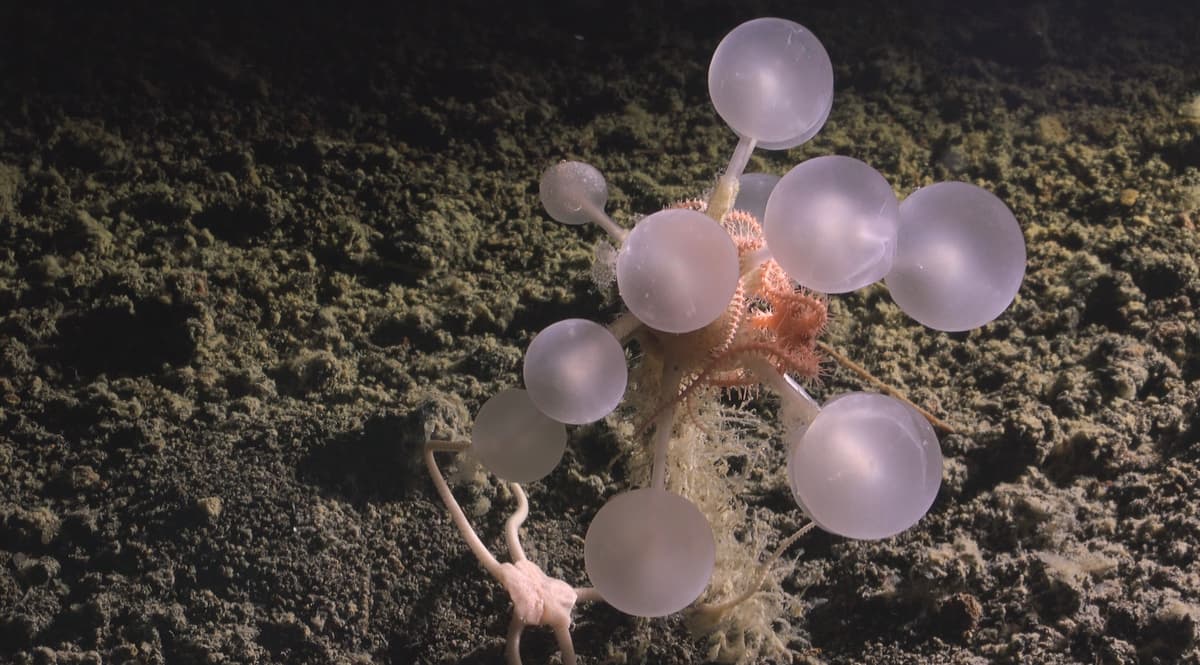
- •Carnivorous *Chondrocladia* sponge captures prey with velcro‑like hooks at 3,600 m.
- •NOVA digital platform enables rapid global sharing of taxonomic data.
- •Discovery rate rose 54% this year, yet many species remain undescribed.
Pulse Analysis
The Ocean Census, a joint effort by Japan’s Nippon Foundation and the UK‑based Nekton institute, was launched in 2023 to catalog marine biodiversity at unprecedented speed. By leveraging ROVs, autonomous underwater vehicles, and a global network of taxonomists, the program aims to log 100,000 new species within a decade. Its digital backbone, the NOVA platform, aggregates high‑resolution imagery, genetic barcodes, and metadata, allowing scientists worldwide to collaborate in real time and sidestep the traditional bottleneck of museum‑based cataloguing.
Recent findings illustrate how deep‑sea habitats continue to surprise. A newly described polychaete worm, *Dalhousiella yabukii*, inhabits a silica‑based sponge that constructs castle‑like structures at nearly 800 meters, showcasing a mutualistic relationship rarely seen in abyssal zones. Equally striking is the discovery of a carnivorous *Chondrocladia* sponge, nicknamed the “death ball,” which uses velcro‑like hooks to ensnare crustaceans at over 3,600 meters near the South Sandwich Islands. Such adaptations expand our knowledge of evolutionary strategies in extreme pressure, darkness, and nutrient‑scarce environments.
Despite the impressive 54% jump in annual discovery rates, taxonomy remains a limiting factor. Formal species descriptions can take 13.5 to 24 years, constrained by a shortage of experts and the painstaking work of morphological and molecular analysis. By fast‑tracking data entry through NOVA, the Census hopes to shrink this lag, enabling policymakers to protect habitats before they vanish. The initiative underscores a broader imperative: as climate change and deep‑sea mining intensify, rapid, open‑access biodiversity inventories will be essential for crafting effective marine conservation frameworks.
Ghost shark, carnivorous sponge among 1,000+ newly discovered marine species
Comments
Want to join the conversation?
Loading comments...