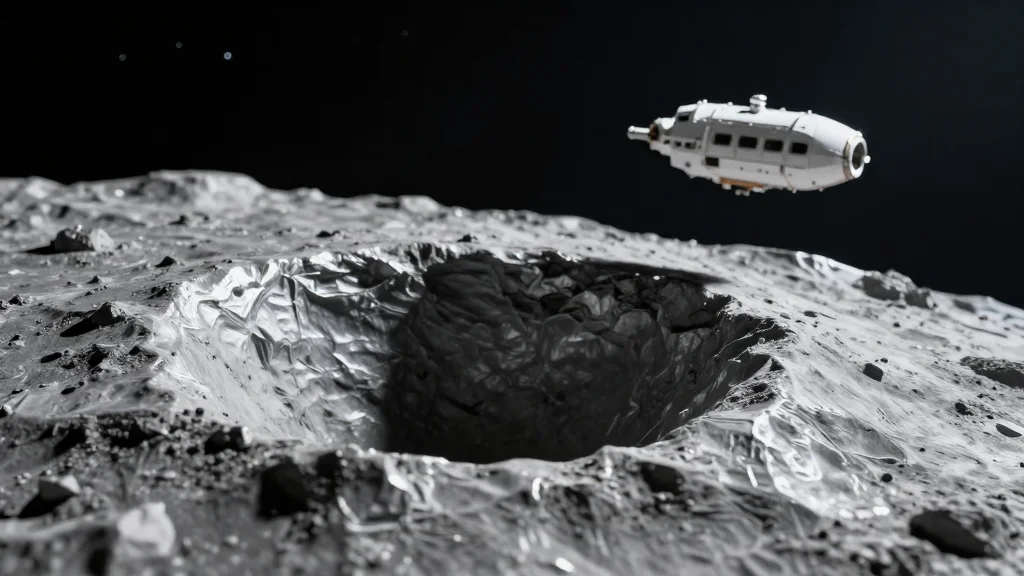
Giant Craters May Reveal if Psyche Is a Lost Planetary Core
Why It Matters
Understanding Psyche's interior will clarify how planetary cores form and evolve, informing models of early solar‑system dynamics and exoplanet composition. The findings also help prioritize measurements for the upcoming NASA mission, maximizing scientific return.
Key Takeaways
- •3‑D impact models assess Psyche's interior porosity.
- •Simulations show porosity influences crater depth‑diameter ratio.
- •Findings guide expectations for NASA's Psyche mission 2029.
- •Potential layered core vs homogeneous metal structure examined.
- •Results will test hypotheses when spacecraft arrives.
Pulse Analysis
The asteroid 16 Psyche stands out in the main belt as a massive, metal‑dominated body roughly the size of Massachusetts. Its unusual composition has long sparked speculation that it may be the exposed core of a protoplanet that never completed planetary accretion. If true, Psyche offers a rare, accessible laboratory for studying core formation processes that are otherwise hidden deep inside planets. This context makes any insight into its internal structure valuable for planetary scientists and investors tracking space‑resource opportunities.
A recent study published in the Journal of Geophysical Research: Planets leveraged high‑resolution 3‑D impact simulations to explore how a giant crater near Psyche's north pole could have formed under different interior scenarios. By varying porosity, the researchers demonstrated that even modest internal voids dramatically affect crater morphology, especially the depth‑to‑diameter ratio. The models compared a uniform metallic body against a stratified configuration with an iron core and silicate mantle, revealing distinct signatures that could be detected by remote sensing or in‑situ measurements. These findings refine the set of observable parameters that the Psyche spacecraft should prioritize.
NASA's Psyche mission, slated for a 2029 arrival, will be the first to conduct a detailed geophysical survey of a metallic asteroid. The simulation outcomes give mission planners concrete expectations for gravity mapping, radar sounding, and magnetic field data, helping to allocate instrument time efficiently. Beyond the mission, confirming Psyche as a planetary core fragment would reshape theories of early solar‑system collisions and core‑mantle differentiation, with ripple effects for interpreting exoplanet densities and the search for habitable worlds. The study thus bridges computational modeling with upcoming exploration, underscoring the strategic importance of asteroid science in the broader space economy.
Giant craters may reveal if Psyche is a lost planetary core
Comments
Want to join the conversation?
Loading comments...