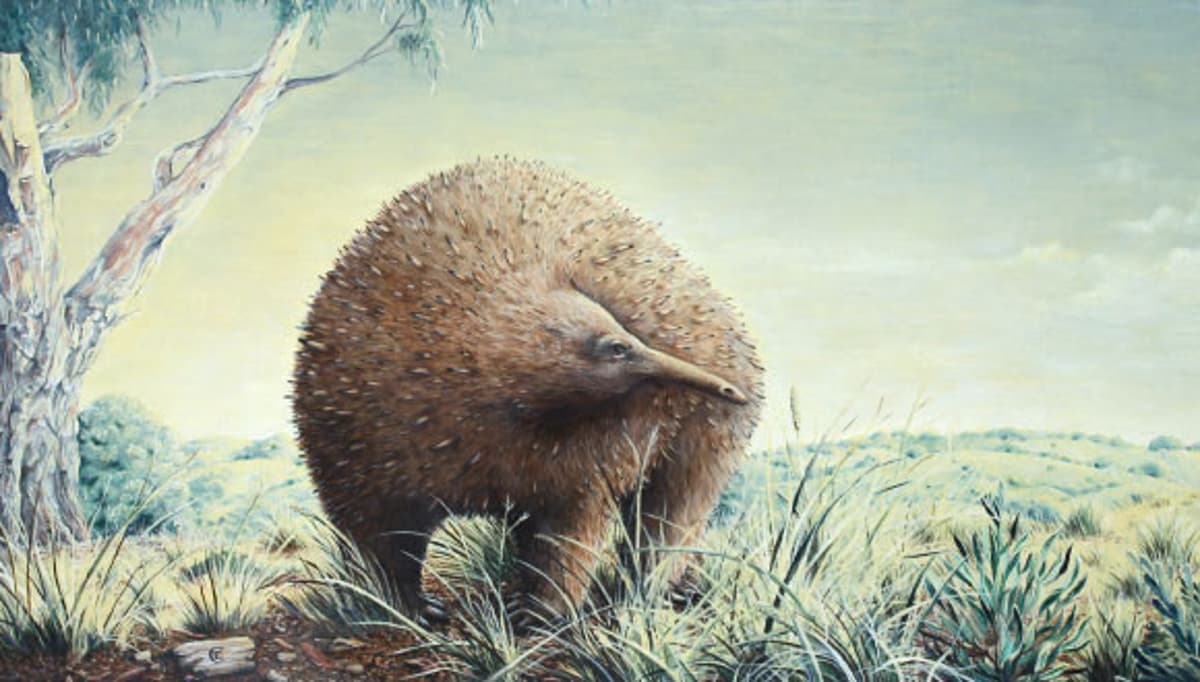
Giant Echidnas Once Roamed Australia’s Victoria, Fossil Shows
Why It Matters
The find revises the known distribution of Australia’s largest echidna, informing models of Quaternary megafauna ecology and highlighting untapped data in legacy collections. It also demonstrates how revisiting old specimens can yield fresh insights for biodiversity research.
Key Takeaways
- •First Victorian fossil of *Megalibgwilia owenii* confirmed
- •Specimen dates to 1907, found in Museums Victoria collection
- •Extends known range, showing continuous distribution across southern Australia
- •Highlights value of revisiting historic museum collections for new discoveries
Pulse Analysis
Echidna fossils are notoriously scarce in Australia, and their patchy record has left gaps in our understanding of prehistoric ecosystems. The giant echidna, *Megalibgwilia owenii*, once roamed the continent’s cooler southern regions, but prior to this study its presence in Victoria was speculative. By confirming a 120‑year‑old skull from the Buchan Caves, researchers now have concrete evidence that the species occupied a broader swath of the continent, bridging the distribution gap between Western Australia, Tasmania, and New South Wales.
The specimen’s journey from a 1907 field expedition to a modern museum shelf illustrates the hidden potential of legacy collections. Dr. Tim Ziegler’s 2021 re‑examination of Museums Victoria’s palaeontology holdings revealed the skull, which had lain unnoticed for more than a century. Such finds demonstrate that historical artifacts, when paired with contemporary analytical techniques and archival research, can resolve long‑standing paleobiogeographic puzzles. Moreover, the discovery adds a new data point for reconstructing the Quaternary megafauna assemblage of the Buchan Caves, a site already famed for fossils of giant marsupials and short‑faced kangaroos.
Beyond regional significance, the study reinforces a broader message for the scientific community: museum collections are dynamic research resources, not static archives. Systematic reviews of existing specimens can uncover novel species records, refine evolutionary timelines, and guide future field surveys. As citizen scientists and researchers alike turn their attention to these repositories, the likelihood of additional breakthroughs—whether in echidna evolution or other extinct lineages—grows. Continued investment in collection digitization and interdisciplinary collaboration will be key to unlocking these hidden narratives.
Giant Echidnas Once Roamed Australia’s Victoria, Fossil Shows
Comments
Want to join the conversation?
Loading comments...