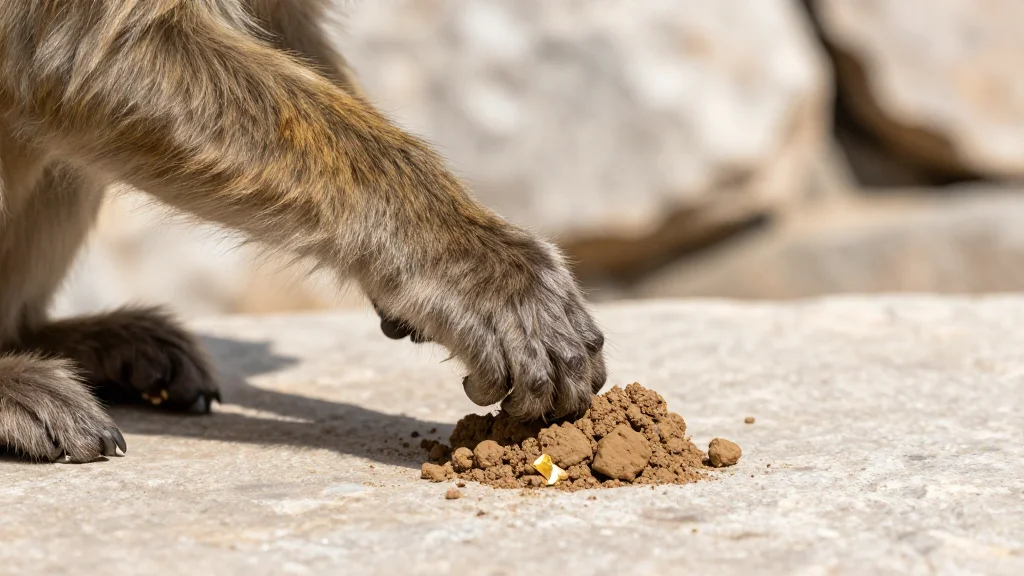
Gibraltar Macaques Are Self-Medicating with Dirt to Help Them Digest Human. Junk Food
Why It Matters
The behavior highlights how human food waste can directly impair wildlife health, prompting urgent management actions for tourism‑driven ecosystems.
Key Takeaways
- •Monkeys observed eating soil 46 times across 612 observation hours
- •Geophagy linked to tourists feeding high‑calorie junk snacks
- •Dirt intake may buffer nausea, diarrhea, and mineral loss
- •Junk food comprises roughly 20% of macaques' daily diet
- •Behavior observed in both male and female groups near tourist zones
Pulse Analysis
Geophagy – the deliberate consumption of soil, clay or sand – is a well‑documented coping strategy among many animal species, from birds to large herbivores. In Gibraltar, the only wild Barbary macaque population in Europe, the practice has now been recorded in response to a surge of human‑derived junk food. Tourists regularly hand out sugary, salty, and fatty snacks, dramatically altering the monkeys’ natural diet of fruits, seeds and leaves. The sudden influx of low‑fiber, high‑energy foods creates digestive stress, prompting the primates to seek natural buffers in the ground.
Researchers from the University of Cambridge logged more than 612 hours of observation across nine sites, documenting 46 distinct geophagy events involving at least 44 individuals out of an estimated 230 macaques. The data suggest that nearly one‑fifth of the monkeys’ feeding time now involves processed human snacks, a shift that mirrors dietary changes seen in urban human populations. By ingesting mineral‑rich earth, the macaques likely neutralize excess acids, bind toxins, and replenish electrolytes, reducing symptoms such as nausea and diarrhea. This self‑medication underscores the physiological parallels between humans and primates when faced with energy‑dense, fiber‑poor diets.
The findings raise urgent questions for wildlife managers and tourism authorities. If unchecked, continued reliance on soil could mask underlying health problems, while persistent feeding of junk food may exacerbate obesity, dental decay, and disease transmission. Implementing educational campaigns, restricting hand‑outs, and providing natural foraging opportunities could mitigate the issue. Moreover, the Gibraltar case offers a vivid illustration of how human consumption patterns can ripple through ecosystems, informing broader debates on responsible ecotourism and animal welfare in an increasingly anthropogenic world.
Gibraltar macaques are self-medicating with dirt to help them digest human. junk food
Comments
Want to join the conversation?
Loading comments...