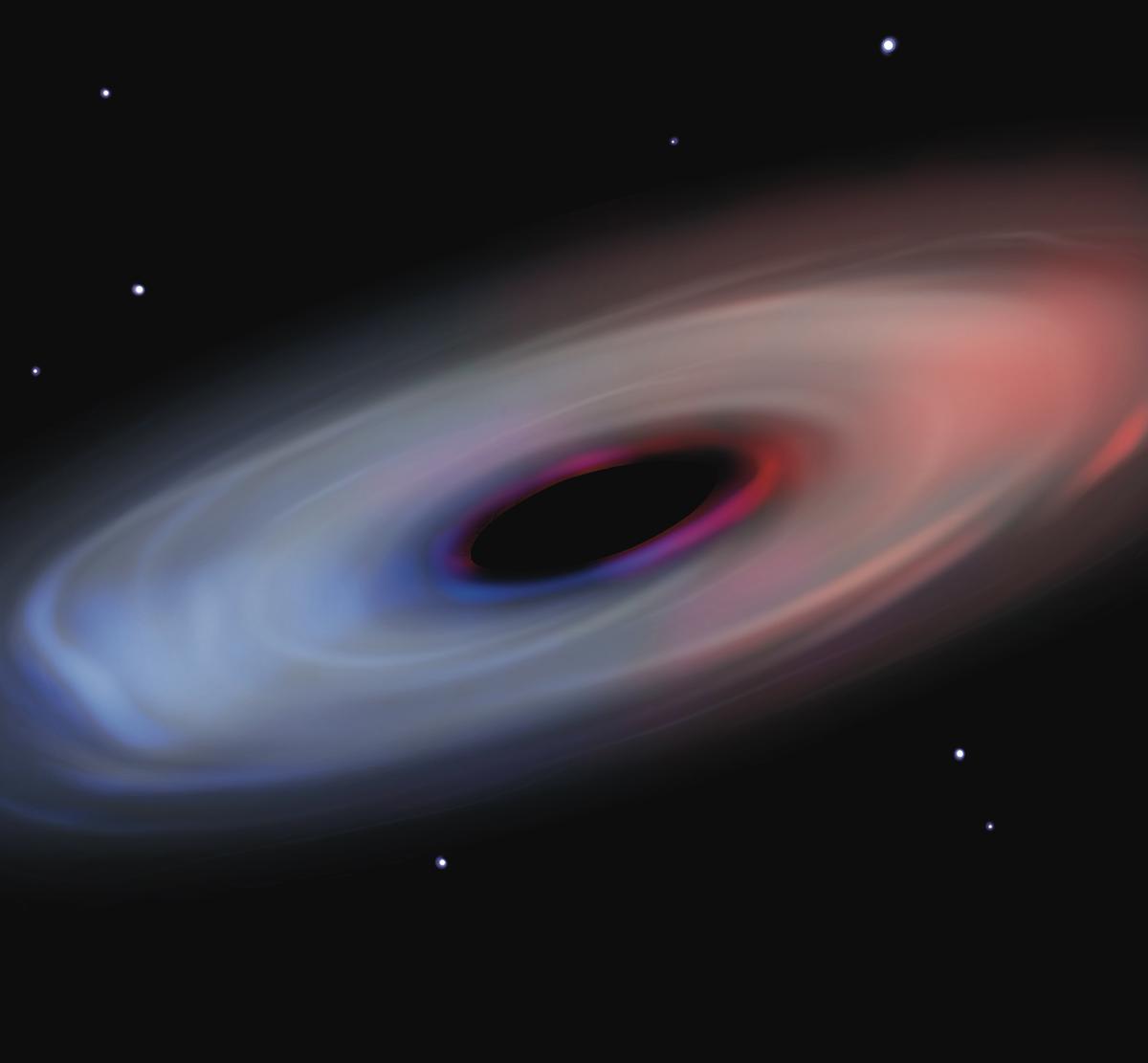
Gigantic ‘Little Red Dot’ Threatens to Upend Cosmic History
Why It Matters
A 50‑million‑solar‑mass black hole this early reshapes theories of how the first cosmic structures grew, influencing models of galaxy formation and the nature of primordial black‑hole seeds.
Key Takeaways
- •JWST spectroastrometry estimates LRD black hole at 50 million M☉
- •Measurement suggests black hole may outmass its host galaxy
- •Findings revive “black holes first” scenario for galaxy formation
- •Alternative “black‑hole star” model faces direct challenge
- •Upcoming ELT observations aim to confirm or refute mass estimate
Pulse Analysis
The James Webb Space Telescope has turned the early universe into a laboratory, revealing countless "little red dots"—compact, luminous sources that likely host nascent black holes. Since JWST’s launch, astronomers have debated whether these objects are simply early supermassive black holes embedded in forming galaxies or a brand‑new class dubbed "black‑hole stars." Their tiny angular size and intense infrared glow make direct measurements difficult, forcing researchers to rely on indirect scaling relations that assume modern galaxy environments.
A new study in Nature leverages spectroastrometry, a technique that maps tiny wavelength shifts in hydrogen emission lines to infer orbital velocities around a central mass. By applying this method to a red dot observed 700 million years after the Big Bang, the team derived a black‑hole mass of about 50 million times that of the Sun—far larger than previous estimates. Such a heavyweight at this epoch implies the black hole could have formed via direct gas collapse or even be a primordial relic, challenging the "black‑hole star" interpretation that posits a much lighter object surrounded by dense gas.
The community remains cautious, noting the measurement pushes JWST data to its limits. Independent confirmation will likely come from next‑generation facilities like the Extremely Large Telescope, which will resolve the host environments with unprecedented clarity. If the mass holds, cosmologists will need to revise seed‑black‑hole formation models and reassess the timeline of galaxy assembly, underscoring how cutting‑edge observations continue to rewrite our cosmic origin story.
Gigantic ‘little red dot’ threatens to upend cosmic history
Comments
Want to join the conversation?
Loading comments...