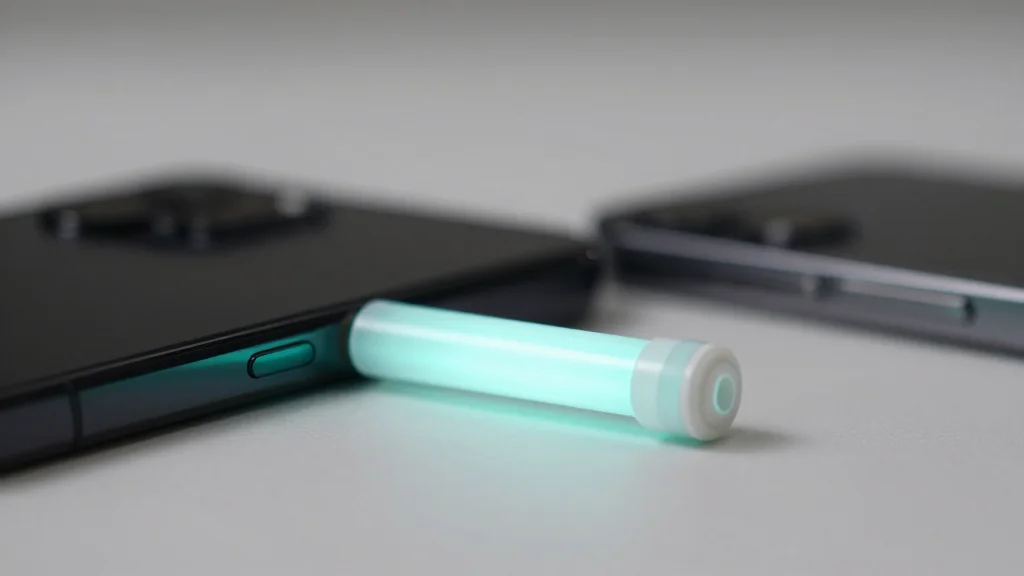
Glowing Probe Detects Multiple Antibiotics with Just a Smartphone
Why It Matters
The innovations accelerate low‑cost, on‑device diagnostics, enable dye‑free lighting solutions, and push bio‑fabrication toward functional tissue engineering, reshaping healthcare and materials markets.
Key Takeaways
- •Italian team built solid‑liquid sensor array mimicking eye vision.
- •Sensor uses smartphone camera to read fluorescence from antibiotics.
- •New polyamide emits white light without dyes, tolerates high temperatures.
- •3D printing inside living cells creates microscale structures like elephants.
- •Cellular printing enables barcode tags for tracking engineered cells.
Pulse Analysis
The Italian sensor array merges a solid‑state circuit board with a liquid electrolyte, creating a bio‑inspired photodetector that can be interrogated by a standard smartphone camera. By coating the array with antibiotic‑responsive fluorophores, the device translates fluorescence intensity into a readable signal, delivering rapid, on‑site detection without laboratory equipment. This approach could democratize antimicrobial stewardship, especially in low‑resource settings where traditional culture methods are impractical.
Meanwhile, the newly synthesized polyamide represents a paradigm shift in light‑emitting materials. Its intrinsic white‑light emission eliminates the need for costly dyes or rare‑earth dopants, while maintaining thermal stability suitable for high‑temperature processing. Such a material could lower production costs for displays, signage, and wearable optics, while also reducing environmental impact associated with conventional phosphors. Industry analysts see potential for integration into flexible electronics and smart‑textile applications.
The breakthrough in 3D printing within living cells pushes the frontier of bio‑fabrication. By using biocompatible inks that solidify inside the cellular matrix, researchers printed intricate structures—including a miniature elephant and encoded barcode tags—directly inside viable cells. This capability paves the way for constructing functional tissue scaffolds, embedding data carriers for cell tracking, and customizing cellular therapies at the microscale. As the technology matures, it may transform regenerative medicine and personalized biotech manufacturing.
Glowing probe detects multiple antibiotics with just a smartphone
Comments
Want to join the conversation?
Loading comments...