Companies Mentioned
Why It Matters
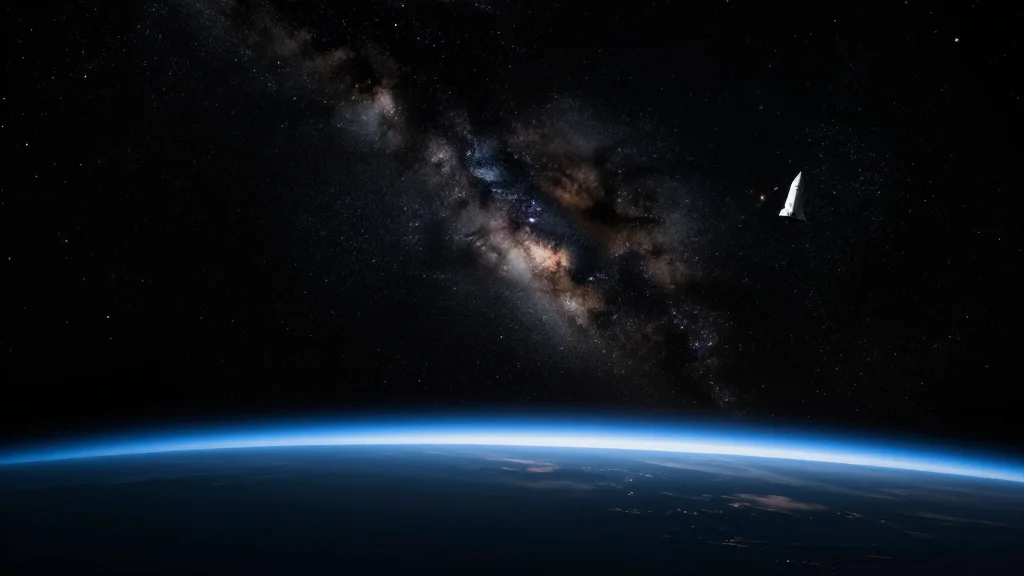
The image provides a rare visual of airglow, aiding public understanding of atmospheric physics and reinforcing NASA’s outreach on everyday space phenomena.
Key Takeaways
- •Airglow results from sunlight‑excited atoms emitting photons in upper atmosphere.
- •Captured on April 13, 2026, from SpaceX Dragon docked to ISS.
- •Milky Way backdrop illustrates Earth's faint atmospheric glow to the naked eye.
- •Phenomenon differs from auroras, which are driven by solar wind particles.
- •Image enhances public engagement and supports atmospheric research communication.
Pulse Analysis
The faint, omnipresent glow that envelopes Earth’s limb is known as airglow, a subtle emission of light from the planet’s upper atmosphere. Unlike the dramatic auroras that flare when charged particles from the solar wind collide with atmospheric gases, airglow is generated continuously as sunlight excites atoms and molecules, prompting them to release photons as they return to lower energy states. This process creates a diffuse, pastel‑colored halo that can be observed from space and, under dark conditions, even from high‑altitude ground sites. Understanding airglow helps scientists monitor the composition and temperature of the mesosphere and lower thermosphere, offering clues about atmospheric dynamics and climate trends.
Capturing this phenomenon requires a stable orbital platform with a clear line of sight, and the International Space Station provides exactly that. On April 13, 2026, astronaut Chris Williams used a handheld camera aboard a SpaceX Dragon capsule docked to the ISS to photograph the Milky Way arching above the Earth’s airglow. The image combines the familiar band of our galaxy with the planet’s faint atmospheric veil, producing a striking visual that resonates with both scientific and public audiences. NASA’s emphasis on astronaut‑taken photography continues to humanize space exploration, turning complex physics into relatable imagery.
The release of Williams’ photo serves multiple strategic goals. For educators, it offers a vivid illustration of how solar radiation interacts with atmospheric particles, enriching curricula in physics and Earth science. For researchers, repeated imaging of airglow from the ISS can feed long‑term datasets that track subtle changes in atmospheric composition, potentially signaling shifts in climate or space weather patterns. Moreover, the visual appeal of the Milky Way over a glowing Earth bolsters NASA’s outreach campaigns, attracting media attention and inspiring the next generation of engineers and scientists. As commercial crew vehicles expand access to low‑Earth orbit, similar observations are likely to become more frequent, deepening our collective understanding of the planet’s thin, luminous envelope.
Glowing Views from the Space Station
Comments
Want to join the conversation?
Loading comments...