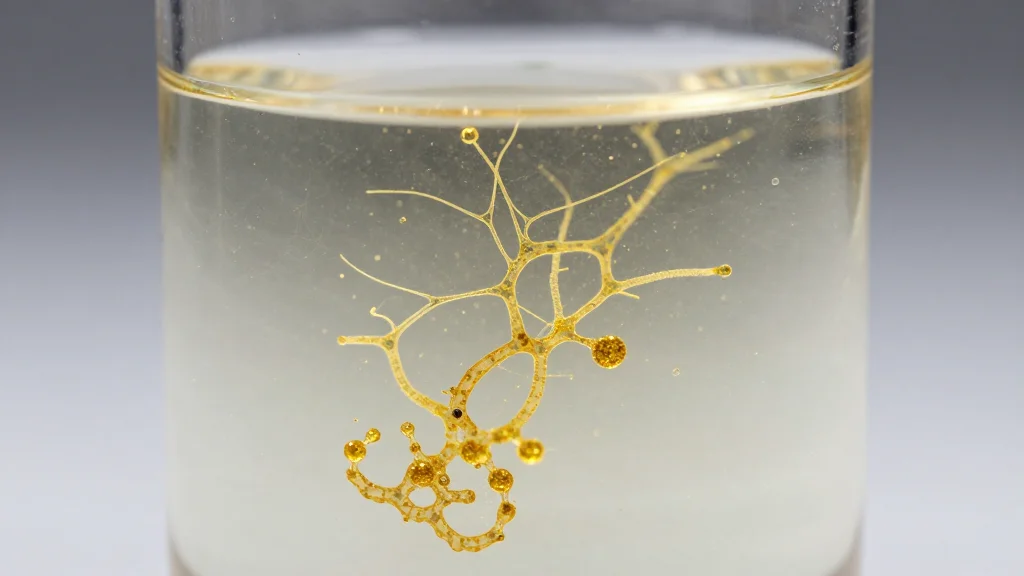
Gold Nanoparticles that Behave Like a Liquid Open Path to Adaptive Materials
Why It Matters
The ability to trigger macroscopic structural changes in nanoparticle layers near physiological temperatures enables adaptive devices, potentially transforming drug‑delivery platforms and next‑generation nanotechnologies.
Key Takeaways
- •Gold nanoparticles reorganize from islands to networks at ~40 °C
- •Thermoresponsive dendron ligands drive surface symmetry changes
- •Liquid‑like behavior achieved at room temperature on air‑water interface
- •Potential for temperature‑triggered drug delivery and adaptive microfluidics
Pulse Analysis
The study marks a shift from static nanoparticle assemblies toward dynamic, reconfigurable surfaces. By exploiting the air‑water interface, the team sidestepped the high‑temperature constraints that typically lock organic ligands in place, allowing gold particles to behave like a two‑dimensional liquid at ambient conditions. This liquid‑like mobility enables rapid, reversible rearrangements that can be tuned with modest temperature shifts or mechanical pressure, a capability that was previously limited to bulk polymers or liquid crystals.
At the heart of the phenomenon is a clever molecular design: a dendritic liquid‑crystal ligand that responds to heat by changing its conformation, paired with a simpler linear ligand. When the temperature rises, the dendrons migrate across the particle surface, altering the effective shape and packing symmetry of each nanoparticle. Synchrotron X‑ray scattering at DESY captured this redistribution in real time, confirming that the collective transition stems from nanoscale surface chemistry rather than external forces. This insight provides a blueprint for engineering other metal or semiconductor nanoparticles with programmable, stimulus‑responsive interfaces.
The commercial implications are substantial. Temperature‑sensitive drug‑delivery carriers could release therapeutics only in the slightly elevated heat of tumor microenvironments, improving efficacy while reducing side effects. Likewise, adaptive coatings that reconfigure under flow or pressure could enhance microfluidic device performance, offering self‑healing or tunable permeability. As the nanomaterials market anticipates a multi‑billion‑dollar growth trajectory, technologies that combine precise optical or electronic tuning with environmental responsiveness are poised to attract venture capital and industrial R&D investment. The findings therefore not only expand fundamental nanoscience but also lay groundwork for a new class of smart, adaptive materials.
Gold nanoparticles that behave like a liquid open path to adaptive materials
Comments
Want to join the conversation?
Loading comments...