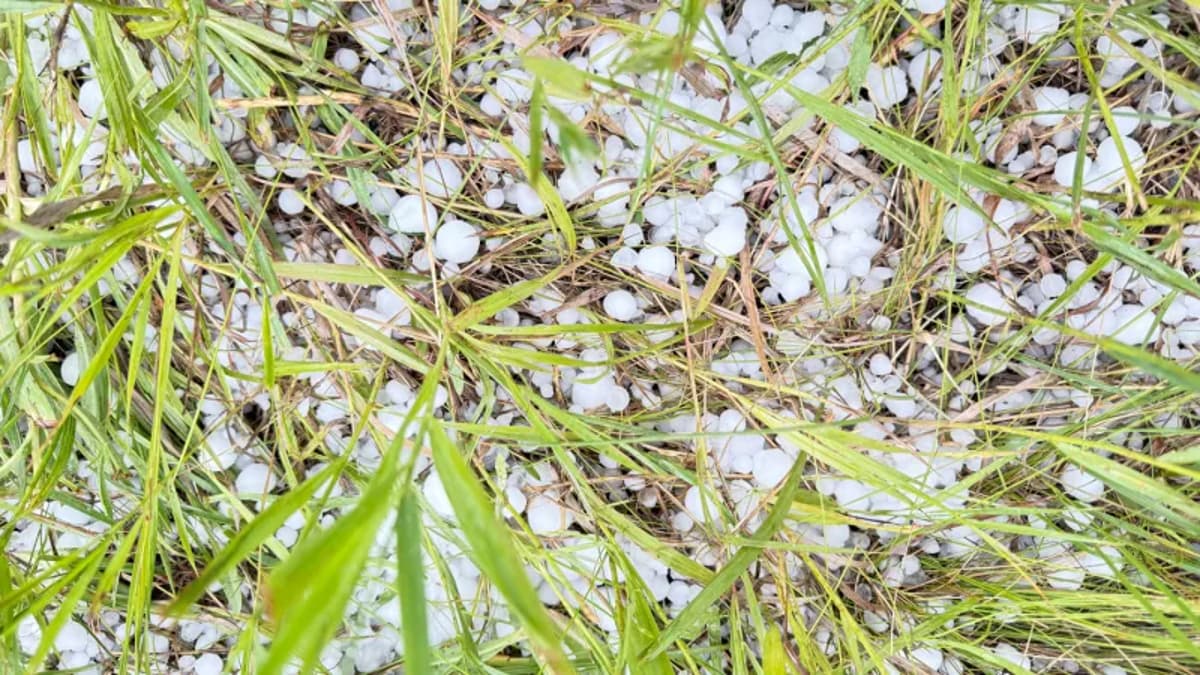
Grapefruit-Sized Hail May Become More Common in a Warmer World
Why It Matters
Increasing large‑hail risk threatens property, agriculture, and insurance costs in many mid‑latitude markets, prompting a need for updated risk assessments and adaptation strategies.
Key Takeaways
- •Study predicts more frequent large hail events in higher latitudes.
- •Warmer air supplies extra moisture, enabling hailstones to grow larger.
- •Tropical regions may see fewer damaging hailstorms as temperatures rise.
- •Model validated against 14,000 past storms, but regional uncertainty remains.
Pulse Analysis
Hailstorms form when powerful updrafts loft moisture into freezing layers, allowing ice particles to accrete. As the planet warms, the atmosphere can retain more water vapor, providing the raw material for larger hailstones. This physical mechanism underpins the new research, which couples detailed cloud‑scale physics with climate model projections to assess future hail hazards. By testing the simulation against thousands of real events across continents, the scientists offer a rare quantitative glimpse into how a traditionally local phenomenon may evolve on a global scale.
The study’s core finding is a geographic split: higher‑latitude regions, where temperature increases will be most pronounced, are projected to experience more frequent, larger hail that can survive the deeper warm layers aloft. Conversely, in tropical and subtropical zones, the enhanced melt zone may suppress hail formation, potentially reducing damage. The model highlights two competing forces—greater moisture supply versus increased melting depth—and shows that the balance tips toward larger hail in many temperate zones. Validation against historic data from the United States and China lends credibility, though the authors acknowledge that global climate models lack the resolution to capture individual storm dynamics, leaving regional forecasts less certain.
For insurers, municipalities, and infrastructure planners, the implications are clear. Larger hail translates to higher repair costs for vehicles, roofs, and crops, and may drive up premiums in affected regions. Adaptation measures such as stronger building codes, hail‑resistant materials, and refined catastrophe modeling will become increasingly important. While the study advances scientific understanding, its uncertainties underscore the need for continued observation and localized risk assessments as climate change reshapes severe weather patterns.
Grapefruit-sized hail may become more common in a warmer world
Comments
Want to join the conversation?
Loading comments...