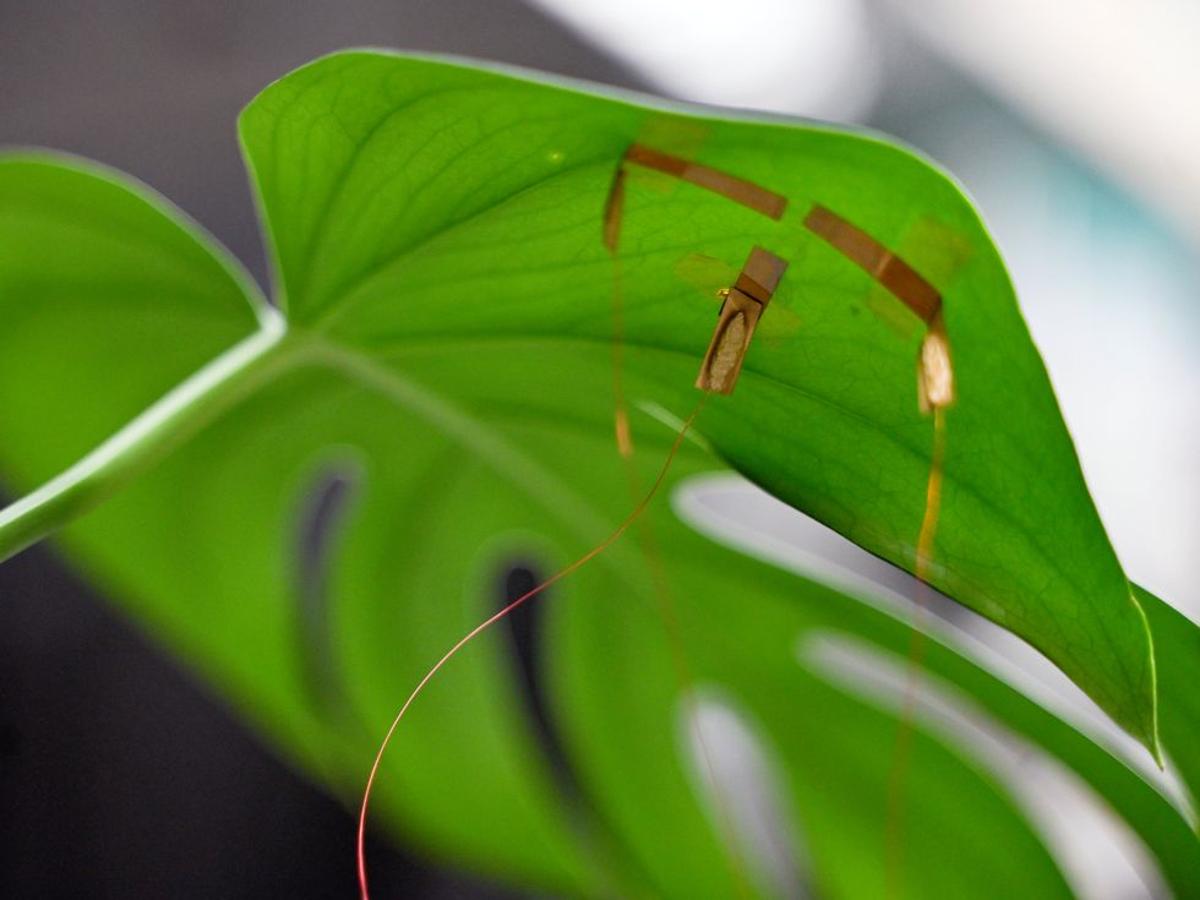
Graphene “Tattoos” For Plants Could Form Neural Networks

Why It Matters
The technology offers a low‑cost, non‑invasive way to continuously monitor plant water stress, a critical factor for agriculture and wildfire prevention. Embedding sensing and neuromorphic computing directly on leaves could transform precision farming and forest management in a climate‑changing world.
Key Takeaways
- •Graphene patch adheres to leaf, measures hydration via conductance changes
- •Sensor acts as artificial synapse, retaining state for ~90 seconds
- •Researchers demonstrated perceptron classification of leaf moisture using sensor data
- •Vision: distributed leaf sensors form neural network for drought and fire monitoring
- •Graphene’s transparency and flexibility avoid disrupting photosynthesis
Pulse Analysis
Accurate assessment of leaf water status has long been a bottleneck for growers and forest managers, who typically rely on destructive sampling or bulky handheld probes that cannot capture rapid changes. Recent advances in flexible electronics have opened the door to wearable plant sensors, but many designs still interfere with photosynthesis or lack durability. Graphene, a single‑atom‑thick lattice of carbon, combines optical transparency, mechanical stretchability, and high electrical conductivity, making it an ideal substrate for a leaf‑compatible device that can stay attached for weeks without harming the plant.
The UT‑Austin team fashioned the graphene patch into a three‑terminal transistor, using the leaf’s own tissue as the dielectric layer. When a brief voltage pulse is applied, ions in the leaf shift, altering the graphene channel’s conductance in proportion to the leaf’s moisture content. Crucially, the conductance does not snap back instantly; it relaxes over roughly 90 seconds, providing a short‑term memory that mimics an artificial synapse. By feeding these analog signals into a single‑layer perceptron, the researchers successfully classified leaves as hydrated, normal, or drought‑stressed, demonstrating on‑leaf neuromorphic potential.
If scaled across a field or forest, thousands of these graphene tattoos could form a distributed neural network that reports water stress in real time, enabling precision irrigation and early fire‑risk alerts. Such a system would reduce the need for satellite‑based indices that suffer from cloud cover and coarse resolution, while delivering plant‑level granularity. Challenges remain, including power delivery, data aggregation, and long‑term bio‑compatibility, but the low‑cost, printable nature of graphene suggests a viable path to commercial deployment. Ultimately, embedding sensing and computation directly on plants could reshape agritech and environmental monitoring in an era of climate volatility.
Graphene “Tattoos” for Plants Could Form Neural Networks
Comments
Want to join the conversation?
Loading comments...