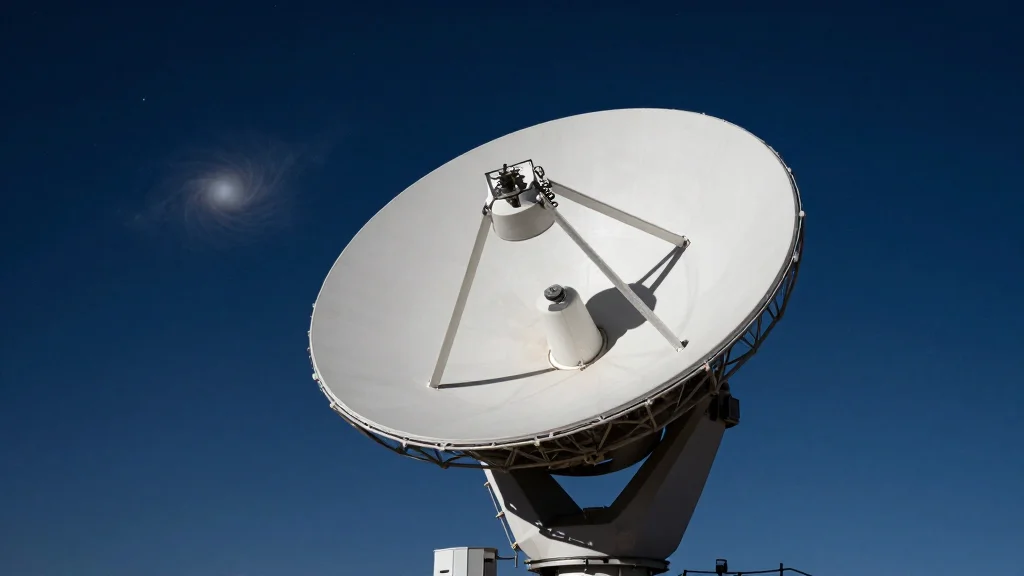
Gravity Holds Up Over 7 Billion Light‑Years, Confirming Newton and Einstein

Why It Matters
Confirming that Newton’s inverse‑square law and Einstein’s relativity hold across 7 billion light‑years does more than settle a theoretical dispute; it validates the core assumptions that underpin modern cosmology, from the expansion history of the universe to the formation of large‑scale structures. By reinforcing the need for dark matter, the study directs experimental efforts toward particle‑physics searches, such as underground detectors and collider experiments, rather than re‑engineering gravity itself. The result also illustrates the power of precision cosmology: instruments originally built to study the cosmic microwave background can now test fundamental physics at scales previously thought inaccessible. This cross‑disciplinary capability accelerates the feedback loop between observation and theory, ensuring that any future anomalies will be detected with the same rigor.
Key Takeaways
- •686,000 galaxies across 7 billion light‑years were analyzed using ACT data.
- •Gravity follows the inverse‑square law exactly, confirming Newton and Einstein.
- •The study rules out Modified Newtonian Dynamics (MOND) as a viable alternative.
- •Findings bolster the ΛCDM model and strengthen evidence for dark matter.
- •Future surveys (LSST, Euclid) will extend the test to even larger cosmic volumes.
Pulse Analysis
The ACT experiment’s success marks a turning point for how cosmologists validate foundational physics. Historically, tests of gravity have been confined to the Solar System or, more recently, to the strong‑field regime around black holes. Extending the inverse‑square law to intergalactic distances required a marriage of microwave background measurements with galaxy‑cluster kinematics, a methodological leap that showcases the maturity of observational cosmology.
From a market perspective, the confirmation of classical gravity reduces the speculative risk associated with funding alternative‑gravity research programs, which have attracted sizable private and public dollars over the past decade. Venture capital and government grants are likely to shift toward dark‑matter detection technologies, such as cryogenic detectors and axion haloscopes, as the community now has stronger empirical justification for the particle‑dark‑matter paradigm.
Looking ahead, the next generation of telescopes will push the precision frontier even further. If LSST or Euclid were to uncover a minute deviation from the inverse‑square law, it would reignite interest in modified‑gravity frameworks and could hint at new physics beyond the Standard Model. Until such an anomaly appears, the ACT result stands as a robust endorsement of the century‑old equations that continue to shape our understanding of the cosmos.
Gravity Holds Up Over 7 Billion Light‑Years, Confirming Newton and Einstein
Comments
Want to join the conversation?
Loading comments...