Gravity’s Inverse‑Square Law Holds Across Hundreds of Millions of Light‑Years

Why It Matters
Confirming that gravity follows the inverse‑square law on the largest observable scales strengthens confidence in the ΛCDM model, which underpins most modern cosmological research. It also narrows the viable alternatives to dark matter, focusing theoretical work on particle‑physics candidates rather than radical revisions of gravity. The study showcases the power of combining cosmic microwave background observations with large‑scale structure surveys, a synergy that will become increasingly important as next‑generation instruments deliver higher‑resolution data. By establishing a robust test of fundamental physics, the work paves the way for more stringent examinations of the universe’s composition and evolution.
Key Takeaways
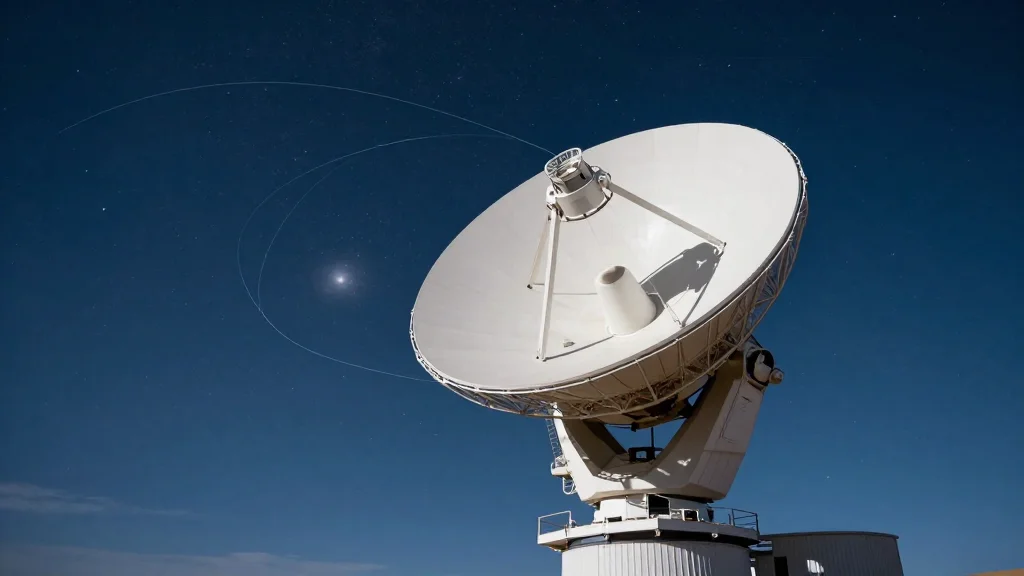
- •Scientists used the Atacama Cosmology Telescope to measure galaxy‑cluster velocities via the kinematic Sunyaev‑Zeldovich effect.
- •The study confirms Newton’s inverse‑square law of gravity over distances of hundreds of millions of light‑years.
- •Results bolster the dark‑matter component of the standard ΛCDM cosmological model.
- •Findings challenge Modified Newtonian Dynamics (MOND) as an alternative explanation for cosmic acceleration.
- •Future work will expand the cluster sample and incorporate data from upcoming observatories like the Vera C. Rubin Observatory.
Pulse Analysis
The confirmation of the inverse‑square law on inter‑cluster scales is a milestone for observational cosmology. While Newton’s law has been tested extensively within the solar system and in laboratory settings, extending the test to the cosmic web required innovative use of the Sunyaev‑Zeldovich effect—a technique that was once considered too subtle for precision work. This breakthrough demonstrates that the cosmic microwave background, a relic of the Big Bang, can serve as a precise ruler for dynamical studies, opening a new frontier for testing fundamental physics.
Historically, challenges to the dark‑matter paradigm have often hinged on perceived anomalies in gravitational behavior at large scales. The new results tighten the constraints on such anomalies, effectively pushing MOND and similar theories into a narrower corner. Researchers will now need to produce even more precise predictions or identify entirely new phenomena to keep alternative gravity models viable. At the same time, the study reinforces the importance of multi‑messenger approaches—combining CMB data, galaxy surveys, and lensing measurements—to cross‑validate cosmological parameters.
Looking ahead, the methodology pioneered here will likely become a standard tool in the cosmologist’s kit. As the Simons Observatory and CMB‑S4 deliver deeper maps of the microwave background, the statistical power of kinematic Sunyaev‑Zeldovich measurements will increase dramatically. This could enable detection of minute departures from the inverse‑square law, potentially hinting at new forces or particles. For now, however, the universe appears to obey Newton’s timeless rule, and dark matter remains the leading explanation for the unseen mass that shapes cosmic structure.
Gravity’s Inverse‑Square Law Holds Across Hundreds of Millions of Light‑Years
Comments
Want to join the conversation?
Loading comments...