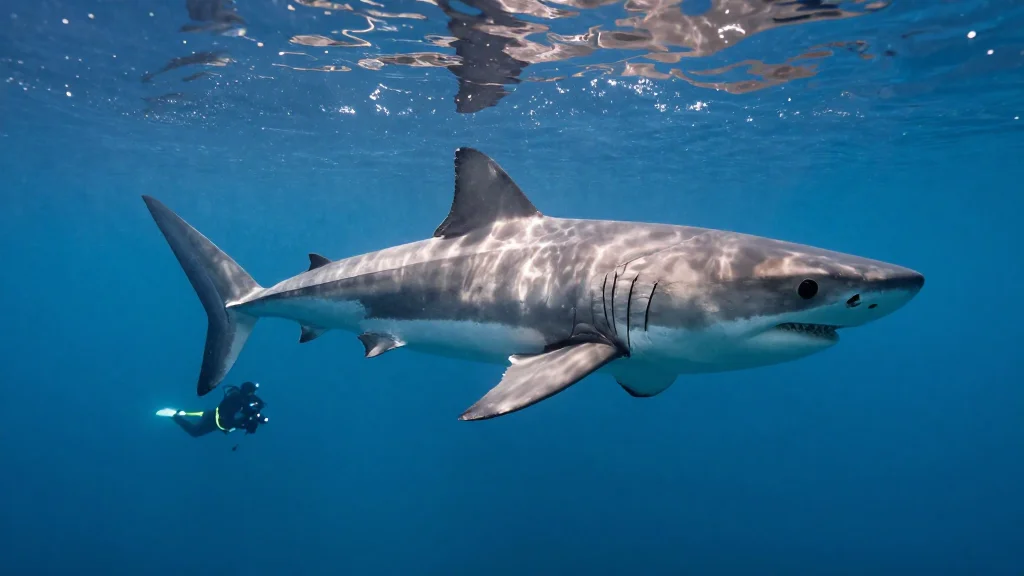
Great White Sharks Have Been in the Mediterranean Sea for Millions of Years—But Sightings Are Incredibly Rare
Why It Matters
Documented Mediterranean great white sightings are scarce, so each observation directly informs science and policy for a critically endangered apex predator. The footage reinforces the need for stronger protections against bycatch and habitat degradation.
Key Takeaways
- •First underwater footage of a great white in Mediterranean captured
- •Mediterranean great whites are critically endangered, sightings now extremely rare
- •Dive groups' documentation aids research on shark distribution and behavior
- •Highlights need for stronger marine protection against bycatch and habitat loss
Pulse Analysis
Great white sharks have roamed the Mediterranean for millennia, yet modern records are vanishingly few. Their historic presence is inferred from ancient fossils and occasional catches, but live observations have become a rarity. The recent video, filmed by volunteers from Ghost Diving and Healthy Seas, offers a vivid reminder that these apex predators still linger in temperate waters, serving as a barometer of ecosystem health. By confirming a mature male in the Strait of Sicily, the footage adds a crucial data point to a sparse distribution map that has long relied on dead specimens.
The species' precarious status in the Mediterranean stems from a perfect storm of human pressures. Accidental capture in commercial nets, illegal fishing, and the depletion of prey such as tuna and seals have driven the regional population toward critical endangerment, as reflected in its IUCN classification. As a top‑level predator, the great white regulates prey populations, influencing trophic cascades that sustain biodiversity. Its decline signals broader ecosystem imbalance, making conservation of this shark synonymous with protecting the entire marine food web.
Citizen‑science initiatives like the recent dive are reshaping shark research. High‑definition footage provides behavioral insights—depth preferences, hunting tactics, and social interactions—that dead specimens cannot. This real‑time data empowers scientists to identify critical habitats, inform marine‑protected‑area design, and lobby for stricter bycatch mitigation. Moreover, public exposure to such rare encounters can galvanize support for stricter fisheries regulations and habitat restoration, turning awe into actionable stewardship for the Mediterranean's fragile marine environment.
Great White Sharks Have Been in the Mediterranean Sea for Millions of Years—but Sightings Are Incredibly Rare
Comments
Want to join the conversation?
Loading comments...