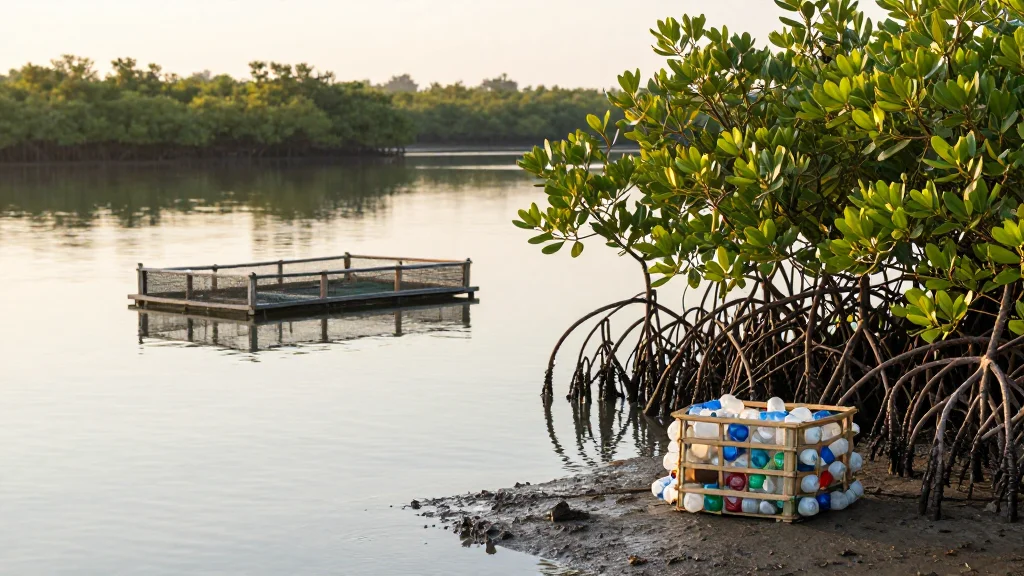
Green Growth Solutions for Climate Change Adaptation in the Mangrove Forest Area of Tien Hai Wetland Nature Reserve, Vietnam
Why It Matters
The findings highlight a tangible pathway for coastal communities to combine livelihood gains with climate adaptation, offering a replicable model for policymakers tackling mangrove‑dependent economies worldwide.
Key Takeaways
- •Ecological aquaculture lifts household income by ~ $105 monthly.
- •81% of residents aware of climate risks; 86% support green growth.
- •Capital scarcity and weak institutions hinder adoption of sustainable practices.
- •Saline intrusion and mangrove erosion intensify under RCP climate scenarios.
- •Recommendations call for market linkage upgrades and governance reforms.
Pulse Analysis
Vietnam’s Tien Hai Wetland Nature Reserve sits at the intersection of biodiversity preservation and rural livelihoods. By applying Ostrom’s socio‑ecological systems framework alongside SWOT and RCP climate scenarios, researchers mapped how mangrove‑based activities—particularly ecological aquaculture and eco‑tourism—can generate both ecological services and modest economic gains. The study’s quantitative core reveals an average household income lift of roughly $105 per month, while qualitative insights show an 81% climate‑risk awareness rate and an 86% willingness to engage in green‑growth initiatives, underscoring strong social readiness.
Despite this optimism, the research pinpoints systemic bottlenecks that impede scaling. Capital shortages, limited technical expertise, fragmented institutional coordination, and unstable market connections emerge as primary constraints. Simultaneously, climate projections under Representative Concentration Pathways forecast heightened saline intrusion, periodic inundation, and accelerated mangrove erosion, threatening the very ecosystems that support these livelihoods. The juxtaposition of economic opportunity and escalating environmental risk creates a narrow window for decisive intervention.
Policymakers can draw actionable lessons from the study’s integrated recommendations. Scaling ecological aquaculture, expanding mangrove restoration, and bolstering community‑driven tourism can diversify income streams, while targeted investments in micro‑finance and skill‑building address capital and expertise gaps. Strengthening market linkages—through cooperatives or digital platforms—and reforming governance structures to improve coordination will enhance resilience. The SES‑SWOT‑RCP framework presented offers a replicable blueprint for other coastal regions seeking to align green growth with climate adaptation, positioning Vietnam as a potential leader in sustainable mangrove management.
Green Growth Solutions for Climate Change Adaptation in the Mangrove Forest Area of Tien Hai Wetland Nature Reserve, Vietnam
Comments
Want to join the conversation?
Loading comments...