Why It Matters
The find clarifies the evolutionary roots of today’s cattle, buffalo and bison, offering insight into how large herbivores adapted to Pliocene climate shifts before human influence. It also informs breeding and conservation strategies by tracing the deep ancestry of key agricultural species.
Key Takeaways
- •14 well-preserved *Parabos tigneresi* skeletons uncovered in Spain
- •Largest individual estimated at ~500 kg, rivaling modern cattle size
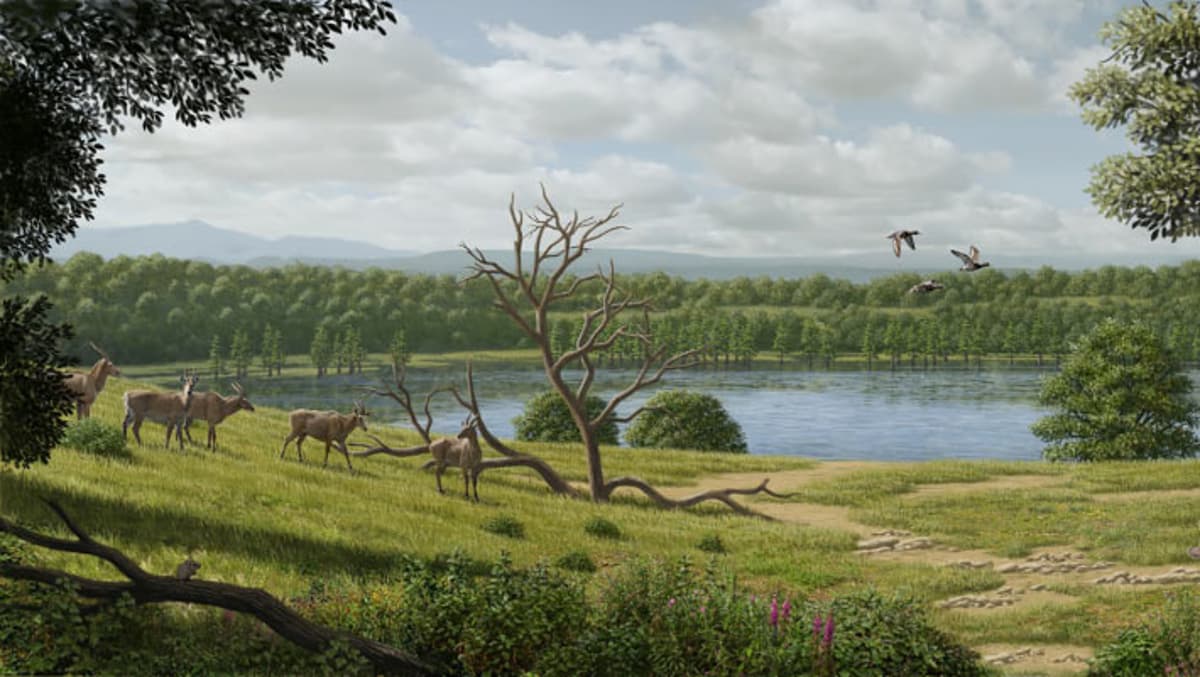
- •Fossils indicate humid, vegetation‑dense Early Pliocene habitat
- •Species may be earliest Bovini or late Tragoportacini lineage
- •Findings fill gap in bovine evolutionary record before human arrival
Pulse Analysis
The early Pliocene, roughly 5 to 4 million years ago, marks a pivotal interval when many mammalian lineages began to upscale in body size. For the tribe Bovini—encompassing today’s cattle, bison and buffalo—this period has remained opaque due to a paucity of well‑preserved specimens. The recent discovery of multiple *Parabos tigneresi* skeletons in northeastern Spain therefore provides a rare window into the anatomical and ecological traits of the first large‑bodied bovids that roamed Europe long before agriculture reshaped the continent. Camp dels Ninots, a maar lake deposit embedded in humid, vegetation‑rich floodplains, yielded at least fourteen individuals with near‑complete skeletal elements.
The largest specimen, reconstructed from limb dimensions, weighed close to 500 kg—comparable to modern beef cattle and substantially larger than any coeval European bovid. Detailed analysis of dental wear, limb proportions and cranial features points to a mixed‑feeding strategy adapted to abundant water plants and grasses. Such morphological evidence confirms that size increase was likely a response to the region’s increasingly warm and wet climate.
Understanding where *Parabos* fits on the bovine family tree reshapes narratives about the origins of domesticated livestock. If it represents the earliest true Bovini, it pushes the lineage’s divergence back by several million years; if it belongs to the extinct Tragoportacini, it highlights a parallel evolutionary experiment that was later supplanted. Either scenario informs breeders, conservationists and climate modelers about the plasticity of large herbivores under shifting environments. Ongoing comparative studies and ancient DNA attempts promise to resolve the phylogenetic puzzle and refine our picture of pre‑human megafaunal ecosystems.
Half-Ton Cattle Relatives Roamed Europe 4 Million Years Ago
Comments
Want to join the conversation?
Loading comments...