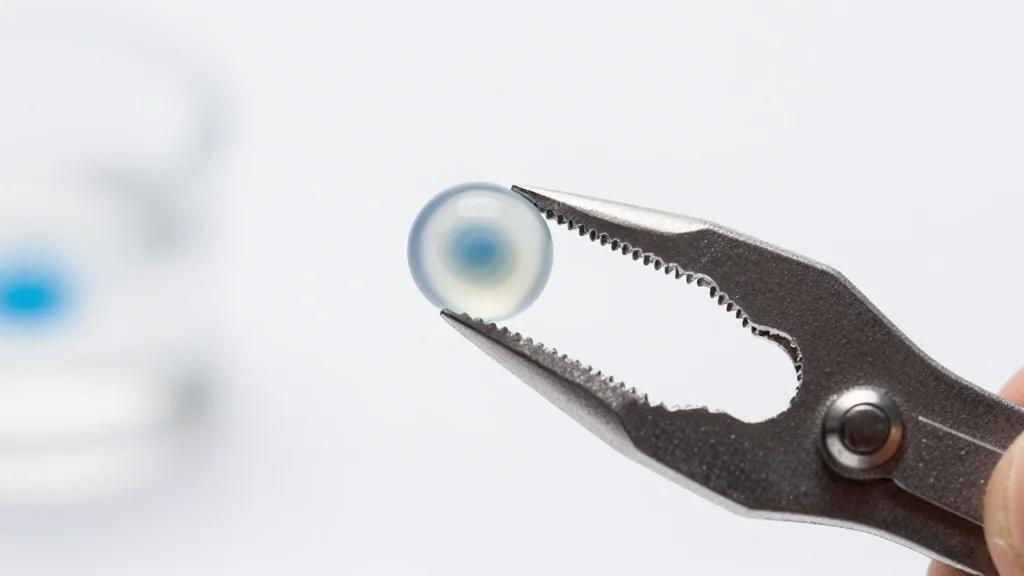
Handle with Care: Mobile Microgrippers Pick up Cells in a Pinch
Why It Matters
The MMG enables precise, low‑damage handling of 3D cell constructs, accelerating biofabrication and reducing reliance on manual techniques.
Key Takeaways
- •Purdue's MMG uses magnetic fields for locomotion and gripping.
- •Real‑time force sensing prevents spheroid damage during manipulation.
- •In‑vitro tests achieved organized spheroid patterns with high viability.
- •Design mimics claw toy, offering controlled gentle grip.
- •Future goal: automated assembly of fully engineered tissues.
Pulse Analysis
The manipulation of three‑dimensional cell spheroids has long been a bottleneck in biofabrication. Spheroids replicate the micro‑architecture of native tissues, yet their delicate extracellular matrix makes them vulnerable to shear forces generated by conventional suction or pipette‑based tools. Researchers at Purdue University recognized that any excess force can compromise cell viability and alter experimental outcomes. Their solution, a force‑sensing mobile microgripper (MMG), promises to replace manual handling with a precision instrument that respects the biomechanical limits of living constructs.
The MMG resembles a miniature claw toy, with two hinged arms that open and close under magnetic control. By embedding permanent magnets in the device and applying external fields, researchers achieve both locomotion across the culture medium and precise jaw actuation without direct electrical contacts, preserving biocompatibility. Integrated force sensors relay real‑time grip data to a controller, which automatically adjusts magnetic torque to stay within a predefined safe range. In vitro experiments demonstrated that the gripper could arrange spheroids into ordered arrays while maintaining over 95 % cell viability, confirming that the applied forces were truly gentle.
Beyond proof‑of‑concept, the MMG opens a pathway toward fully automated tissue assembly lines. By scaling the magnetic actuation system and integrating computer vision, future platforms could orchestrate thousands of spheroids into complex, multi‑cellular structures without human intervention. Such capability aligns with the growing demand for organ‑on‑a‑chip models, personalized regenerative therapies, and high‑throughput drug screening, where reproducibility and cell health are paramount. As the technology matures, commercial interest from biotech firms and medical device manufacturers is likely to accelerate, potentially reshaping the economics of tissue engineering.
Handle with care: Mobile microgrippers pick up cells in a pinch
Comments
Want to join the conversation?
Loading comments...